
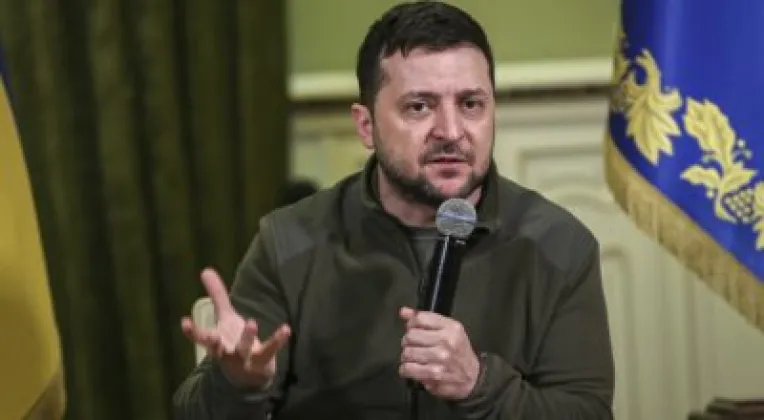
Ukrainian President Volodymyr Zelenskyy arrived in Berlin on Tuesday for talks aimed at rallying international support for Ukraine's defence as Russia's attack on the country continues. The visit places the Ukrainian leader in the capital of one of Kyiv's most important European partners at a time when Ukraine is working to consolidate diplomatic, military and economic backing from abroad. In a message posted on X shortly after his arrival, Zelenskyy said his discussions in the German capital would focus on three broad themes: diplomatic coordination with partner countries, the strengthening of Ukraine's air defence systems, and cooperation in the energy sector. Germany is among the main countries providing military, economic and humanitarian assistance to Ukraine, a status that gives the Berlin talks particular significance in Kyiv's wider effort to keep international backing flowing.
Zelenskyy outlines his agenda in a post on X
The Ukrainian president announced the purpose of his visit in a post on X, where he set out the areas his delegation intends to pursue during the stop in Berlin. According to the post, the visit will cover the following priorities:
- Diplomatic coordination with international partners, an effort aimed at keeping Ukraine's backers aligned on political and practical support for the country's defence.
- Strengthening air defence systems, a central request of Kyiv as it seeks to protect its territory and population from Russian attacks.
- Cooperation in the energy sector, an area of partnership that touches on Ukraine's ability to maintain essential services under wartime conditions.
By setting out the agenda publicly, Zelenskyy signalled that the visit is intended to be forward-looking, focused on securing concrete forms of cooperation rather than symbolism alone. The three themes together mirror the main fronts on which Ukraine has sought help from its partners: the diplomatic front, where coordination shapes the scale and direction of assistance; the military front, where air defence remains among the most urgent categories of need; and the civilian front, where energy cooperation affects daily life for millions of Ukrainians.
The significance of each theme
Diplomatic coordination has been a recurring feature of Ukraine's wartime diplomacy, as Kyiv works to ensure that the group of countries supporting its defence remains cohesive and engaged. Air defence strengthening addresses one of the most immediate demands Ukraine has made of its partners, since defending the country against Russian attacks depends heavily on the systems and capabilities supplied from abroad. Energy cooperation, the third theme named in Zelenskyy's post, reflects the importance Ukraine places on working with partners to keep its energy sector functioning while the war continues.
Germany's role as a leading supporter
Germany's standing as one of the principal providers of military, economic and humanitarian assistance to Ukraine makes it a natural destination for a visit of this kind. Military assistance from countries such as Germany supports Ukraine's ability to defend itself against Russia's attack, while economic assistance helps sustain the country's finances through the strain of war. Humanitarian assistance, the third pillar of the support described, addresses the needs of people affected by the fighting.
Against that backdrop, Zelenskyy's arrival in Berlin underscores the weight Kyiv places on its relationship with Germany. For Berlin, hosting the Ukrainian president offers an opportunity to reaffirm its position among the main supporters of Ukraine's defence. For Kyiv, the talks provide a channel to press for continued and strengthened support in the areas its leadership has identified as priorities, from air defence to energy. The fact that the visit was announced through the president's own account on X also highlights how Kyiv has used direct public communication to frame its engagements with partner governments.
Sustaining international backing amid the war
The visit comes as Ukraine continues its effort to rally international support for its defence against Russia's attack. Securing that support has required sustained diplomacy by the Ukrainian leadership, and trips to partner capitals have been a key instrument of that effort. The agenda Zelenskyy set out for Berlin, spanning diplomacy, air defence and energy, points to the breadth of the assistance Ukraine depends on, covering political alignment, military capability and civilian resilience at the same time.
The emphasis on diplomatic coordination in particular highlights the stake Kyiv has in maintaining unity among the countries supporting Ukraine. Air defence strengthening speaks to the continuing military threat posed by Russia's attack, while energy cooperation addresses the wartime pressures on the country's infrastructure. Taken together, the three themes sketch the outline of Ukraine's current needs as presented by its own president, without the president's office having to rely on intermediaries to convey its message.
Zelenskyy arrived in the German capital on Tuesday, with his stated agenda centred on the three areas he named in his post. Further details of the visit and its discussions have been reported by Khabarhub and Pradeskhabar.


