
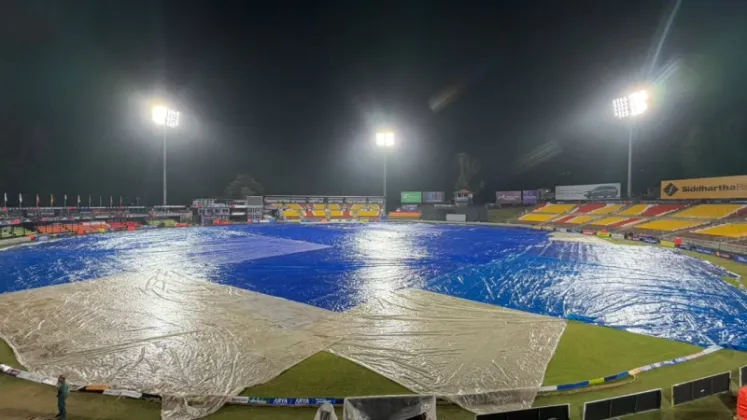
The Tribhuvan University cricket stadium in Kirtipur has been left flooded after heavy rain that began on Friday, with water covering the ground and the areas surrounding the venue and disrupting the day's cricket schedule. Play at the stadium has been affected, and the Cricket Association of Nepal (CAN) is making efforts to hold the second match of the day, with a Nepal Premier League (NPL) fixture among the games caught up in the disruption. The flooding has also renewed attention on the venue's drainage, which remains the old system even though the stadium was upgraded with parapets only last year, according to reports by Global Aawaj and Pradesh Khabar.
Sustained rain leaves the ground under water
Rain that set in on Friday has continued across the Kirtipur area, and the water has now spread across the Tribhuvan University stadium, one of the central venues of Nepali cricket. Reports from the ground describe standing water not only on the playing area but also in the spaces around the stadium, painting a picture of a venue struggling to cope with the volume of rain it has received.
The key facts as reported from the scene are stark:
- Heavy rain has fallen at the venue since Friday, with water accumulating continuously since then.
- The ground and the surrounding areas of the stadium are covered in water.
- Play has been affected by the flooding.
- CAN is attempting to hold the second match of the day despite the conditions.
- The Nepal Premier League fixture is among the games impacted by the waterlogged ground.
For a stadium that sits at the heart of Nepal's cricket calendar, the sight of the field submerged is a serious disruption. Matches scheduled at the venue cannot proceed normally while water remains on the ground, and the flooding has directly interfered with the running of the day's fixtures, including the high-profile NPL game.
New parapets, old drains: the upgrade gap in focus
What makes the current situation particularly striking is the state of the stadium's infrastructure. The venue was upgraded last year, with parapets installed as part of the improvement work. Parapets are the boundary barriers that rise above ground level, and their addition was a visible enhancement to the stadium.
The drainage system, however, was left as it was. The old drainage network, the same one that served the ground before the upgrade, remains in place. As the present flooding demonstrates, that distinction matters most at exactly the moment the stadium needs it most: when sustained rain arrives and water has to be moved off the field quickly.
A visible improvement with an underground shortfall
The contrast is between what can be seen from the stands and what lies beneath the surface. The parapets changed the look and safety of the stadium above ground, but the system responsible for clearing rainwater from the playing area was not replaced. With rain falling since Friday, the old drainage has been unable to keep pace, and water has pooled across the ground and its surroundings instead of draining away.
The flooding, in other words, is not simply a story of unusually heavy rain. It is also a story of a facility that received upgrades in one area while the critical drainage infrastructure, invisible to spectators but essential to play, stayed unchanged.
CAN works to keep the day's schedule alive
Despite the difficult conditions, CAN has not given up on the day's cricket. The association is attempting to hold the second match of the day at the flooded stadium, a sign of how much importance is attached to keeping the schedule intact, particularly with an NPL fixture involved.
The Nepal Premier League game is among the matches impacted by the flooding, and the conditions at the ground will determine what happens next. Reports so far describe CAN's efforts to hold the match rather than any confirmed outcome, meaning the fixture's fate rests on how the ground recovers and whether the weather relents enough for play to become possible.
What standing water means for a cricket ground
Flooding is among the most disruptive conditions a cricket venue can face. Standing water on a playing field affects every element of the game: the pitch itself, the outfield, and the safety of the players. A sodden outfield slows the ball and alters the character of play, while a wet pitch can behave unpredictably and pose risks to batters and bowlers alike.
Clearing a waterlogged ground is also not instantaneous. Water has to drain or be removed, surfaces need time to dry, and officials must be satisfied that conditions are safe before play can resume. That is why the state of the drainage system is so important to a venue like Tribhuvan University stadium. A modern, effective network can move rainwater off the field quickly and shorten interruptions; an old one, as the current scene in Kirtipur shows, can leave a ground submerged and a schedule in disarray.
For now, attention in Kirtipur is fixed on two questions: whether CAN's efforts can salvage the second match of the day and its NPL fixture, and how quickly the waterlogged stadium can be brought back to a playable state. The flooding has also made the venue's drainage deficit impossible to ignore, underlining the gap between last year's visible upgrades and the aging system still working, or failing to work, beneath the field.


