
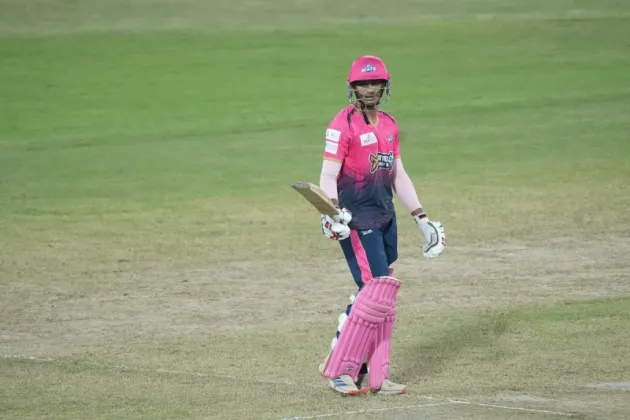
Janakpur will defend a target of 148 runs after a composed half-century from Tritraj anchored the side's innings, according to reports published by Nepali news outlets on 1 November 2026. The fifty sat at the centre of Janakpur's batting effort, giving the innings its structure and leaving Pokhara with a clear equation: 148 runs needed for victory. Both Nepal Views and Nepal Lead carried the story, with each report singling out Tritraj's knock as the defining feature of the Janakpur innings. Detailed figures from the knock, such as the balls faced and boundaries struck, were not included in the early summaries, but the broader picture they painted was consistent: Janakpur's total was built around its anchor, and that fifty ultimately determined the number Pokhara must chase.
Tritraj's fifty: the anchor Janakpur needed
Every limited-overs batting side hopes for at least one batter who bats deep into the innings, absorbs pressure and keeps the scoreboard moving without taking unnecessary risks. That is precisely the role reports credited Tritraj with playing. A half-century is a milestone in its own right, but the word "anchor" carries a specific meaning in cricket: a batter who holds up one end, values his wicket highly, and allows the rest of the batting order to play around him rather than in his place.
The importance of such a knock tends to reveal itself in the final target. A batting side that loses wickets in clusters frequently ends up well short of the total it wants, forced to defend a score its bowlers have little chance with. A side that has an anchor at the crease can steady itself mid-innings, rebuild, and post a number that keeps the contest alive. Janakpur's ability to set Pokhara a target of 148 owed much to that stability at one end.
Why anchor innings decide tight matches
Anchoring is often undervalued because it rarely produces the flashiest highlights, yet it is frequently the knock that shapes the result. Batters in this mould typically start watchfully, rotate the strike, punish only the deliveries that deserve punishment, and leave the attacking bursts to partners at the other end. By the time the innings closes, the anchor's fifty has usually done the quiet work of converting a fragile position into a defensible total. For Janakpur, that work ended with Pokhara needing 148. For Pokhara, the same knock now represents the obstacle standing between them and victory.
The equation for Pokhara: 148 runs to win
Pokhara's chase begins with simple arithmetic. How demanding that target feels will depend heavily on how the innings unfolds in its early stages, because chases of this size are rarely won by one explosive passage of play. More often they are built patiently, partnership by partnership, with the batting side keeping the required rate within reach and the bowling side fighting for every dot ball.
- A steady start: The opening batters' first task is to see off the new ball and deny Janakpur early inroads, because a chase that begins with quick wickets immediately hands the momentum back to the defending side.
- One substantial partnership: Even in modest chases, a single significant stand usually settles the outcome, allowing the batters who follow to play with freedom rather than tension.
- Constant strike rotation: Ticking the scoreboard over with singles and twos keeps the required rate from climbing and prevents the fielding side from building sustained pressure.
- Wickets in hand: A chase of 148 leaves little room for reckless shots through the middle overs; preserving batters for the final phase is often worth more than ten quick runs.
For Janakpur's bowlers, meanwhile, 148 is a total they can attack with. Defending a target of this size frees a bowling and fielding unit to hunt wickets aggressively, knowing that a cluster of breakthroughs at any stage can swing the match firmly back their way. Fielding intensity, catching and ground coverage tend to rise when a side believes every dot ball is pushing the opposition closer to trouble, and Janakpur will expect exactly that mindset as the chase develops.
Where to follow the match
Both Nepali outlets that covered the game published their reports on 1 November 2026, and their pages remain the natural destinations for readers seeking the fuller details of the contest, including the complete scorecard and the eventual result.
- Nepal Views: Janakpur sets Pokhara a target of 148 runs with Tritraj's half-century
- Nepal Lead: Match report on Janakpur's innings against Pokhara
As the chase progresses, the questions that will decide the match are the ones every limited-overs game asks: whether Pokhara's top order can negotiate the new-ball spell, whether a middle-order batter can supply the anchoring presence that Tritraj provided for Janakpur, and whether Janakpur's bowlers can make a target of 148 feel larger than it looks on paper. Until those questions are answered on the field, the scoreboard's message is simple: Pokhara need 148 runs, and Janakpur need ten wickets.


