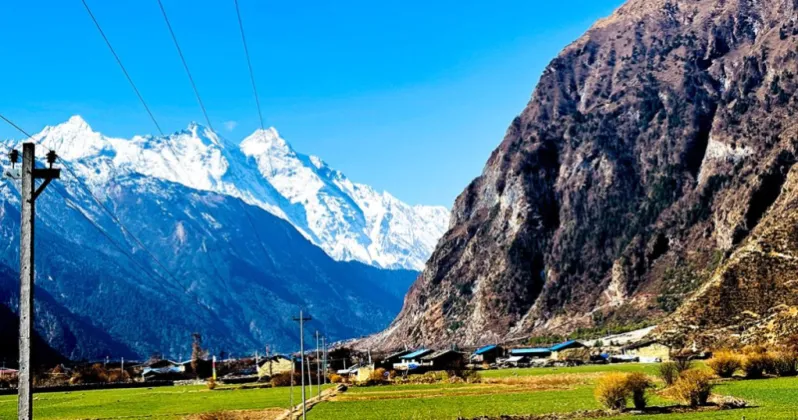
Tourists visiting Chum Valley in Gorkha were left stranded after the Budhigandaki River flooded on Sunday, damaging bridges and trekking routes and restricting movement through the area. Some of those affected were airlifted to safety by the Nepal Army on Monday morning, while others remained concerned about their ability to travel, according to local hotel entrepreneur Ganesh Karki.
Flood damage disrupts movement
The swollen river affected key routes used by tourists in the valley, with damage to bridges and trekking paths disrupting movement in the area. The resulting restrictions left visitors unable to continue their journeys as planned. The available reports did not specify how many tourists were stranded, how many bridges or route sections were damaged, or the precise locations affected.
Karki said the tourists were worried because their movement had been restricted. His account points to the immediate difficulty faced by visitors after the flood: damaged crossings and trekking routes limited their ability to move through the area. The reports did not provide further details about the tourists’ planned destinations or how long they had been in Chum Valley before the flooding.
Nepal Army airlifts some tourists
The Nepal Army carried out an airlift on Monday morning, bringing some of the stranded tourists to safety. The operation followed the disruption caused by the river flooding on Sunday. The reports did not say how many people were airlifted, where they were taken, or whether additional flights were planned.
The airlift provided a way out for some visitors whose movement had been affected by damage on the ground. However, the available information does not clarify the situation for every tourist in the valley or indicate whether all stranded visitors were able to leave. Karki’s comments describe ongoing concern among tourists over the restrictions on their movement.
Tourists’ travel plans affected
The incident disrupted travel in Chum Valley by affecting both bridges and trekking routes. With those routes damaged, tourists faced constraints on moving through the area, while the airlift addressed the needs of at least some of them. The reports did not provide details about the condition of individual routes, the extent of the bridge damage, or when normal movement might resume.
The flooding therefore left visitors dependent on the available means of safe movement while access through the valley was disrupted. The information reported so far establishes that the river rose on Sunday, that bridges and trekking routes were damaged, and that some tourists were flown to safety the following morning. It does not give a total number of affected visitors or a full account of the condition of the routes after the flood.
For tourists in Chum Valley, the immediate concern was the restriction on travel, Karki said. The Nepal Army’s Monday morning airlift brought some people to safety, but the reports available did not confirm whether the operation covered everyone affected. Further details about the number of tourists, the damage and the restoration of movement were not provided.