
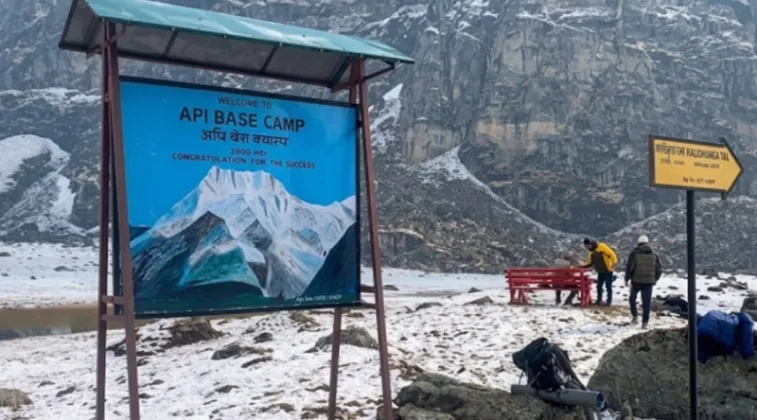
The three-day Api Himal Tourism Festival 2083 began on November 3 at Pilkand, in the Api Himal Base Camp area of Api Himal Rural Municipality-1 in Darchula, opening a fresh push to develop tourism in one of Nepal's most remote Himalayan regions. Organised by Api Himal Rural Municipality, the festival is intended to promote the Api Himal area by highlighting its Himalayan landscapes, lakes, caves, alpine pastures and cultural heritage, while also raising awareness of the little-known destination among domestic and international travellers.
A Festival at the Foot of Api Himal
The choice of venue is central to what organisers are trying to achieve. By staging the event at Pilkand, within the Api Himal Base Camp area, the rural municipality has placed the festival directly amid the scenery it hopes to market, rather than in a more accessible district headquarters or urban centre.
According to a report by Onlinekhabar, the festival began on November 3 and will run for three days, with Api Himal Rural Municipality itself taking the lead in organising the programme. The setting sends a clear message that the Api Himal region is a destination in its own right, combining high-mountain terrain with natural and cultural attractions that remain unfamiliar to much of the travelling public.
Showcasing Nature and Heritage
At the heart of the festival's promotional pitch are the natural features that define the Api Himal region. Organisers have singled out the area's key attractions, which include:
- Himalayan landscapes
- Lakes
- Caves
- Alpine pastures
- Cultural heritage
Together, these give the region a varied tourism profile. Dramatic mountain scenery anchors the destination's identity, while the lakes and caves offer additional points of interest for visitors, and the alpine pastures reflect the traditional grazing grounds that shape life in the high country. The range of attractions means the region can appeal to more than one kind of traveller, rather than resting on its mountain views alone.
Cultural heritage carries equal weight in the festival's framing. The event is being used as a platform to present the heritage of the Api Himal area alongside its natural features, an approach that reflects the understanding that tourism in the region must rest on the culture of its communities as much as on its scenery. For a rural municipality staging an event of this kind, the combination is intended to present Api Himal as a rounded destination rather than a single-attraction site.
Reaching Domestic and International Travellers
A stated purpose of the festival is to raise awareness of the remote area among domestic and international travellers. The Himalayan Times reported that the event is being advanced as a way of developing mountain tourism in Darchula through the Api Himal festival, placing the district within the wider conversation about destinations beyond Nepal's better-known tourism routes.
The emphasis on awareness speaks to the practical challenge facing promotion in far-flung areas. Destinations that lack name recognition struggle to draw visitors no matter what they offer, and festivals such as this one are designed to close that gap by generating attention around the region and encouraging travellers to consider it. For Api Himal Rural Municipality, the three-day programme represents a direct effort to introduce its area to potential visitors who may never previously have thought of Darchula as a travel destination.
Holding the festival at the base camp area reinforces that aim. Visitors and participants attending the event are able to experience the landscapes, lakes, caves and pastures firsthand, turning the festival from a simple promotional exercise into an opportunity for travellers to see the region's offerings in person.
Local Government Leading the Promotion
The festival also underlines the role local governments have assumed in promoting tourism within their own territories. Rather than depending on outside promoters, Api Himal Rural Municipality has organised the event itself, using the festival to market the natural and cultural assets of Api Himal Rural Municipality-1 and the wider region to a national and international audience.
Organisers hope that by bringing the festival to Pilkand and the Api Himal Base Camp area, they can build recognition for the region as a destination defined by its Himalayan landscapes, lakes, caves, alpine pastures and living heritage. As the three-day programme continues, the event stands both as a celebration of what the Api Himal region has to offer and as a deliberate attempt to secure its place on the itineraries of domestic and international travellers.


