
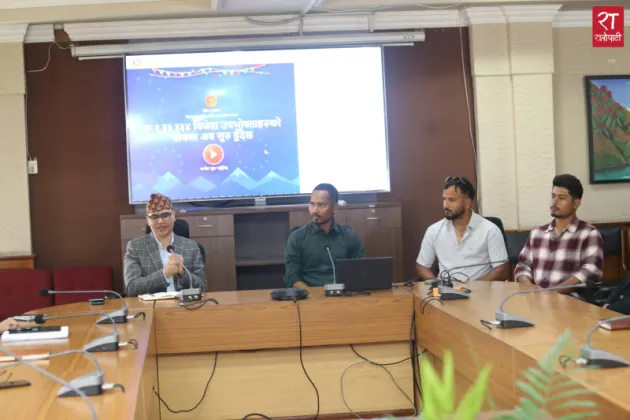
The Inland Revenue Department on Monday announced 16 winners under the federal government's Taxpayer Incentive Gift Programme, drawing the recipients from consumer transactions made between Kartik 1 and Kartik 15. One winner claimed the bumper prize of Rs 1 million, while the other 15 each received Rs 100,000 (Rs 1 lakh), according to reports published by RatoPati, Aaja ko Artha and Nepal Lead. The announcement puts a fresh spotlight on a scheme built around one simple habit: asking for a bill when buying goods and services.
A Rs 415 Purchase Turns Into a Rs 1 Million Prize
Perhaps the most striking detail to emerge from Monday's announcement is the size of the winning transaction. As one report noted, the recipient of the Rs 1 million bumper prize had purchased goods worth just Rs 415. In other words, a bill covering a purchase of a few hundred rupees was enough to secure a windfall worth well over two thousand times the original amount spent.
The anecdote is the kind of story that spreads quickly in a market where many consumers still walk away from the counter without a receipt. It captures the core promise of the programme: the value of the bill does not decide who wins, the act of taking a documented bill does. For this winner, a routine shopping trip has produced the largest payout the scheme offers.
Equal Odds, Whatever the Bill
For shoppers, the outcome underlines that any valid transaction stands a chance in the draw, whether it covers a small grocery run or a large electronics purchase. The 15 other prizes of Rs 100,000 each spread the rewards across a wider group of bill-holding consumers rather than concentrating everything in a single jackpot, giving participants multiple routes to a payout in this round.
How the Winners Were Selected
The department drew this round of winners entirely from transactions recorded during the first half of Kartik, the seventh month of the Nepali calendar that runs from roughly mid-October to mid-November. The Kartik 1 to Kartik 15 window typically overlaps with one of the busiest stretches of the shopping year, as households make festive and seasonal purchases and everyday spending picks up.
Tying the draw to a defined two-week window keeps the selection process recent and allows the department to publish results while the purchases are still fresh in consumers' minds. The department announced the list of 16 winners on Monday, with the prize money allocated as follows:
- Bumper prize: Rs 1 million for one winner
- Cash prizes: Rs 100,000 (Rs 1 lakh) each for 15 winners
- Selection period: transactions made between Kartik 1 and Kartik 15
- Announcement: made on Monday
The structure, one headline prize supported by a broader set of smaller awards, keeps attention fixed not only on the jackpot but on the fact that many bills can win something. With 16 names announced from a single half-month window, shoppers who took bills during Kartik had a realistic sense that the scheme touches ordinary purchases, not just rare outliers.
Why the Government Pays Shoppers to Take Bills
The Taxpayer Incentive Gift Programme rests on a straightforward premise: when customers demand bills, businesses find it harder to keep sales off the record. Every receipt taken at the counter creates a paper trail that tax administrators can check against what a business reports, making it easier to identify under-declared revenue and bring more transactions into the formal, documented economy.
By turning bill-taking into a potential cash windfall, the government is attempting to change everyday behaviour at the point of sale. Shoppers who might otherwise wave the seller on now have a standing financial reason to ask for the receipt, while businesses that prefer informal cash sales face customers who insist on documentation. The rationale is that wider bill compliance broadens the base on which taxes are assessed, an outcome that outweighs the cost of the prizes themselves.
Monday's announcement offers a public demonstration of that logic. A shopper who spent Rs 415 is now Rs 1 million richer, and 15 others are each Rs 100,000 better off, all through transactions they would have made anyway. For the Inland Revenue Department, few arguments for asking for a bill are likely to be as persuasive as that arithmetic, and the 16 winners now stand as living proof of what a single receipt can be worth.


