
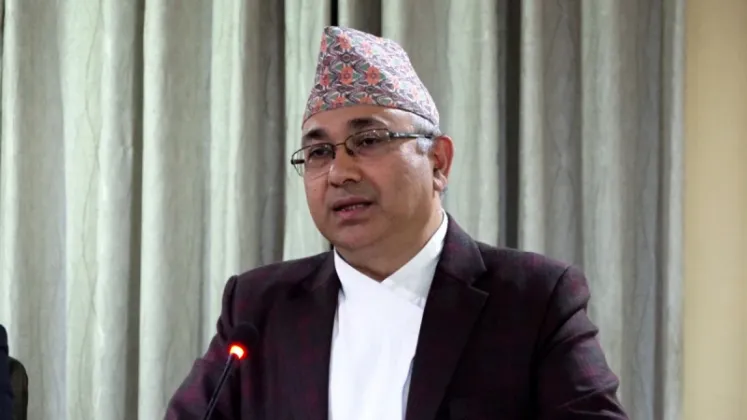
Supreme Court Justice Hari Prasad Phuyal has gone on leave for three consecutive days of the Nepali month of Kartik, staying away from the bench on the 17th, 18th and 19th of the month, according to sources at the Supreme Court in Kathmandu. The confirmation of the leave comes at a delicate moment for Nepal's apex court, as questions have been raised about the justice's contacts and meetings with Inam Sapkota, described in reports as an alleged middleman. Justice Hari Prasad Phuyal has already issued a clarification on the matter, stating that it was he who filed a complaint after Sapkota was arrested, and the episode continues to draw attention in legal and public circles.
Three Days of Leave Confirmed by Supreme Court Sources
According to Supreme Court sources, Justice Hari Prasad Phuyal is on leave for Kartik 17, 18 and 19. Kartik is the seventh month of the Bikram Sambat calendar used in Nepal and generally runs from around mid-October to mid-November, which places the three dates in question in the first half of November. The information about the leave was reported by Pradesh Khabar, citing sources at the court.
While leaves by judges are a routine feature of court administration, the timing of this particular confirmation has drawn special attention. It arrives while the justice remains a subject of public questioning over his reported contacts and meetings with Sapkota, and while his clarification on those links is still being discussed. A judge who is on leave does not sit on the bench or hear cases during that period, so the three dates effectively take Justice Phuyal away from judicial proceedings. The sources cited in the reports confirmed the dates of the leave, but no separate public statement accompanying the leave was cited in the reports.
The key points of the development can be summarised as follows:
- The leave: Justice Hari Prasad Phuyal is on leave for Kartik 17, 18 and 19.
- The source: Supreme Court sources confirmed the dates of the leave.
- The controversy: Questions have been raised over the justice's contacts and meetings with alleged middleman Inam Sapkota.
- The response: Justice Phuyal has issued a clarification, stating that he filed a complaint himself after Sapkota was arrested.
The Clarification: Complaint Filed After Sapkota's Arrest
At the centre of the debate is the clarification issued by the justice. In it, Justice Hari Prasad Phuyal stated that he had filed the complaint himself after Inam Sapkota was arrested. The statement is significant because it frames the justice's connection to Sapkota as that of a complainant who approached the authorities following the arrest, rather than leaving the nature of their dealings unexplained.
The clarification has already been made public, as indicated by the confirmation that the justice "has already issued" his explanation on the matter. That places his own account on the record before, or at least alongside, the news of his three days of leave. For a sitting justice of the Supreme Court, whose conduct attracts heightened public interest, putting such an explanation forward is a direct response to the questions that have been circulating about his links with the alleged middleman.
Questions Raised Over Contacts and Meetings
The questions that have been raised concern the justice's contacts and meetings with Inam Sapkota, a figure described in the reports as an alleged middleman. The matter has gained traction in the wake of Sapkota's arrest, the very event that the justice referenced in his clarification when he said the complaint in question was filed by him after the arrest.
As of the reports available, the scrutiny has remained focused on the nature of the contacts and meetings between the two. The questions have turned the issue into a talking point precisely because they involve a sitting justice of the country's highest court and a person labelled an alleged middleman. The justice's clarification addresses this directly, offering his explanation of how he came to engage with the authorities in the matter surrounding Sapkota, but the wider discussion has continued, and the confirmation of his leave has added a further element to the story.
Why the Development Is Being Watched
The Supreme Court of Nepal sits at the top of the country's judicial system, and the conduct of its justices, both inside and outside the courtroom, is a matter of legitimate public interest. Any question about contact between a sitting justice and an alleged middleman naturally invites scrutiny, because it touches on the independence and integrity that the judiciary is expected to uphold. It is against this backdrop that the latest confirmation is being read.
The two concrete facts on the record at this stage are the justice's clarification and his three days of leave. The clarification offers his own explanation, namely that the complaint was filed by him after Sapkota was taken into custody. The leave, confirmed for Kartik 17, 18 and 19, keeps him away from the bench for those dates. Beyond these points, the available reports do not indicate any further action by the court in connection with the matter.
For now, the episode remains defined by the information confirmed by Supreme Court sources: a sitting justice on leave for three days of Kartik, continuing questions about his contacts with alleged middleman Inam Sapkota, and a clarification in which Justice Hari Prasad Phuyal says the complaint was his own, filed after the arrest. Any further clarity on the situation will depend on what additional details or institutional responses, if any, emerge in the coming days.


