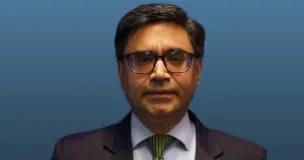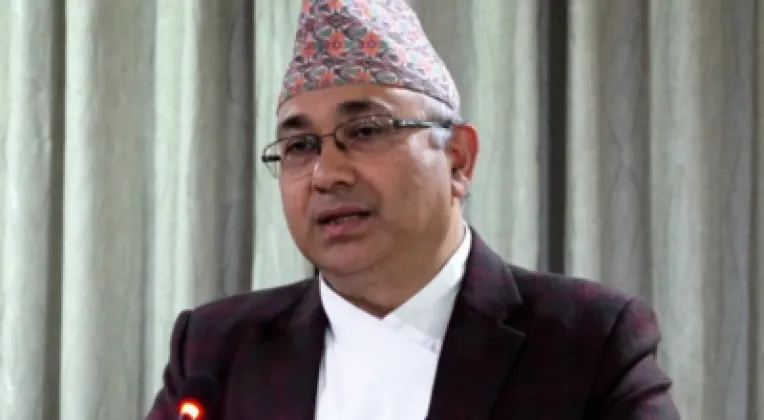
Supreme Court Justice Hari Phuyal has gone on leave from Tuesday through Friday amid a growing controversy over his alleged communication with a person under investigation for money laundering, and he is due to return to the court only after the Tihar holidays. The Supreme Court confirmed the development, with spokesperson Ashok Chhetri saying that Justice Phuyal had received approval for the leave from Chief Justice Manoj. The reports, published by Khabarhub and Online Khabar, have drawn wide attention because they place a sitting justice of the country's apex court at the center of a public debate over judicial conduct at a time when Nepal is preparing for one of its biggest festivals.
A sanctioned leave, a loaded timing
On paper, the leave follows a familiar administrative route. Supreme Court justices, like other judges and government officials, are entitled to leave, and the consent of the Chief Justice, who oversees the court's administration and assigns benches, is a standard requirement. What would ordinarily be a routine matter has, in this instance, been read through the lens of the allegations swirling around the justice.
The key details confirmed so far are as follows:
Details confirmed by the court
- Leave period: Tuesday through Friday of the current working week
- Approval: Granted by Chief Justice Manoj, according to Supreme Court spokesperson Ashok Chhetri
- Expected return: Only after the conclusion of the Tihar holidays
- Backdrop: Alleged communication with a person under investigation for money laundering
Because the sanctioned leave runs through Friday and the festival break follows, Justice Phuyal's absence from the bench will stretch well beyond the four working days covered by the approval. For a court that runs on tightly packed hearing calendars, even a routine absence requires adjustment; an absence amid controversy invites far closer scrutiny.
The controversy explained
The controversy stems from reports that Justice Phuyal allegedly maintained communication with a person who is under investigation for money laundering. Khabarhub reported that the leave comes amid the dispute over those alleged contacts. While the reports do not describe the nature, timing or substance of the communication, the mere suggestion of contact between a sitting judge and an individual facing investigation for a serious financial crime is enough, in Nepal's charged media environment, to set off debate.
The sensitivity is easy to understand. Judges are expected not only to be impartial but to be seen as impartial. Money laundering cases often involve powerful interests, and any perceived proximity between a judge and a subject of investigation risks undermining confidence in the independence of the judiciary. In Nepal, courts and the legal community have repeatedly stressed that judicial conduct, both on and off the bench, must meet the highest standard precisely because the institution's legitimacy rests on that perception.
At the same time, caution is warranted. No finding of wrongdoing against Justice Phuyal has been announced, and the reports so far stop short of saying whether the alleged communication is connected to any case pending before the Supreme Court. The court's spokesperson has confirmed only the leave and its approval, and no public comment from the justice himself on the matter has been reported.
Tihar and the road to his return
The timing of the leave is inseparable from the festival calendar. Tihar, the festival of lights, is one of Nepal's most widely celebrated holidays, and the judiciary, along with other government offices, observes an extended break around it. With Justice Phuyal's approved leave ending on Friday and the Tihar holidays following, his return to the courtroom is expected only once the festivities conclude.
That means the controversy will have time to simmer. By the time the justice is due back at the court, the public conversation around the alleged communication will have run for days, and developments ranging from clarifications to demands for investigation could have intervened. The extended break also gives the court's leadership space to consider how the matter will be handled when the bench reassembles.
What to watch next
Looking ahead, the central question is whether the episode ends with the holidays or triggers formal institutional scrutiny. Under Nepal's constitutional framework, the Judicial Council is the body empowered to look into the conduct of judges, including justices of the Supreme Court, and to recommend action where warranted. As of now, no complaint or council proceeding has been reported in connection with the allegations against Justice Phuyal.
For now, the verified facts are limited: a justice on approved leave, a spokesperson's confirmation of the Chief Justice's approval, and reports of alleged communication that remain unverified in their details. What happens after Tihar, whether Justice Phuyal quietly resumes hearings or the controversy escalates into a formal inquiry, will determine how this episode is remembered.
For the judiciary, an institution whose authority ultimately rests on public trust, the affair is a reminder of how quickly questions of judicial conduct can move from rumor to headline. The court has confirmed little beyond the leave itself, and until more is known, both the justice's return after the Tihar holidays and the broader debate over accountability will remain matters to watch.