
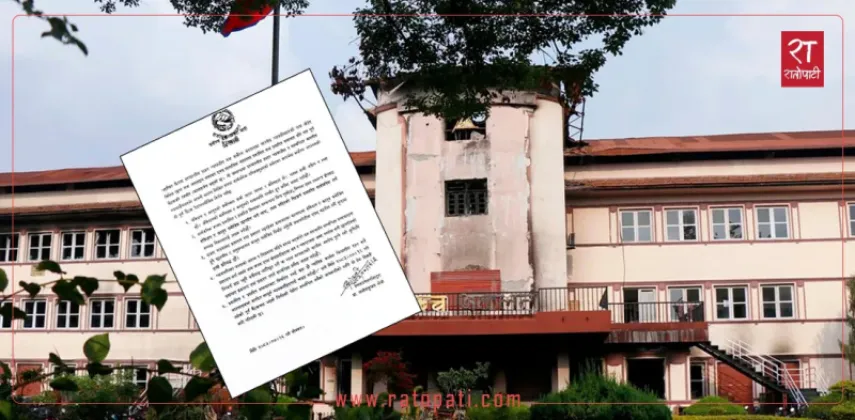
Kathmandu - The Supreme Court of Nepal on Monday issued a five-point decision expressing serious concern over media and social media reports that have named the Chief Justice and other justices of the apex court. The decision was adopted by the full bench at the court's plenary meeting and was subsequently made public. Through it, the country's highest judicial body urged the concerned authorities to conduct an impartial, independent and unbiased investigation into the matter and to make public conclusions based on facts, while stressing that no one should be stigmatised before the investigation concludes.
The announcement places the judiciary itself at the centre of the response to the reports, which have circulated in the media and across social media platforms. By speaking through the full bench, the Supreme Court has framed the issue as one that concerns not only the individuals named but the standing of the institution as a whole.
What the five-point decision says
According to the decision made public after Monday's plenary meeting, the full bench expressed serious concern over the reports naming the Chief Justice and other Supreme Court justices. The central elements of the decision, as highlighted in reports published by RatoPati and Nepal Lead, include:
- Serious concern: The bench expressed serious concern over media and social media reports that named the Chief Justice and other justices of the Supreme Court.
- Independent investigation: It urged the concerned authorities to conduct an impartial, independent and unbiased investigation into the matter.
- Fact-based conclusions: It called for the conclusions of the investigation to be made public on the basis of facts.
- No premature stigma: It stated that no one should be stigmatised before the investigation concludes.
The published details of the decision centre on these guiding commitments, which together set out how the full bench believes the matter should be handled from this point forward.
Concern over reports naming judges
The decision reflects the gravity with which the full bench views the naming of the Chief Justice and other justices in recent media and social media reports. While the decision as made public does not describe the individual reports that prompted it, its language makes clear that the bench was responding to coverage that singled out the country's top judge as well as other members of the court.
The choice to convene as a full bench and issue a formal five-point decision signals that the court regards the matter as an institutional concern. In Nepal's judiciary, the full bench, or plenary meeting, is the forum in which the justices of the Supreme Court sit collectively to deliberate on matters affecting the court, and decisions adopted there are treated as the institution's own position. That the five points were adopted at Monday's plenary and then released publicly indicates the court wanted its stance clearly on the record rather than communicated informally.
A call for an impartial, independent probe
At the heart of the decision is the demand that any investigation into the matter be impartial, independent and unbiased. The three-part formulation underscores the bench's insistence that the inquiry be insulated from pressure and from any presumption of guilt or innocence before the facts are established.
The decision pairs that demand with a parallel requirement on transparency: the concerned authorities have been urged to make public conclusions based on facts. Taken together, the two strands of the decision point to a process that is both credible in its conduct and open in its outcome, with findings shared with the public once they rest on verified facts.
It is also notable that the full bench framed its intervention as an urging of the concerned authorities rather than a directive from the court itself. The conduct of the investigation therefore remains with the authorities responsible, with the five-point decision serving as the judiciary's formal statement of expectations for how that work should proceed.
No stigma before the investigation concludes
The closing emphasis of the decision, that no one should be stigmatised before the investigation concludes, addresses directly the treatment of those named in the reports. The principle echoes the presumption of innocence and reflects the court's position that reputations should not be settled in public commentary before an inquiry has established the facts.
The decision as made public focuses on how the investigation is conducted and how those named are treated, rather than on the reports themselves. Its tone, however, conveys the bench's seriousness: the naming of the Chief Justice and other sitting justices in ongoing coverage was described as a matter of serious concern by the court's highest collective forum.
What comes next
Attention will now turn to the authorities tasked with the investigation. The full bench's decision lays out clear benchmarks against which their work is likely to be measured: independence and impartiality in the process, conclusions grounded in facts and made public, and restraint in stigmatising anyone before the probe is complete.
Until the investigation concludes and its findings are published, the five-point decision stands as the Supreme Court's formal position on a matter that touches the leadership of Nepal's judiciary. Any further developments, including the identity of the investigating authorities and the eventual conclusions, will determine how the concerns raised in Monday's plenary are resolved.


