
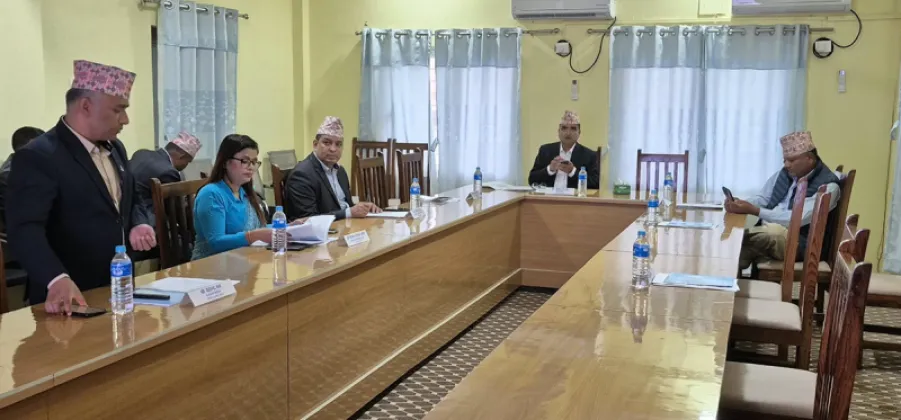
Sudurpashchim Province Chief Minister Khagaraj Bhatta has called for a fundamental change in the existing work culture of state governance and development, saying the province's path to prosperity lies in new thinking, innovation and transformative plans rather than conventional practice. Speaking at the 11th meeting of the Provincial Research and Training Council in Dhangadhi, Chief Minister Bhatta stressed the need to prepare result-oriented work plans and to ensure their effective implementation, placing delivery and outcomes at the centre of the province's development agenda.
A Direct Call to Change the Development Work Culture
Bhatta's message to the council meeting was unambiguous: the way governance and development work is carried out in the province must change. He said the existing work culture in state governance and in development activities needs to be reformed, signalling that the focus should shift from routine procedures toward meaningful results for the people of the province.
The chief minister made the remarks while addressing the 11th meeting of the Provincial Research and Training Council held in Dhangadhi, the hub of the province's administration in the far-western region. According to a report published by Nagarik News, the remarks were reported under the theme that changes are needed in the existing work culture of development.
The choice of venue gave the message added weight. The Provincial Research and Training Council is a provincial mechanism concerned with research and training, and its meetings provide a platform for the provincial leadership to set direction on how government business is studied, planned and delivered. By using the council's 11th meeting to speak about work culture, Bhatta put the emphasis on how development is done, not only on what is planned.
Result-Oriented Plans and Effective Implementation
At the heart of Bhatta's address was a two-part prescription for better governance. First, he stressed the need to build work plans that are result-oriented. Second, he underlined that such plans must be implemented effectively.
The two points, taken together, outline the chief minister's expectations for the province's development efforts:
- Plans built around results: Work plans, in Bhatta's view, should be designed with clear outcomes in mind, so that government activity translates into visible benefits across the province.
- Effective implementation: Preparing plans and policies is not sufficient on its own; he stressed that implementation must be effective if the intended results are to be achieved.
- A change in work culture: Underpinning both points is his call for change in the existing work culture of state governance and development, which he identified as necessary for progress.
The emphasis on effective implementation reflects the chief minister's broader argument that the province's challenges are not only about preparing documents, but about the culture and methods with which public work is carried out. His remarks indicate that development efforts should ultimately be measured by the results they deliver on the ground.
Prosperity Through New Thinking and Innovation
Beyond the critique of the current work culture, Bhatta struck an optimistic note about the province's future. He said Sudurpashchim can be made prosperous through new thinking, innovation and transformative plans, presenting a forward-looking vision in which fresh ideas and creative approaches replace established habits.
Sudurpashchim is one of Nepal's seven provinces, covering the far-western region of the country across nine districts, with its government based in Dhangadhi in Kailali district. The chief minister's framing placed the accent on possibility: with innovative and transformative planning, he said, the province can chart a course toward prosperity.
The message ties together the other strands of his address. In his telling, changing the work culture, preparing result-oriented plans and implementing them effectively are not separate tasks but parts of a single approach, one in which new thinking drives both the design and the delivery of development.
A Platform for Direction-Setting
The 11th meeting of the Provincial Research and Training Council served as the platform for these remarks, and the setting was fitting. As a provincial body focused on research and training, the council sits at the intersection of knowledge and administration, areas that bear directly on the quality of planning and implementation that Bhatta emphasised in his address.
The chief minister's appearance before the council also underscores the importance his government appears to attach to research, training and institutional learning as inputs into governance. His message to the meeting was, in effect, a call for the province's institutions to support a new way of working: result-oriented, innovative and transformative.
As reported by Nagarik News, Bhatta's remarks at the Dhangadhi meeting centred on a single theme: that the existing work culture of state governance and development must change if Sudurpashchim is to realise its potential. Result-oriented planning, effective implementation, innovation and transformative plans were presented as the building blocks of that change, and of a prosperous Sudurpashchim.


