
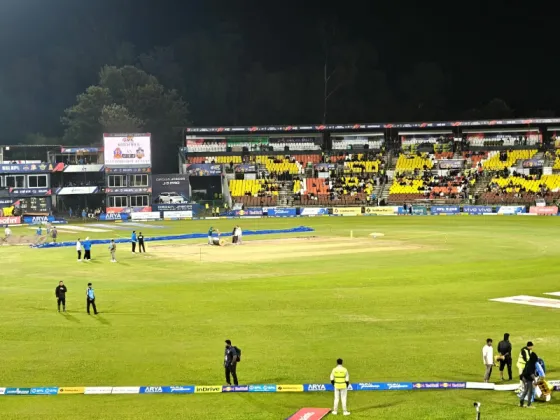
The fixture between Sudurpaschim and Biratnagar has been dramatically scaled back to a five-over-a-side contest after rain disrupted play, with the revised format confirmed on Saturday. What was expected to be a full-length battle between the two sides will now be a sprint, with each team receiving just five overs at the crease and five overs in the field. The match forms part of the ongoing cricket competition, and the shortened arrangement ensures that fans will still get a result from the fixture provided the weather holds, according to Nepal Views.
The confirmed details around the revised contest are as follows:
- Rain affected play and forced a reduction in the length of the match.
- The revised format was confirmed on Saturday.
- Both Sudurpaschim and Biratnagar will now compete over five overs each.
- The fixture remains part of the ongoing cricket competition.
Rain forces a dramatic revision to the playing conditions
Rain interruptions are among the most frustrating features of the sport, and they have now reshaped this fixture entirely. When wet weather prevents play from proceeding on schedule, match officials typically take stock of the situation, allow the groundstaff time to work on the outfield and the pitch with covers and super soppers, and then recalculate how many overs can realistically be completed within the remaining time. That process has ended with a five-over format being agreed for this clash, a decision that was confirmed on Saturday.
A five-over match is about as compressed as cricket gets while still resembling the game. Each innings lasts just thirty legal deliveries, which means there is virtually no time for batsmen to settle in or for bowlers to find their rhythm through a long spell. Every delivery carries a disproportionate amount of weight, and a single expensive over or a quick flurry of boundaries can swing the entire match. For the players, the mental adjustment is significant: the usual building blocks of a longer innings, such as rotating the strike and pacing a knock, give way to immediate aggression from the very first ball.
What a five-over contest means for both teams
The reduction to five overs apiece changes the tactical calculus completely for Sudurpaschim and Biratnagar. In such a short format, captains generally want their most destructive hitters at the top of the order, because there is no time for a traditional middle-order rebuild. The toss and the reading of conditions become even more decisive than usual, since a damp pitch or a wet outfield, common after rain, can influence whether bowling first offers an early advantage.
Several practical realities define matches of this length:
- Bowling changes must be surgical, as playing conditions typically restrict how many overs any single bowler can deliver in such a shortened innings.
- Fielding sides cannot afford to wait for mistakes, because there simply are not enough deliveries to apply sustained pressure.
- Batters are effectively batting inside a permanent powerplay environment, with boundary-hitting at a premium throughout.
- One dropped catch, one misfield, or one no-ball can decide the outcome in a way that would rarely be true in a longer format.
For squads that have prepared with a longer match in mind, the switch demands rapid replanning. Batting orders are shuffled, the role of the all-rounder becomes even more valuable, and captains must be prepared to make bold calls within the first few minutes of play.
Weather remains the wildcard
Even with the five-over format locked in, the weather will continue to loom over the fixture. Should further rain arrive before or during the revised contest, competition playing conditions generally provide for further reductions in overs or for calculations to adjust targets if one innings is curtailed. In the worst case, continued rain could deny both sides the chance to complete even the shortened match, leaving the teams to share the points or accept whatever outcome the tournament regulations prescribe for abandoned fixtures.
The groundstaff and officials, having already worked to make the playing area ready, will be watching the sky as closely as the players. The conditions after rain also affect the game itself: a moisture-laden outfield slows the ball down and makes boundaries harder to find, while bowlers may benefit from early movement through the air or off the surface before the pitch settles.
Stakes in the wider competition
Although the format has been squeezed, the fixture still carries full significance within the ongoing competition. Shortened matches have a way of unsettling expectations, because the elimination of the middle overs strips away the advantage that more settled, methodical sides usually enjoy. A five-over contest rewards the team that can produce a burst of wickets or a blitz of boundaries in the moment, and that unpredictability gives both Sudurpaschim and Biratnagar a genuine opportunity to seize momentum regardless of how their campaigns have unfolded so far.
For supporters of both sides, the message from Saturday's confirmation is straightforward: the match is on, but it will be brief, explosive, and decided in a hurry. Thirty balls per side will determine the result, and in a contest compressed to that extent, the team that adapts fastest to the revised format and the damp conditions will hold the decisive edge. Fans following the ongoing competition will be watching closely to see which of these two sides makes the most of a chance that could barely be shorter.


