
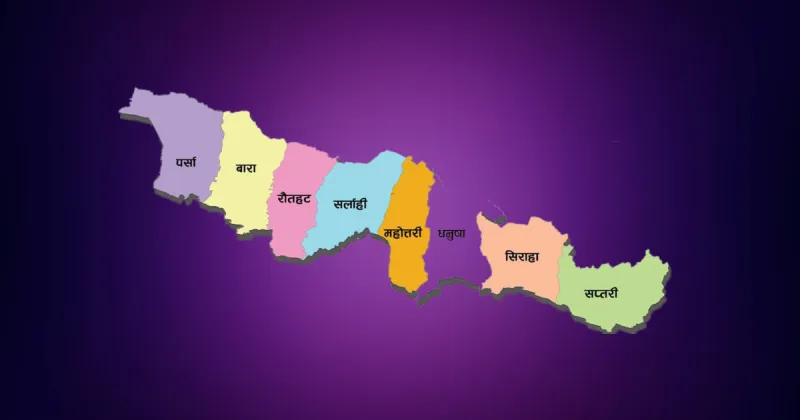
Stakeholders have urged that the safe housing programme be expanded to all eight districts of Madhes Province so that poor and economically weak communities across the southern plains can gain access to secure housing. The call was raised at a discussion held in Janakpurdham, the provincial capital, on Saturday, where participants also argued that building safe homes is only part of the answer. According to those present, families must additionally be able to tap housing finance, micro-insurance and financial and digital literacy if housing security is to become a reality for deprived households.
A call to cover every district of Madhes
The central message from the Janakpurdham meeting was that the safe housing programme should not remain confined to selected areas but should reach vulnerable families throughout the province. Madhes, which lies in the Terai plains along Nepal's southern border with India, is made up of eight districts:
- Saptari
- Siraha
- Dhanusha
- Mahottari
- Sarlahi
- Rautahat
- Bara
- Parsa
Stakeholders at the discussion said the programme's reach should extend across all eight of these districts so that poor and economically weak communities can access secure housing wherever they live. In their assessment, safe housing should be treated as a province-wide need rather than an intervention available only in some places, with the benefits of the programme made accessible to families who currently have the fewest resources to protect themselves.
The demand was voiced in Janakpurdham, which falls in Dhanusha district and serves as the headquarters of Madhes Province, making it a frequent venue for provincial-level discussions on development and social issues.
Beyond construction: finance, insurance and literacy
Alongside the appeal for wider geographic coverage, speakers in Janakpurdham stressed that constructing safe houses by itself will not ensure housing security. They said that expanding access to housing finance and micro-insurance, together with financial and digital literacy, would help guarantee that deprived families are genuinely protected. In other words, the stakeholders presented safe homes as one element of a broader package of support.
Housing finance and micro-insurance
For economically weak families, the cost of building or improving a house is frequently the largest barrier to safe shelter. This is where the stakeholders placed housing finance: without credit and financing mechanisms that poor households can realistically use, a safe housing drive risks passing over the very communities it is meant to serve. Micro-insurance was raised in the same breath, as a form of protection that can help deprived families safeguard their homes and belongings when hardship strikes, rather than seeing years of effort wiped out by a single shock.
Financial and digital literacy
The third component highlighted in Janakpurdham was financial and digital literacy. Stakeholders said that access to finance and insurance only translates into real security when families know how to use these tools, whether that means managing loans and savings or navigating digital platforms and services. Building this capability among deprived communities, they argued, belongs in the same package as building safe homes itself.
Housing security for deprived families
The overall argument advanced at the discussion was that housing security for the most deprived households rests on several supports working together: safe construction, affordable finance, protective insurance, and the knowledge needed to use financial and digital services. If any one of these is missing, the others become harder to use, which is why stakeholders bundled them together in their appeal for an expanded programme.
Participants framed the issue around the province's poor and economically weak communities, the groups they identified as the intended beneficiaries of a properly expanded safe housing programme. Their message in Janakpurdham was that access to secure housing should not depend on where a family lives within Madhes or on its ability to pay, and that complementary tools such as finance, insurance and literacy support are what turn a newly built house into lasting housing security.
The discussion and the call for expansion were reported by Nepali media outlets including Nagarik News and Khabarhub, whose coverage of the Janakpurdham event noted both the emphasis on reaching all eight districts of Madhes Province and the push for a wider package of housing finance, micro-insurance and literacy support for deprived families.


