
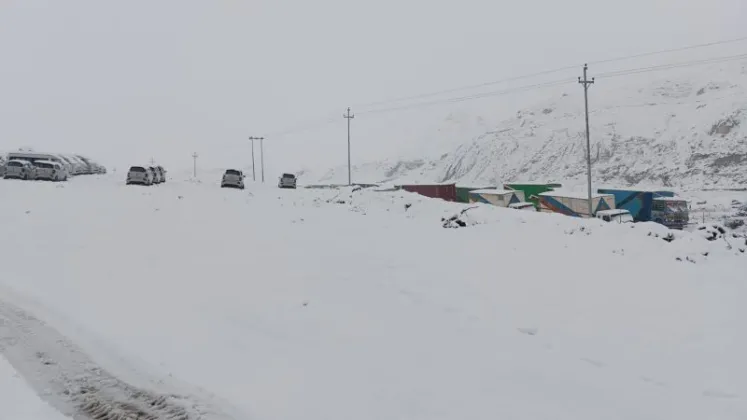
Six Indian tourists, two women and four men, have gone missing in Nepal's Dolpa district after heavy snowfall, losing contact near a high Himalayan pass in She-Phoksundo Rural Municipality, according to local media reports. The disappearance has triggered a search and rescue operation in one of the country's most remote high-altitude regions, but efforts are being hampered by harsh weather and difficult terrain, and authorities have requested a helicopter to help locate the missing group.
What Is Known So Far
The available details of the incident, as reported by Thaha Khabar and Pradesh Khabar, are as follows:
- Six Indian tourists, including two women and four men, are missing in Dolpa district.
- Contact with the group was lost near a high Himalayan pass in She-Phoksundo Rural Municipality.
- Heavy snowfall had hit the area around the time the tourists went missing.
- Search and rescue efforts are under way but are facing significant difficulties.
- A helicopter has been requested to support the search and rescue operation.
The reports did not immediately provide the names of the missing tourists, the exact pass where contact was lost, or the route the group had been following. Those details are expected to become clearer as the search operation progresses and officials on the ground are able to verify information.
Contact Lost Near a Snow-Covered Pass
According to the reports, the group lost contact while traveling near a high mountain pass in She-Phoksundo Rural Municipality after heavy snowfall blanketed the area. Passes at high altitude are among the most exposed points on any trekking route, and fresh snowfall can quickly bury trails, obscure markers, and turn already steep terrain into dangerous ground.
Weather conditions in the trans-Himalayan districts of western Nepal can change rapidly, and snow can fall heavily even outside the peak of winter. When visibility drops at a pass, trekkers can lose the route within minutes, and deep snow slows movement to the point that groups can become stranded between settlements. Cold temperatures at such altitudes add further risk, as prolonged exposure can lead to hypothermia and frostbite, while the thin air increases the danger of altitude sickness for anyone forced to wait out bad weather in the open.
The loss of contact near a pass after snowfall has therefore raised concern among those coordinating the response, since such locations are difficult to reach quickly on foot even in fair conditions.
Rescue Efforts Hampered, Helicopter Requested
The search operation is facing serious obstacles. Continuing snowfall, freezing conditions, and the rugged landscape of the area have made it difficult for teams to move through the search zone, according to the reports. The very conditions that the tourists went missing in are the ones now slowing the effort to find them.
Given the difficulty of reaching the location overland, authorities have requested a helicopter for the search and rescue operation. Aerial searches are often the only practical way to cover high passes and remote valleys in Dolpa within a short window of time. However, helicopter operations in the mountains are themselves dependent on the weather, and pilots require sufficient visibility to navigate between ridges and land safely at altitude. Any break in the weather is therefore critical for the operation to move forward.
Communication presents a further challenge. Mobile coverage across much of Dolpa is limited, and contact with trekking groups in the district is often only possible from particular points along the route. This can delay efforts to establish where a group was last seen and in what condition, complicating decisions about where to concentrate search resources.
Dolpa: A Popular Destination With Demanding Terrain
She-Phoksundo Rural Municipality lies in Dolpa, the largest district in Nepal by area, situated in the remote Karnali Province. The area is renowned among domestic and international visitors alike and is widely described as one of the country's popular tourist destinations. It is home to Phoksundo Lake, the deepest lake in Nepal, which sits within the Shey Phoksundo National Park and is famous for its striking turquoise waters surrounded by cliffs and snow-capped peaks.
Beyond the lake, the district is the gateway to the Upper Dolpo region, a trans-Himalayan area that lies in the rain shadow of the Dhaulagiri range and is known for its Tibetan-influenced culture, ancient monasteries such as Shey Gompa, and trekking routes that cross some of the highest passes open to trekkers in Nepal. The region's remoteness is part of its appeal, but it also means that trails are long, settlements are sparse, and help can be days away on foot.
These characteristics make timely rescue particularly challenging when trekkers run into trouble. In snowfall, trails over the passes can disappear entirely, and even local herders and guides familiar with the routes generally avoid crossing them until conditions improve. The incident involving the six Indian tourists underscores the risks that heavy and unexpected snowfall can pose to travelers moving through high passes in the area.
Search Operation Continues
As of the latest reports, the six missing Indian tourists have not been located, and rescue teams remain engaged in the search while awaiting the support of a helicopter. Further details about the group and the circumstances in which contact was lost have yet to be confirmed by officials.
The situation remains fluid, and updates are expected as weather conditions allow rescuers to expand their operation. The case has again highlighted the need for trekkers and travelers in Nepal's high-altitude districts to monitor weather conditions closely, remain flexible with their itineraries, and avoid crossing high passes when snowfall is forecast or under way.


