
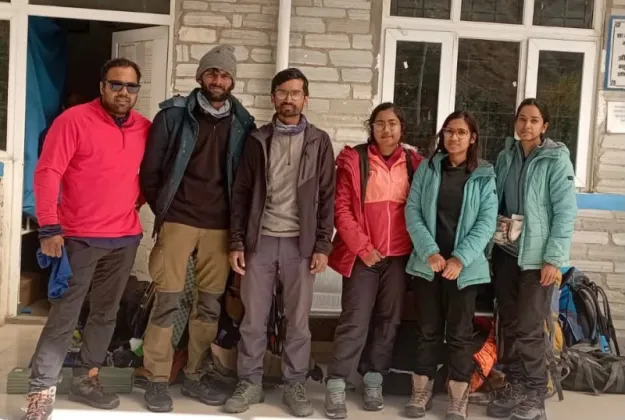
Six Indian tourists have been fined after entering Nepal's restricted Upper Dolpa region without the special permit the area requires, and after pressing on with their journey despite official warnings about adverse weather. The group was eventually rescued by helicopter on Monday from She-Phoksundo Rural Municipality-4 in Dolpa district, a remote, high-altitude corner of Karnali Province in the country's north-west where they had been traveling without authorization.
According to Nagarik News, the tourists were fined and further action was taken against them once they were brought to safety. The reports did not specify the exact amount of the penalty, but the case has cast a fresh spotlight on the risks travelers take when they enter restricted Himalayan regions outside the permit system, and when they disregard advisories issued for their own protection.
Airlifted from She-Phoksundo
The helicopter rescue on Monday lifted the six Indians out of She-Phoksundo Rural Municipality-4, one of the most isolated parts of Dolpa. Settlements in this belt lie scattered across high valleys, linked to the outside world by trails that cross steep terrain; when snow falls or storms close in, those routes can become difficult or impassable, leaving travelers in the upper reaches of the district with little option but to wait for clearer conditions or an airlift.
That is precisely the scenario the group had been warned about. The tourists had been advised against traveling into the area because of the poor weather, but they went ahead regardless, undertaking what authorities described as a risky journey. By Monday, the situation had reached the point that a helicopter was needed to bring them out of the municipality.
Action for entering without a permit
The second strand of the case concerns the tourists' unauthorized entry. Upper Dolpa falls within Nepal's restricted areas, a designation covering parts of the Himalaya where foreign nationals cannot simply arrive and move about freely. Visitors are required to obtain a special area permit, on top of the regular paperwork for the wider Dolpa region, so that the authorities have a record of who is traveling through territory where rescue capacity and medical support are limited.
Entering without that permit is a violation, and the six tourists are now facing the consequences. The fine serves as a signal that the rules governing restricted regions are enforced even when, as in this case, the unauthorized journey ends in a rescue operation. Airlifting travelers out of remote valleys is expensive and logistically demanding, and officials have repeatedly stressed that those who ignore both permit requirements and weather advisories endanger not only themselves but also the rescue crews and local resources that must be mobilized on their behalf.
What the rules expect of visitors
For anyone planning a trip toward Upper Dolpa, the basic expectations are straightforward:
- Obtain the special restricted-area permit in advance, through the official process, before setting foot in the upper region
- Follow weather and safety advisories issued by local authorities, particularly during periods of deteriorating conditions
- Travel through approved arrangements so that authorities know where visitors are and can reach them if trouble strikes
The six Indian tourists, by their own account of the journey, skipped all three safeguards at once.
A warning for high-altitude tourism
The case comes against the broader backdrop of Dolpa's growing appeal among adventure travelers. The district is home to the strikingly blue Phoksundo Lake and to the routes that lead from the She-Phoksundo area toward Upper Dolpa's centuries-old monasteries and Tibetan-influenced villages, landscapes that have drawn trekkers and filmmakers to the region for decades. Nepali Views and Pradesh Khabar both reported on the fines imposed after Monday's rescue.
But the same remoteness that gives Upper Dolpa its allure also makes it unforgiving. Altitude, thin air, sudden snowfall and long distances from medical help mean that poor decisions are punished quickly, and travelers who set out against official warnings often discover that the narrow trails cut into hillsides offer no easy way back. Weather in the high valleys can shift within hours, turning a manageable journey into a fight for safety, which is how trips that begin as sightseeing can end with a helicopter overhead.
Advisories against travel are issued for good reason, and this episode underlines that they carry weight. For now, the six Indian visitors are safe and back from the mountains. The fine they carry home, however, is a pointed message from the authorities to every traveler eyeing the restricted valleys of Upper Dolpa: the permits exist, the warnings are issued in earnest, and ignoring either carries a real and immediate cost.


