
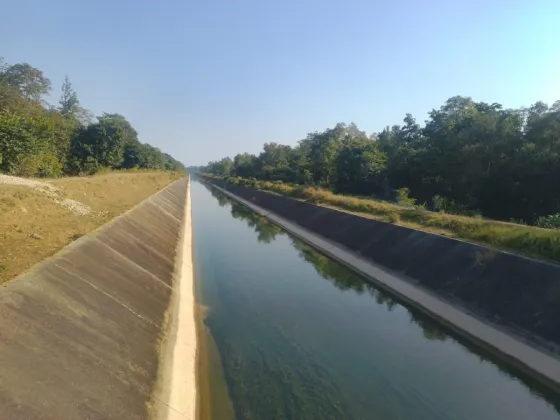
The Sikta Irrigation Project in Banke has reached 51 percent progress and begun collecting information on farmers receiving irrigation in its command area, Project Director Raju Acharya said. The project is preparing a list of farmers served through branches and sub-branches of the Eastern and Western Main Canals, with the stated aim of improving water distribution and management and ensuring irrigation reaches its intended beneficiaries.
Farmer data collection begins
The information-gathering work focuses on farmers who are currently receiving irrigation services through the canal network. Acharya said the project is preparing a list of those beneficiaries. The work is intended to give the project a clearer record of who is being served across the command area, rather than relying only on the project’s overall construction progress as a measure of delivery.
The collection covers service through both the Eastern and Western Main Canals and their branches and sub-branches. Those routes are the channels through which farmers in the command area currently receive irrigation, according to the project. Recording beneficiaries connected to these parts of the network is intended to support decisions about how water is distributed and managed.
The project has linked the data exercise to improving the reach of irrigation services. A beneficiary list can help identify the farmers who are currently receiving water through the system and provide a basis for managing service delivery. The stated goal is to ensure that irrigation reaches the intended beneficiaries. The project has not provided further details in the available update on the number of farmers being recorded, the timetable for completing the list or how the information will be used beyond improving distribution and management.
Project progress and irrigation services
The 51 percent progress figure represents the reported status of the Sikta Irrigation Project, which is under construction in Banke and classified as a national pride project. The farmer data collection is a separate but related part of the update: it concerns the people receiving irrigation through the existing canal branches and sub-branches. Together, the two details describe both the project’s progress and its attention to how services are delivered in the command area.
The reported figure does not, by itself, explain how much of the canal network is operational or how many farmers have access to irrigation. The project update instead identifies farmers currently receiving services through the two main canals’ branches and sub-branches as the focus of the listing exercise. No additional figures on the command area, beneficiary numbers or the proportion of farmers served were included in the information released.
Focus on managing water distribution
By collecting beneficiary information, the project aims to strengthen water distribution and management. The stated purpose is practical: to help ensure that services reach the people they are intended for. The list is being prepared around current recipients of irrigation, giving the project a record tied to the service routes that farmers use.
Acharya’s update places the data collection within the wider work of the Sikta project, which remains under construction at 51 percent progress. The project’s next steps on the list, including when collection will be completed or whether it will be updated over time, were not specified in the available information. For now, officials have described the effort as a way to improve the management of irrigation and make service delivery more accurately directed to beneficiary farmers in the command area.


