
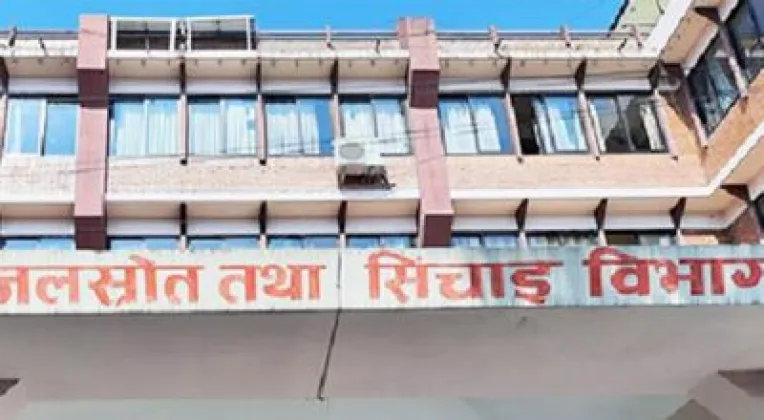
Two of Nepal's flagship irrigation schemes have brought canal water to farmland that previously lacked it. According to data from the Department of Water Resources and Irrigation, recorded up to the end of the Nepali month of Bhadra, the Sikta Irrigation Project in Banke has extended surface irrigation to an additional 100 hectares, while the Babai Irrigation Project in Bardiya has added a further 50 hectares. Taken together, the two schemes, both designated by the government as projects of national pride, have expanded irrigation services to 150 hectares of new land. The figures were reported by Khabarhub, RatoPati and Nepal Press.
Measured gains in Banke and Bardiya
The department's figures, compiled up to the end of Bhadra, which falls around mid-September and marks the second month of the Nepali financial year, capture expansion work carried out by the two schemes in the western Tarai. The breakdown of the newly irrigated area is as follows:
- Sikta Irrigation Project, Banke: 100 hectares brought under surface irrigation
- Babai Irrigation Project, Bardiya: 50 hectares brought under surface irrigation
- Combined new area irrigated: 150 hectares
Surface irrigation, the method employed by both projects, refers to water diverted from rivers and delivered to fields through canal networks, as distinct from systems based on pumping groundwater. Banke and Bardiya lie in the Tarai plains, where agriculture anchors household incomes and where the reach of a canal system often decides how much land can be cultivated with confidence beyond the monsoon season. For farmers on the newly covered land, access to surface irrigation reduces dependence on rainfall and supports more reliable planting decisions in both the main and secondary growing seasons.
What the figures represent
The department's data counts land brought under irrigation for the first time, not areas that were already receiving water. The totals are described as services extended to new areas, meaning that farmers on the 150 hectares in question now have access to canal water where they previously did not. For the projects themselves, the numbers function as a physical progress indicator, one of the yardsticks by which national pride projects are tracked and reported through the financial year. Presenting progress in hectares of new irrigation also allows comparisons between projects and between reporting periods, which is why the department's regular updates are followed closely by planners and by the media alike.
Sikta moves ahead with procurement
Alongside the irrigation gains, the Sikta project has advanced on the procurement front. According to the available information, the project has issued four bids under a cost estimate of Rs 540.3 million.
In Nepal's public procurement system, issuing a bid notice is the stage at which a project invites contractors to compete for construction or supply work, with the cost estimate serving as the benchmark against which bids are assessed. Four bids issued under a single estimate of Rs 540.3 million represent a substantial package of work being put to the market. The tenders point to further contracting activity at Sikta in the period ahead, complementing the physical expansion recorded in the department's data and signalling that the project intends to keep building on the gains reported so far.
The national pride designation
Both Sikta and Babai carry the status of national pride projects, a label the government applies to a select group of large infrastructure schemes considered critical to the country's development. In practice, the designation brings closer government attention, including priority in planning and regular monitoring of physical and financial progress. Irrigation schemes holding this status are expected to show tangible results, such as new command areas brought under canal water, and the department's periodic reporting is intended to demonstrate whether they are delivering on that expectation.
For Banke and Bardiya, the significance is direct. Both are farming districts where crops depend heavily on a dependable water supply, and every additional hectare brought under surface irrigation means more secure cultivation for the farmers who work that land. The latest figures, modest in area though they are, indicate the direction of travel for the two schemes over the course of the financial year and offer a snapshot of how the national pride portfolio is performing at the ground level.
Looking ahead
The department's record runs only to the end of Bhadra, so the figures reflect the early part of the financial year. Subsequent updates will show whether the pace of expansion is maintained through the months that follow. At Sikta, the four bids issued under the Rs 540.3 million cost estimate must pass through evaluation and, if awarded, into implementation, offering a further measure of the project's progress in due course.
For now, the position stands as follows: 150 hectares of new irrigated land across the two national pride projects, with Sikta in Banke accounting for 100 hectares and Babai in Bardiya for 50. Readers seeking further detail can follow the projects through the department's reporting and through the coverage by Khabarhub, RatoPati and Nepal Press.


