
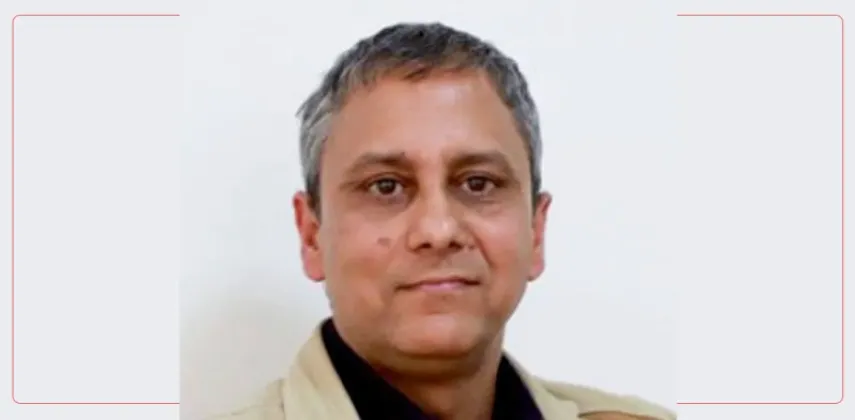
Senior journalist Shiva Gaunle, a former president of the Nepal Press Union, said on Friday that if the police are entering newsrooms and arresting journalists in the name of tracing news sources, then "the constitution in the country has come to an end." Gaunle, a senior figure in Nepali journalism, made the remarks in Kathmandu while expressing serious concern over the practice of police entering media houses to identify the sources behind published news reports, according to a report by RatoPati.
A warning framed in constitutional terms
The thrust of Gaunle's statement was uncompromising. In his view, the entry of police into newsrooms to trace the sources of news, and the arrest of journalists in connection with their reporting, is not merely a matter of professional inconvenience or an isolated dispute between the press and law enforcement. It is, he argued, a sign that the constitutional order itself has been abandoned. If such actions are taking place, he said, the constitution has effectively ceased to function.
Gaunle expressed particular concern over the practice of police seeking out news sources. His remarks present the issue as a test of whether the guarantees enshrined in Nepal's constitution, including freedom of expression and of the press, hold any real meaning in practice. When the state can send its security personnel into the very rooms where journalism is produced, the veteran journalist's argument implies, the protections that journalists and their sources depend upon lose their force.
Why source protection sits at the heart of the debate
Journalism, particularly reporting that holds power to account, depends heavily on people who are willing to share information. Officials, whistleblowers, citizens and experts often agree to speak with reporters only on the understanding that their identities will be protected. The concern Gaunle raised speaks directly to that foundation. If police are able to enter newsrooms and work backwards from a published story to the person who provided the information, that understanding collapses.
The consequences at stake
The consequences of such a practice, as Gaunle's warning implies, reach far beyond individual newsrooms:
- Sources stop coming forward. People with information of public interest may remain silent if they believe the state can identify them through the newsroom that published the story.
- Journalists face detention. The arrest of journalists in the name of tracing sources places reporters themselves at risk of being treated as targets rather than as professionals performing a public function.
- Editorial independence is threatened. The presence of police inside media houses creates an atmosphere of pressure that can shape what gets published and what does not.
- The public loses access to information. When the flow of information from sources to reporters is choked off, citizens are the ultimate losers, as stories of public importance may simply never be told.
In Gaunle's assessment, these effects together amount to something far more serious than a setback for the press. They strike at the constitutional arrangement under which a free press operates, which is why he chose such stark language in describing the practice as the end of the constitution.
A message from a veteran of the press
The weight of the statement owes much to the person delivering it. Gaunle is described as a senior journalist and has previously served as president of the Nepal Press Union, an organization that represents journalists in Nepal. That background places him among the voices with long experience in defending the interests of the press, and his choice to frame the issue in constitutional terms reflects that standing.
His remarks were delivered in Kathmandu, the centre of the country's political and media life, on Friday. By speaking in the capital, where decisions about policing and policy are made, Gaunle directed his warning at the very environment in which such practices are carried out. His concern, as reported, was not with a single incident but with the practice itself of police entering newsrooms to find news sources and arrest journalists.
What the statement leaves on the record
Gaunle's comments stand as a clear articulation of principle from a senior member of Nepal's press community: that the treatment of journalists and their sources is a measure of the country's constitutional health. In his framing, the arrival of police in a newsroom is not a routine law enforcement matter but a moment that reveals whether the constitution's promises are being honoured in practice.
By speaking out on Friday, Gaunle has put the issue on the record in unambiguous terms. As he made plain, a country where police can enter newsrooms and arrest journalists in the name of tracing sources is, in his assessment, a country where the constitution has come to an end. For Nepal's media community, the statement serves as a reminder that the relationship between the press and the state's security apparatus is not simply a professional matter, but a question that goes to the heart of the country's democratic and constitutional framework.


