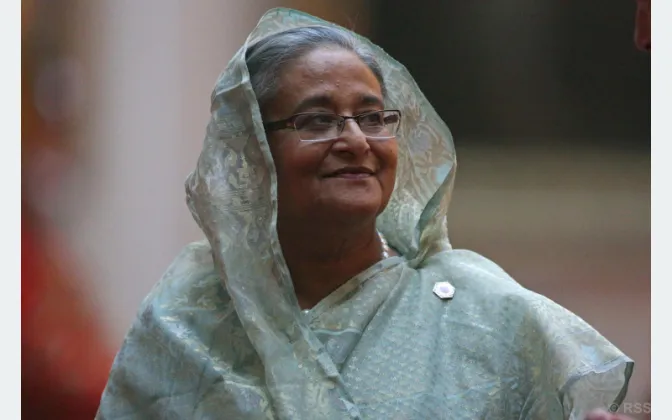
Sheikh Hasina, the former Prime Minister of Bangladesh, has vowed to return to the country in December, insisting that she will go home despite the death sentence she faces. Hasina, who has been living in exile in India since she was ousted from power by a student-led movement in 2024, said she remains committed to her decision even with the risks involved, according to a report by Ratopati.
The declaration is a striking one from a leader who left her country under the most dramatic of circumstances and has not set foot in Bangladesh since. By putting a month on her return, Hasina has transformed what had been an open question into a specific promise, one she delivered while acknowledging openly that danger awaits her.
For a figure who once led the government of Bangladesh, the journey back would not be a simple homecoming. She would not be returning merely as a former prime minister settling into private life, but as a leader facing a death sentence, travelling back to a country that removed her from power. That she continues to speak of December, rather than in vague terms, underlines how firmly she has framed the decision.
A Promise Made Despite the Danger
Hasina's message was unambiguous: she intends to return to Bangladesh in December, and the death sentence hanging over her does not change that plan. In stating her position, she acknowledged the risks involved but made clear that they have not deterred her. The commitment, reiterated rather than voiced for the first time, suggests a deliberate effort to keep her intentions firmly in public view.
The significance of the pledge lies in its specificity. Leaders in exile often speak of returning home in general terms, leaving timelines unstated and possibilities open. Hasina has done the opposite. She has named the month, restated her determination and accepted that the journey carries personal danger. Whatever one makes of her politics, the statement leaves little room for ambiguity about what she says she intends to do.
Key Points at a Glance
- Who: Sheikh Hasina, former Prime Minister of Bangladesh
- What: She has vowed to return to Bangladesh in December despite facing a death sentence
- When: December, the timeframe she has named for her return
- Where: She has been living in exile in India since her ouster
- Why it matters: Her pledge sets up a potentially defining moment in the country's political landscape
The Student-Led Movement That Ended Her Rule
The circumstances of Hasina's exit explain why her return would be so charged. In 2024, a student-led movement swept through Bangladesh and brought down her government, ending her tenure as prime minister and forcing her to leave the country. She has lived in exile in India ever since, in a country that shares a long border with her own.
Her ouster was the culmination of a movement led by students, one that succeeded in removing a sitting prime minister from office. The events of 2024 marked a decisive rupture in Bangladesh's politics, and they continue to shape every question about the country's future, including whether and how Hasina might come back.
Since that rupture, Hasina's exile in India has defined her position. She has remained outside Bangladesh while the political order she left behind has continued to evolve in her absence. Her vow to return in December is, in that sense, an attempt to reinsert herself into a narrative that has moved on without her, and to do so on her own terms.
Weighing a Return Against a Death Sentence
What separates Hasina's vow from an ordinary promise of return is the penalty she faces. The former prime minister is under a death sentence, a fact that makes any journey back to Bangladesh an acceptance of grave personal risk. She knows this, and she has said as much: even with the risks involved, she remains committed to her decision.
The tension at the heart of her statement is therefore stark. On one side stands the sentence, the most severe penalty a legal system can impose. On the other stands her declared intention to return in December regardless. Between the two lie every practical question that her pledge raises: how she would travel, what reception would await her, and how the authorities and the public would respond to the arrival of a former head of government facing capital punishment.
None of these questions has yet been answered. Her statement addresses her intention, not the mechanics of her return. What it establishes is that she has set a deadline for herself, named the month and accepted the danger. Whether December brings the homecoming she describes will depend on circumstances that no statement from exile can fully control.
For Bangladesh, the prospect of Hasina's return in December ensures that the former prime minister will remain at the centre of national attention in the months ahead. Her vow, made from exile and against the backdrop of a death sentence, is both a personal declaration and a political statement. As the month she has named approaches, her words will be weighed against events on the ground, and the country will watch to see whether the leader who left in 2024 comes back as she has promised.