
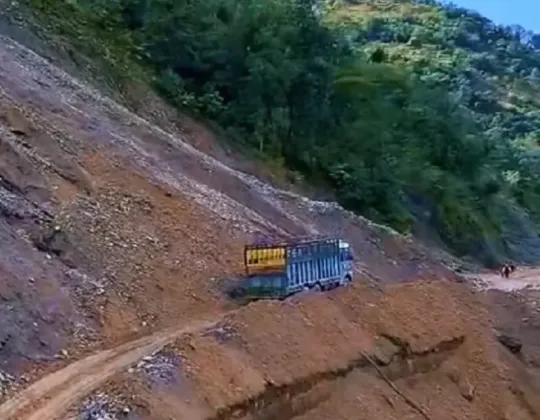
Traffic has resumed on the Sandhikharka-Gorusinge road after authorities cleared sand and other obstructions from the Ribdi Daha Khola section, which had been blocked by rainfall, restoring movement along an important local transport route. The reopening was confirmed by the secretariat of Minister of Infrastructure Development Sunil Lamsal, which said the road was brought back into operation once the debris was removed. The clearance formed part of a broader response to the recent weather, with landslides, mud and silt also cleared from various other roads to restore transportation services. The development comes at a time when rainfall and snowfall have been reported in various parts of the country, as reported by RatoPati.
Obstructions Cleared at Ribdi Daha Khola
The disruption on the Sandhikharka-Gorusinge road centred on the Ribdi Daha Khola section, where rainfall washed sand and other material onto the roadway. The accumulation blocked the section and halted vehicular movement, leaving the route impassable until clearance work could be carried out.
Blockages of this nature are a recurring feature of wet weather on roads that pass through sloping and stream-side terrain. When rain falls heavily, water moving down hillsides and along khola channels can carry sediment onto the carriageway, leaving stretches buried under sand, mud and debris. Until those materials are removed, vehicles cannot pass and the people who rely on the road for travel and supplies are left waiting.
Crews worked to clear the sand and other obstructions from the affected section. Once the roadway was freed of the debris, traffic was able to move again and the Sandhikharka-Gorusinge road was restored to operation. The resumption of service was publicly confirmed through the secretariat of Minister Sunil Lamsal, which shared the information about the reopening.
Wider Clearance Work to Restore Transport
The reopening of the Ribdi Daha Khola section was not an isolated effort. According to the minister's secretariat, landslides, mud and silt were also cleared from various roads in order to restore transportation services more widely.
The Obstructions That Had to Be Removed
The types of obstruction identified in the announcement highlight the different ways in which wet weather can disrupt a road network:
- Landslides can pour rock, soil and debris onto a roadway, often covering it completely and requiring substantial clearance before vehicles can pass.
- Mud deposited on road surfaces can make sections slippery or impassable, slowing or stopping traffic until it is scraped away.
- Silt carried by rainwater can settle across the surface of a road, gradually building up until it obstructs movement.
By clearing these materials from multiple roads, the authorities sought to bring transportation services back to normal across the affected network rather than on a single route alone. The announcement from the secretariat indicated that the clearance work had succeeded in restoring those services.
For the communities that depend on these roads, the restoration matters in practical terms. Roads carry passengers to work, school, markets and health facilities, and they carry goods and supplies in the other direction. When a section is blocked, journeys are delayed or cancelled, and the resumption of traffic brings those routines back on track. The reopening of the Sandhikharka-Gorusinge road, alongside the clearance of other routes, therefore eases the disruption that the recent weather had caused for daily movement.
Rain and Snow in Various Parts of the Country
The clearance operations unfolded as unsettled weather continued to affect the country, with rainfall and snowfall reported in various areas. Such conditions are closely watched by those responsible for road transport, because both rain and snow can interfere with travel: rain can trigger slides and wash debris onto roads, while snowfall can cover surfaces and make sections difficult to negotiate until they are cleared.
The combination of wet and wintry conditions across different parts of the country explains why obstructions appeared on multiple roads at around the same time, prompting the clearance effort described by the minister's secretariat. Roads that pass close to streams, slopes and slide-prone ground are particularly exposed whenever the weather deteriorates, as the Ribdi Daha Khola section demonstrated when the rainfall left it covered in sand and other material.
Restored Connections for Travellers
With the sand and other obstructions removed, the Sandhikharka-Gorusinge road is once again open to traffic, and transportation services on the other cleared roads have also resumed, according to the information released by the secretariat of Minister of Infrastructure Development Sunil Lamsal. For travellers, freight operators and residents along the affected routes, the reopening restores access that the blockages had interrupted.
The episode also underlines the value of prompt clearance work in keeping a road network functioning through periods of heavy rain and snowfall. The speed with which landslide debris, mud, silt and sand are removed from blocked sections often determines how long communities are cut off and how quickly schools, markets and services return to normal. In this instance, the clearance of the Ribdi Daha Khola section and other affected roads has returned traffic to those routes, bringing relief to the people who depend on them, as confirmed in the report on the reopening.


