
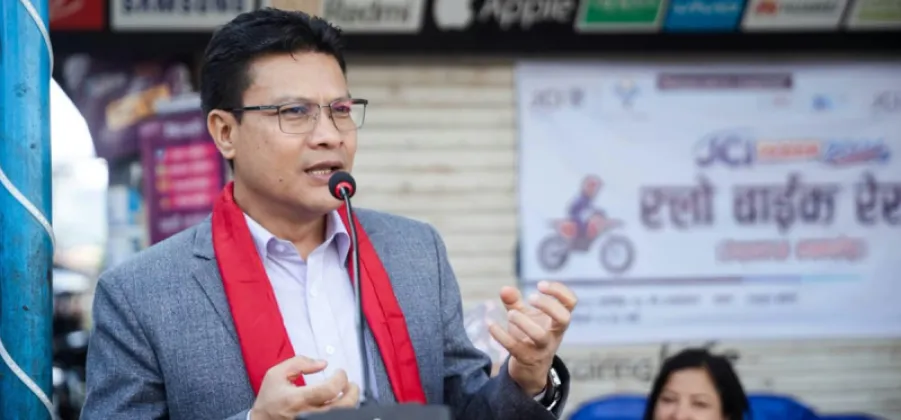
Prakash Chandra Pariyar, the parliamentary party whip of the Rastriya Swatantra Party (RSP), on Monday called for Nepali society to be freed from excessive politicization and the dominance of political parties, saying pervasive partisanship has hindered the social development the country has been expecting. Pariyar made the remarks while inaugurating the Tarahara JCI Week in Sunsari district, where he also stressed that social organizations have an important role to play in leading that change. His comments, reported by Nagarik News and Gorkhapatra Daily, came at a community forum rather than a political stage, underscoring the message that progress must be driven from outside party structures.
Politicization and Party Influence: What Pariyar Said
According to Pariyar, the reach of political parties into nearly every sphere of social life has become an obstacle to the progress communities have been waiting for. He said pervasive politicization and party influence have hindered the expected pace of social development, and he argued that society should be freed from excessive partisanship if it is to move forward.
His remarks point to a familiar dynamic: when party affiliation becomes the primary lens through which communities operate, civic energy risks being diverted toward partisan competition rather than collective welfare. In Nepal, party-aligned committees and sister organizations span sectors ranging from education to transport, and concerns about the depth of party penetration into everyday life have surfaced repeatedly in public debate. Pariyar's comments added a parliamentary voice to that ongoing conversation.
His key points, as reported, were:
- Nepali society should be freed from excessive politicization and party domination.
- Pervasive politicization and party influence have hindered the social development expected by communities.
- Social organizations have an important role to play in the effort to address these challenges.
The Role He Saw for Social Organizations
Central to Pariyar's address was the conviction that social organizations, rather than political parties, are better placed to drive social progress. He said such organizations have an important role to play in freeing society from the weight of partisanship, and the venue of his remarks aligned closely with that message. Tarahara JCI is a community-based youth organization rather than a party-aligned platform, making it a fitting setting for a call to depoliticize social life.
Junior Chamber International (JCI), to which Tarahara JCI is affiliated, is a global leadership development network for young people, often described as an organization of young active citizens, with a presence in more than a hundred countries. Its Nepali chapters, widely known as Jaycees, focus on developing young leaders through community service, training and local development activities. By addressing such a gathering with this message, Pariyar placed the responsibility for change on civic institutions as much as on politics.
The Occasion: Tarahara JCI Week in Sunsari
The event, held on Monday in Tarahara in Sunsari district, marked the inauguration of Tarahara JCI Week, an observance in the Jaycee calendar during which local chapters organize programs centered on community engagement and youth development. Sunsari lies in Koshi Province in eastern Nepal, and Tarahara, close to the commercial town of Itahari, is one of the district's better-known localities.
For a JCI Week inauguration, the message carried particular resonance. Organizations like Tarahara JCI depend on voluntary participation and local initiative, qualities that excessive politicization is seen to erode. Pariyar used the platform to encourage precisely the kind of independent civic action that his remarks suggested has been crowded out by party influence.
A Whip's Voice from a Newer Political Force
Pariyar serves as the whip of the RSP parliamentary party, a role that involves keeping his party's lawmakers coordinated in parliament. The Rastriya Swatantra Party, one of the newer forces in Nepal's federal politics, has built much of its public identity around demands for good governance and systemic reform, and Pariyar's call for a less politicized society is in line with that broader narrative.
By taking the message to a youth service organization rather than a party gathering, the whip signaled that the responsibility for social change rests with civil society as much as with elected politics. The emphasis on the role of social organizations also suggested that, in his view, the effort to reduce party domination cannot be left to parties themselves.
Looking Ahead
Pariyar's core message was straightforward: Nepal's social development will remain incomplete as long as party influence crowds out independent civic initiative, and organizations such as JCI have both the reach and the community roots to help fill that space. Whether the call translates into wider action, his remarks in Sunsari have added a clear voice to the debate over how large a role political parties should play in Nepali social life, and what society stands to gain when that role is scaled back.


