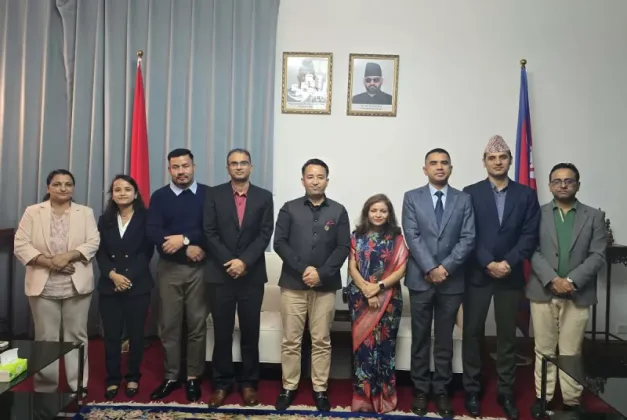
A team led by Ganesh Parajuli, deputy leader of the National Independent Party (RSP) parliamentary party, visited the Nepali Embassy in Beijing, China, during Parajuli’s visit to the country. The team held meetings and interactions at the embassy. Parajuli is in China to participate in a programme organised by the Chinese People’s Association for Friendship with Foreign Countries.
Embassy visit during China programme
The visit brought Parajuli and his team to Nepal’s diplomatic mission in Beijing while he was in China for the programme. The reported activities at the embassy included meetings and interactions. No further details about the participants, subjects discussed or specific outcomes of those engagements were provided in the available information.
The embassy visit took place as part of Parajuli’s broader stay in China, which is linked to the programme organised by the Chinese People’s Association for Friendship with Foreign Countries. The available reports do not specify the programme’s agenda or the length of Parajuli’s visit. They identify the organisers and state that Parajuli travelled to China to take part.
Parajuli’s role in the RSP parliamentary party
Parajuli is the deputy leader of the RSP parliamentary party. He led the team that visited the embassy, according to the reports. The visit is notable as an overseas engagement by a senior figure in the party’s parliamentary group, although the information provided does not detail the delegation’s composition or describe any official position communicated during the meetings.
The RSP is identified in the reports by its full name, the National Independent Party. The information does not include a statement from Parajuli or the party about the purpose of the embassy interactions, nor does it provide details on whether the discussions were connected to the programme he is attending. It therefore remains unclear what specific issues were raised at the embassy.
Details reported so far
The confirmed details are limited to the location, the delegation’s leadership and the reason for Parajuli’s presence in China: the team visited the Nepali Embassy in Beijing; Parajuli led it; and he is in China for a programme organised by the Chinese People’s Association for Friendship with Foreign Countries. The reported embassy activities consisted of meetings and interactions.
No date for the visit, names of other team members or further information about the meetings was included in the available reports. The reports also did not set out any agreements, announcements or follow-up steps arising from the embassy visit. Further information about the discussions or the programme was not available at the time of reporting.