
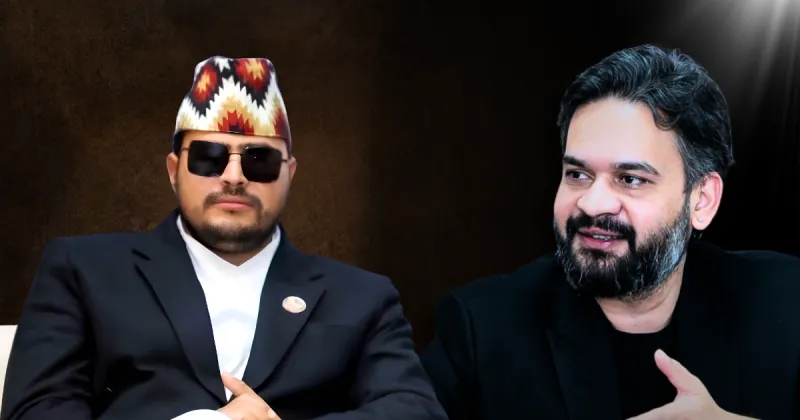
Rastriya Prajatantra Party (RPP) parliamentary party leader Gyanendra Shahi has issued a blunt public challenge to Prime Minister Balen Shah and Home Minister Sudhan Gurung over their handling of corruption and crime. In a social media post shared on Monday evening, the RPP leader and member of parliament asked whether the authorities intended to arrest those he said were looting the country, or whether they would content themselves with intimidating wrongdoers through Facebook. He went further, demanding to know why murderers and rapists remain at large and continue to behave in a defiant manner. His remarks were reported by Lokaantar and Nagarik News, and they have pushed the twin questions of graft and public safety back to the centre of political debate.
"Scare People on Facebook, or Catch the Culprit?"
The sharpest edge of Shahi's post was captured in the headline of the Nagarik News report itself: "Is it just to scare people by writing a status on Facebook or to catch the culprit?" The question, addressed directly to Prime Minister Balen Shah and Home Minister Sudhan Gurung, distilled the RPP leader's argument that public statements and online announcements are no substitute for concrete legal action. According to the report, the post was published on Monday evening and framed the issue in stark terms.
At the heart of his challenge were two pointed questions:
- Would the government arrest those accused of looting the country, or would it merely try to frighten them through Facebook?
- Why do murderers and rapists remain free, and why do they continue to act in a defiant manner?
By posing these questions publicly, Shahi sought to draw a clear line between rhetoric and enforcement. His implication was unambiguous: a government that limits itself to commentary, whether delivered in official forums or on social media, cannot credibly claim to be fighting corruption or delivering justice. The language of the post suggested impatience with what he regards as performative governance rather than accountable administration.
Action Versus Optics
The framing of the challenge is significant. Shahi did not ask merely whether investigations were underway; he asked whether the government would act at all, contrasting the arrest of suspects with the act of frightening them online. In doing so, he placed the burden of proof on the two officeholders who preside over the machinery of the state, arguing that the public expects to see wrongdoers in custody rather than reprimanded by status update.
Why Murderers and Rapists "Remain Free and Defiant"
The second strand of Shahi's challenge concerned violent crime. Beyond corruption, he asked why murderers and rapists continue to walk free and why they appear emboldened rather than deterred. This portion of the post carried the debate beyond financial wrongdoing and into the realm of public safety, an area that falls squarely under the Home Ministry led by Gurung.
The choice of words in his question carried its own weight. By noting that perpetrators of such grave crimes remain "free and defiant," Shahi pointed to a situation in which offenders are not only escaping arrest but appear to be acting openly, without fear of consequences. For a Home Minister responsible for the country's security apparatus, the question amounted to a direct demand to demonstrate that law enforcement is functioning and that the courts and police are being allowed to do their work.
A Public Test for the Prime Minister and the Home Minister
Shahi speaks with an institutional voice. As the RPP's parliamentary party leader, he leads his party's lawmakers and represents a recognised force within the country's political system. His decision to raise these questions through a social media post, rather than confining them to a parliamentary platform, reflects how political accountability is increasingly contested in the public arena, where leaders address citizens directly and their words spread within hours.
The reports by Lokaantar and Nagarik News did not indicate an immediate response from the Prime Minister or the Home Minister. What the reports did make clear is the substance of the challenge. Shahi wants arrests rather than statements, and the application of the law rather than warnings. Until those accused of looting the country face legal consequences, and until the perpetrators of murder and rape are seen to be punished, his post implied, the government's commitments on corruption and security will be judged as words rather than deeds.
The Irony of a Facebook Challenge
There is a notable irony in the medium of Shahi's message. In criticising a government that, in his view, prefers to intimidate wrongdoers through Facebook, the RPP leader chose Facebook as the arena for his own challenge. The episode underlines how central social media has become to Nepal's political discourse, with leaders using it to bypass traditional channels and speak straight to the public.
For the government, however, the questions raised are not so easily deflected. The demand at the core of the post, that those who loot the country be arrested and that murderers and rapists be brought to justice, speaks to expectations that cut across party lines. How the Prime Minister and the Home Minister respond, whether through visible action, public explanation or silence, may shape perceptions of their commitment to the rule of law.
As it stands, the ball rests with the government. Shahi's Monday evening post has articulated a clear demand for enforcement against both corruption and violent crime, and the coverage in Lokaantar and Nagarik News ensures the questions will not pass unnoticed. Whether the answer arrives in the form of handcuffs or further Facebook statuses is a question the public will now be watching closely.


