
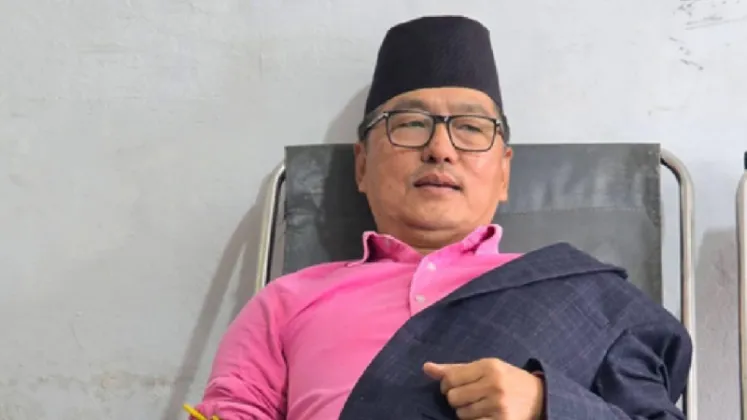
Rastriya Prajatantra Party (RPP) Chair Rajendra Lingden donated blood for the 95th time on Friday, taking part in a blood donation programme organised at the party's central office in Kathmandu. The drive was held in response to a growing shortage of blood in hospitals, a situation the party leadership described as demanding an immediate humanitarian response from its ranks.
Lingden, who has made repeat blood donation a personal hallmark over the years, said he decided to organise the donation drive as soon as he heard news of the shortage. He simultaneously called on party leaders and cadres across the country to come forward and fulfil what he termed their humanitarian duty at a time when patients in need of transfusions are facing difficulties.
A drive mounted at party headquarters
The blood donation programme was organised at the RPP's central office in Kathmandu, turning the party's own headquarters into a donation venue for the day. According to reports published by Nepal Press, the decision to hold the drive came directly from the party chair, who moved to arrange the programme immediately after learning of the dwindling blood supplies in hospitals.
The choice of venue carried its own message. By staging the drive at the central office rather than an external venue, the party sought to place its leadership and organisational machinery at the centre of the relief effort, encouraging leaders, cadres and well-wishers arriving at the office to participate on the spot.
Key details of the programme:
- Chief donor: RPP Chair Rajendra Lingden, donating blood for the 95th time
- Venue: RPP central office, Kathmandu
- Timing: Friday, with reports published the same day
- Reason: A growing shortage of blood in hospitals
- Call to action: Party leaders and cadres urged to join the effort
Nagarik News, which covered the programme under its health desk, noted the scale of Lingden's personal contribution, counting his latest donation as his 95th. Khabarhub similarly reported the party chair's appeal to leaders and activists to treat blood donation as an obligation rather than an optional gesture.
95 donations and counting
Reaching a 95th donation places Lingden in the category of committed repeat donors, a group on whom voluntary blood supply systems typically depend heavily. Every unit collected from a regular, screened donor represents blood that can be issued to patients without waiting for a replacement donor to be arranged, which is often the binding constraint during shortage periods.
The milestone also reflects a sustained habit rather than a one-off act of charity. A donor who has given blood 95 times has returned to donation camps repeatedly over an extended period, maintaining eligibility each time. Party insiders and observers alike pointed to the party chair's consistency as the reason his participation drew attention on Friday, with the 95th donation serving as a visible example of the commitment he was asking of others.
For the RPP, the moment offered a demonstration of values in practice. Political parties in Nepal frequently organise social programmes alongside their political activities, and blood donation drives are among the most common. Lingden's decision to lead by example, by personally donating on the day he called others to act, reinforced the message he sought to convey to his organisation.
"Fulfil your humanitarian duty"
Speaking at the programme, Lingden said he had moved to organise the drive immediately after hearing news of the blood shortage, framing the response as a duty rather than a favour. He urged party leaders and cadres to come forward and donate, presenting participation as a humanitarian obligation owed to patients whose treatment depends on the availability of blood.
His appeal extended beyond those present at the central office. By directing the call to the party's wider leadership and activist base, Lingden effectively opened the drive to the RPP's organisational network, encouraging members in their respective areas to respond to the same shortage. The message, as reported by Nepal Press, was that leaders and activists should fulfil their humanitarian obligations precisely when the need is acute.
The timing of the appeal matters. Blood shortages tend to strain hospital services when demand for transfusions, whether from surgery, accidents, childbirth complications or conditions requiring ongoing transfusion support, outpaces what blood banks hold in reserve. In such periods, the difference between an adequate response and a crisis is often measured in how quickly voluntary donors step forward.
Politics meets public service
The programme underscored the role that political organisations can play in mobilising voluntary donors at short notice. With a leadership that reaches into districts and local units across the country, a party can translate a call from its chair into turnout at donation camps far beyond the capital. Lingden's appeal on Friday was addressed to exactly that network.
For hospitals confronting the current shortfall, each additional donor recruited through such mobilisation adds directly to available supply. The RPP's central office drive, anchored by the party chair's 95th donation, was presented as one contribution to that effort, with the clear expectation that leaders and cadres would carry the same spirit into future donation opportunities.
As reports of the programme circulated, the image that stood out was that of a party chair rolling up his sleeve for the 95th time and asking his organisation to match his commitment. For Lingden and the RPP, the blood donation drive was both a response to an immediate shortage and a reminder of the humanitarian work political leaders are expected to perform alongside their political roles.


