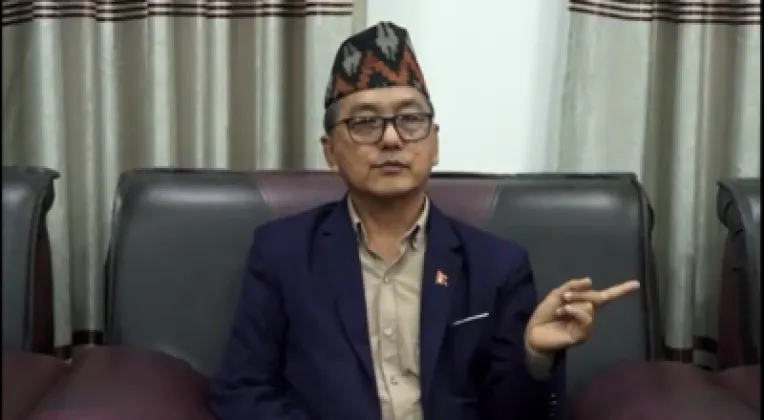
Kathmandu - Rastriya Prajatantra Party (RPP) Chair Rajendra Lingden on Wednesday warned that the country faces a growing risk of authoritarianism being established under the guise of public support, arguing that governance is increasingly being driven by whim rather than by laws, rules and orders. Speaking at a greetings exchange programme in Kathmandu, Lingden pointed to a series of recent actions, including the removal of the Inspector General of Police (IGP) and the detention of employees from various bodies at the Prime Minister's Office, as evidence that established procedures are being pushed aside. As reported by Khabarhub, his remarks, delivered on an occasion typically devoted to pleasantries and best wishes, carried a stark message: popularity in politics, however loudly proclaimed, cannot substitute for the discipline of law in running the state.
Popularity is not a licence, Lingden argues
At the heart of Lingden's warning was a distinction between a genuine democratic mandate and its misuse. He said there is a growing risk that authoritarian rule is being established in the country under the cover of public support, a formulation that suggests decisions are being justified by appeals to popular sentiment rather than by legal authority. In his view, this dynamic is more insidious than overt rule by decree, because it allows extraordinary actions to be presented as the will of the people even when they bypass established procedures.
The RPP chair's argument rests on a principle long held in democratic practice: public support, however real, operates within the framework of the constitution and the law, never above it. When leaders invoke popularity to justify steps that lack proper legal grounding, he suggested, the checks and balances that protect citizens begin to erode. His comments were framed as a caution to the public as much as a criticism of those in power, delivered at a moment when, in his assessment, the boundaries of lawful governance are being tested.
The incidents he cited
Lingden grounded his warning in specific developments rather than abstractions. The two sets of incidents he highlighted were:
-
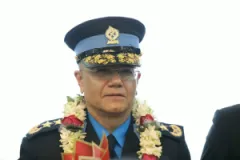
The removal of the Inspector General of Police (IGP): Lingden cited the removal of the country's top police official as one of the developments that alarmed him. The IGP heads the police institution responsible for law enforcement and internal security, and decisions concerning its leadership are expected to follow established legal and procedural channels. Bypassing those channels, in his view, sets a dangerous precedent.
-
The detention of employees from various bodies at the Prime Minister's Office: He also flagged the detention of staff members drawn from different bodies at the Prime Minister's Office, an action he presented as part of the same troubling pattern rather than an isolated event.
Taken together, Lingden argued, these incidents are symptoms of a governing style in which individuals and institutions can be removed, punished or sidelined without the restraint of law. His choice of examples was pointed: one touches the leadership of the police force, while the other concerns the personnel of bodies attached to the prime minister's own office. Both, in his telling, illustrate how quickly established procedure gives way when personal discretion replaces due process.
Running the state on whim, not law
The sharpest element of Lingden's address was his assessment of how the country is presently being governed. The state, he said, is being run on whims rather than on laws, rules and orders, a situation he described as pointing to serious authoritarianism. The formulation captures the core of his concern: that governance has come to depend on the preferences of those in power rather than on the documented rules that bind every public office.
The distinction matters because laws, rules and orders are what make the exercise of state power predictable, contestable and accountable. They tell officials what they may do, citizens what to expect, and oversight institutions what to enforce. When government action rests on whim instead, decisions become difficult to anticipate, challenge or reverse, and accountability gives way to impunity. Lingden's warning, in effect, is that this shift is already visible. By pairing his general thesis with concrete incidents, he sought to move the debate from abstract worry to specific examples that, he argued, can be examined and judged by the public.
A serious charge at a customary gathering
The setting of the remarks gave them added weight. Greetings exchange programmes are typically cordial affairs where party leaders meet well-wishers and representatives from various walks of life to exchange congratulations and best wishes. Lingden used the Kathmandu gathering to deliver a message of a very different temper, warning that the foundations of lawful, constitutional governance are at risk and that the country's trajectory should concern every citizen who values democratic order.
By framing recent events, from the IGP's removal to the detentions at the Prime Minister's Office, as evidence of a drift toward authoritarianism, the RPP chair has placed the conduct of the country's highest offices squarely in question. His central proposition was unambiguous: governments earn legitimacy through fidelity to laws, rules and orders, not through claims of public backing, and any departure from that standard, he warned, points toward serious authoritarianism.