
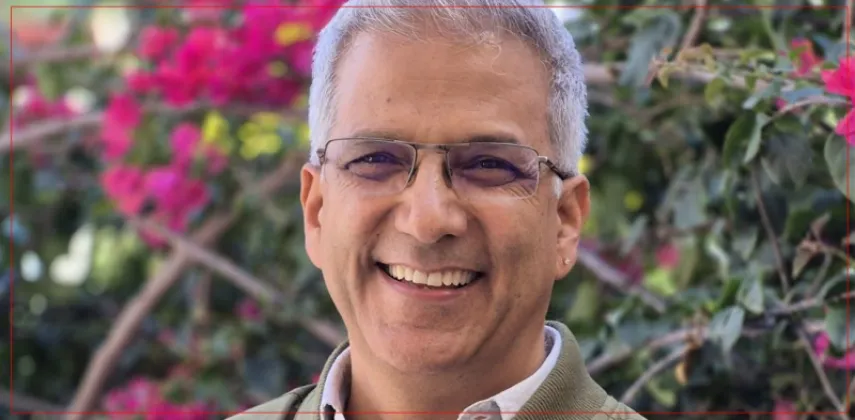
Kathmandu - Ravindra Mishra, former vice-chairman of the Rastriya Prajatantra Party (RPP), has warned that recent state activities are showing signs of a "seizure of power", in a sharply worded statement posted on Facebook on Friday. The remarks came after journalists who had been arrested from a newsroom were released, and Mishra used the moment to raise what he described as grave questions about democracy, the rule of law and the rights of citizens. His comments were reported from Kathmandu by RatoPati and Khabarhub.
A Direct Accusation of a Power Grab
In his status, Mishra expressed serious dissatisfaction with the recent developments in the country. His central claim was unambiguous: the activities of the state, he argued, are signalling a seizure of power. This is an extraordinary charge for a senior political figure to level, because it goes beyond criticism of any single policy or decision and instead questions the manner in which state authority itself is being exercised.
The phrase carries particular weight in a democratic system. When a leader accuses the state of a power grab, the underlying allegation is that institutions meant to serve the constitutional order are being redirected toward concentrating authority, and that the checks and balances which hold a government accountable may no longer be functioning as they should. Mishra did not present his concern as a routine political disagreement. According to his post, the recent events strike at the foundations of governance itself.
He anchored his warning in three specific concerns, each of which goes to the heart of how a democracy is meant to operate:
- Democracy: A system in which power flows from the people and governments remain answerable to them. Mishra's suggestion that state conduct now raises grave questions on this front points to a fear that accountability itself is being weakened.
- Rule of law: The principle that everyone, including the state and its agencies, must act within the law. Any exercise of state power that appears arbitrary or outside established process directly undermines this foundation.
- Citizens' rights: The freedoms and protections that individuals hold against the state. Concerns raised on this ground imply that ordinary people, not only political actors, may feel the effects of what Mishra described as a seizure of power.
The Timing: A Response to the Journalists' Release
The timing of Mishra's post is central to understanding its force. It was published on Friday, after journalists arrested from a newsroom were released. The arrest of journalists from their own workplace is among the most sensitive events that can occur in a democracy, because it touches directly on press freedom and on the ability of the media to report without fear of state action.
While the release of the journalists restores their liberty, it does not by itself resolve the questions surrounding the episode: why the arrests were made, under what legal authority they were carried out, and what process was followed. Until those questions are answered, the incident stands as a concrete example of the kind of state conduct that Mishra linked to his larger warning. His decision to speak out immediately after the release connected a specific event to a broader alarm about the direction of governance.
For the press and for the public, the episode - and the strong reaction it drew from a senior political figure - is likely to keep attention fixed on the relationship between the state and the media, and on whether the treatment of journalists reflects the rule of law that Mishra said is now in question.
A Warning from a Senior Political Figure
The identity of the person making the claim gives the statement additional weight. Mishra formerly served as vice-chairman of the RPP, a party within Nepal's political mainstream, and remarks from figures who have held senior positions in national politics are generally read as more than routine partisan commentary. They signal concern about the systemic direction of the country rather than dissatisfaction with a single government decision.
Notably, Mishra chose Facebook as his vehicle, speaking directly to the public through a status rather than through a formal statement alone. That choice reflects the immediacy of his concern and follows a familiar pattern in Nepali public life, where political leaders use social media to frame debates quickly as events unfold. The remarks were picked up and reported by multiple Kathmandu-based outlets, including RatoPati and Khabarhub, extending their reach beyond his own followers.
Questions That Remain Open
The questions Mishra raised about democracy, the rule of law and citizens' rights will not be settled by a Facebook post. They point to a need for clarity and accountability regarding the events that prompted his statement, most immediately the arrest of journalists from a newsroom and the circumstances that led to their release. The summary of his position is stark: recent events, in his view, raise grave questions that the state must address.
Until those questions are answered, his warning of a "seizure of power" stands as a public demand for answers from a former vice-chairman of a major party, and as a marker of how seriously the recent developments are being taken within Nepal's political class. The debate his post has joined - over the conduct of state institutions, the treatment of the press and the health of democratic safeguards - is one that the country's institutions themselves will now be expected to resolve.


