
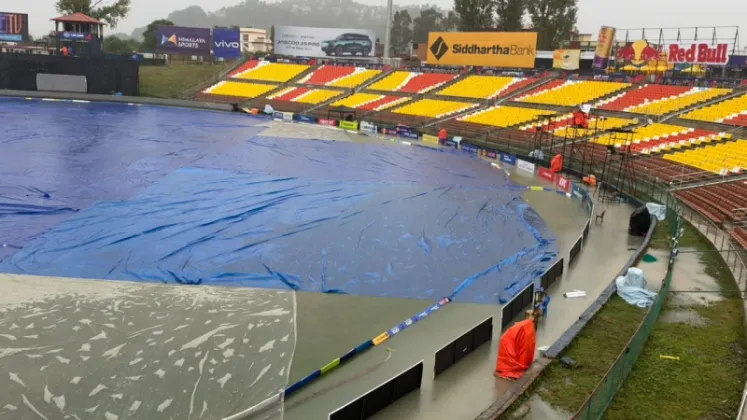
Continuous rain has made it difficult to hold cricket matches at the Tribhuvan University (TU) Cricket Ground in Kirtipur, Cricket Association of Nepal (CAN) Vice President Roshan Singh said, with ground staff working since the morning to drain water from the field. Singh confirmed that efforts to manage drainage at the venue had been under way since morning and that discussions will now be held on refunding money to spectators who bought tickets. His comments, reported by Nepal Views and Pradesh Khabar, highlight the growing disruption that wet weather is causing at the ground widely regarded as the home of Nepali cricket.
Drainage efforts under way since morning
Singh's assessment of conditions in Kirtipur was direct: the steady rain has left the ground in a state where matches cannot easily go ahead. According to the CAN Vice President, the priority since the morning has been managing the water that has accumulated on the field, with the drainage work continuing as the rain persisted.
Drainage is among the most labour-intensive tasks in cricket ground management. Water tends to collect in low patches of the outfield, and until it is cleared, mowers cannot be used, the outfield cannot be rolled properly, and the square remains off-limits. At an open venue like TU, where the entire playing area is exposed to the elements, the pace of recovery depends heavily on the weather itself easing, no matter how many people are deployed to clear the water.
That reality lies behind Singh's statement that the continuous rain has made holding matches at Kirtipur difficult, and it explains why the association has moved to drain the field rather than simply wait for the skies to clear.
Why a wet ground keeps players off the field
For spectators, the reasons a waterlogged cricket field cannot host play are straightforward, and they go well beyond puddles on the grass:
- A saturated outfield slows the ball and makes running between the wickets hazardous for batters and fielders alike.
- A damp pitch produces uneven and unpredictable bounce, turning batting into a safety risk.
- Bowlers and fielders cannot grip a wet ball reliably, affecting control and raising the chance of injury.
- Umpires will not permit play to begin until inspections confirm the ground is fit, and even after the rain stops, a field can take hours to dry to an acceptable standard.
These practical constraints mean that clearing standing water is only the first step. Even once the visible water is gone, officials must be satisfied that the surface is safe before any match can resume, which is why heavy rain at a cricket venue so often leads to delays, shortened contests or abandoned games.
Ticket refunds head the agenda
Beyond the state of the field, Singh also touched on the issue most immediately felt by fans: their tickets. He said discussions will be held about refunding ticket money, a question that becomes pressing whenever weather prevents scheduled play after spectators have purchased tickets in advance.
CAN has not yet announced how any refund would be processed, when it would begin, or whether it would apply across all ticket categories. Those details, according to the Vice President's remarks, are expected to be settled in the planned discussions rather than through an immediate announcement.
Ticket refunds are a familiar challenge for cricket administrators everywhere. Matches can be delayed, reduced in length or abandoned altogether depending on conditions, and refund entitlements often depend on how much play, if any, eventually proves possible. Governing bodies typically spell out refund procedures only after the fate of a match is decided, which helps explain why CAN has framed the matter as an upcoming discussion rather than a settled policy.
Kirtipur's central place in Nepali cricket
The TU Cricket Ground at Kirtipur, on the southern edge of the Kathmandu Valley, is the principal venue for international cricket in Nepal and has staged many of the country's biggest matches in front of its largest crowds. Because so much of Nepal's top-level cricket is centred on the ground, disruption there is felt immediately across the sport, by the teams scheduled to play, by the organisers and above all by the fans who travel to Kirtipur or buy tickets expecting to watch cricket.
That is why Singh's dual message, that the rain has made matches difficult to hold and that ticket refunds will be discussed, matters well beyond the boundary rope at TU.
Waiting on the weather
With drainage work ongoing and the rain continuing, attention now turns to two questions: when the ground will be fit for play again, and how ticket holders will be compensated if the weather has washed out their plans. CAN has so far confirmed only that drainage efforts have been running since the morning and that refund discussions will be held. Supporters and ticket holders alike will be watching for the association's next announcement on both fronts.


