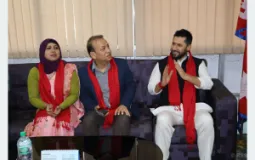
Rastriya Swatantra Party (RSP) Chairman Rabi Lamichhane has rejected speculation of a rift between his party and the government, saying the two are working in coordination while respecting their respective responsibilities. Speaking to journalists in Chitwan, Lamichhane said the party has chosen to let the government work independently rather than interfere unnecessarily in its responsibilities.
Lamichhane’s response to speculation
Lamichhane’s remarks were intended to address questions about whether the relationship between the party and the government had become strained. He denied that there was a difference or conflict, presenting the relationship instead as one in which both sides maintain communication while carrying out distinct roles. His comments framed coordination and independence as compatible, rather than as evidence of disagreement.
The RSP chairman said the party has adopted a policy of allowing the government to perform its work without unnecessary intervention. That approach, as he described it, does not mean the party is disengaged from government activity. Instead, it sets a boundary between the party’s role and the government’s responsibility to carry out its work.
Discussion is not the same as interference
Lamichhane also said that discussions, suggestions and requests for clarification about government work are normal. His distinction was between ordinary engagement and interference: the party may discuss government activity or seek explanations, while still allowing the government to work independently. He did not present those exchanges as proof of a dispute.
The clarification is significant to the way the relationship is being described publicly. Lamichhane’s account suggests that questions or suggestions about government work should not automatically be interpreted as a breakdown in cooperation. In his view, communication can take place alongside respect for the government’s responsibilities, and a request for clarification can be part of that engagement rather than an attempt to direct government work.
Separate responsibilities, continued coordination
The chairman’s comments emphasize two points: the party and government are coordinating, and each has responsibilities that should be respected. He argued against unnecessary party interference, while also describing discussions and requests for clarification as routine. Taken together, those remarks outline the approach he says the RSP is following: maintain communication without obstructing the government’s work.
Lamichhane did not describe a specific disagreement or identify a particular government decision in his remarks as presented. His response addressed the broader speculation about relations between the RSP and the government. By rejecting the idea of a rift and explaining how the party engages with government work, he sought to distinguish ordinary political discussion from conflict.
The central message from his statement in Chitwan was that coordination does not require the party to interfere in the government’s day-to-day responsibilities. At the same time, allowing the government to work independently does not rule out discussion, suggestions or requests for explanations. Lamichhane said these forms of engagement are normal and maintained that they do not indicate a conflict between the party and the government.