
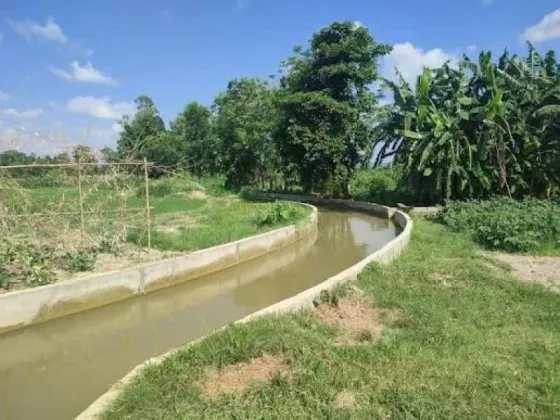
The Pragyanna irrigation system, operating in the Deukhuri area of Dang district, has brought irrigation facilities to 58,000 hectares of farmland, strengthening water access for farmers in one of the region's important agricultural zones. The project, which is being run to irrigate various areas of Lamahi Municipality and Rapti Rural Municipality in Deukhuri, currently supplies water through three intakes, according to reports by RatoPati and Ajako Artha.
Irrigation Coverage Reaches 58,000 Hectares
The scale of the system's reach marks a significant milestone for agriculture in Deukhuri, where farming households have long depended on consistent water supplies to cultivate their land. With 58,000 hectares now receiving irrigation, the Pragyanna system has become a central piece of the agricultural infrastructure serving the area, supporting the cultivation activities that anchor the local economy.
The project's operational footprint spans two local levels within Deukhuri. Farmers in Lamahi Municipality and Rapti Rural Municipality are among the direct beneficiaries, with the system channeling water to farmland across both areas. The coverage reflects the project's core purpose of extending irrigation to as much cultivable land in the region as possible.
Key facts at a glance
- Project: Pragyanna irrigation system
- Location: Deukhuri, Dang district
- Coverage achieved: 58,000 hectares of farmland
- Local levels served: Lamahi Municipality and Rapti Rural Municipality
- Current infrastructure: Three intakes supplying water
- Objective: Expanding irrigation coverage on cultivable land in the area
Water Delivered Through Three Intakes
At present, the system draws and distributes water through three intakes, which serve as the entry points for the irrigation network. These intakes form the backbone of the current operation, channeling water from its source to the agricultural land spread across the municipalities. The three-intake structure defines the system's existing capacity as it continues to serve farmers throughout the irrigated zones.
The distribution network built around these intakes allows water to be carried to various areas within Lamahi Municipality and Rapti Rural Municipality, ensuring that irrigation reaches different sections of the farmland rather than remaining concentrated in a single locality. This spread of coverage across multiple areas underscores the system's role as a shared resource for the wider Deukhuri farming community.
A Boost for Deukhuri's Farming Communities
For the agricultural communities of Deukhuri, reliable irrigation is a decisive factor in how productively land can be used. Farming in much of Nepal remains closely tied to rainfall patterns, and irrigation systems such as Pragyanna reduce that dependence by giving farmers a steadier supply of water for their fields. With 58,000 hectares already under irrigation, a large share of the cultivable land in the project's service areas can now be farmed with greater confidence.
Consistent water access also shapes what farmers are able to grow and when. Irrigated land typically supports more dependable planting cycles and helps sustain the staple crops that feed households and local markets. In districts like Dang, where agriculture is a primary livelihood for many families, the difference between rain-fed and irrigated farming often determines the stability of rural incomes.
The system's operation across two municipalities also carries collective significance. By serving both Lamahi Municipality and Rapti Rural Municipality, the project ties together farming areas that would otherwise manage their water needs separately, creating a broader base of irrigated agriculture within Deukhuri.
Looking Ahead: Expanding Coverage
According to the reports, the system is aimed at expanding irrigation coverage on cultivable land in the area, indicating that the current 58,000 hectares represent a stage in an ongoing effort rather than a final limit. The emphasis on expansion suggests that the project's operators are working to bring more of Deukhuri's farmland within reach of the irrigation network over time.
The potential gains from such expansion are considerable for the region. Every additional hectare brought under irrigation represents more farmland that can be cultivated with reduced uncertainty, reinforcing the agricultural foundation of Lamahi Municipality, Rapti Rural Municipality and the surrounding Deukhuri area. For now, the system's three intakes continue to supply water across the project's service zones, sustaining irrigation on a scale that has already made Pragyanna a noteworthy development in Dang district's farming landscape.
The progress of the system has been documented in local media coverage, with RatoPati and Ajako Artha both reporting on the 58,000-hectare milestone and the system's operation through its three intakes. As the project continues its work in Deukhuri, farmers and local authorities alike will be watching how much further the irrigation map of the area can grow.


