
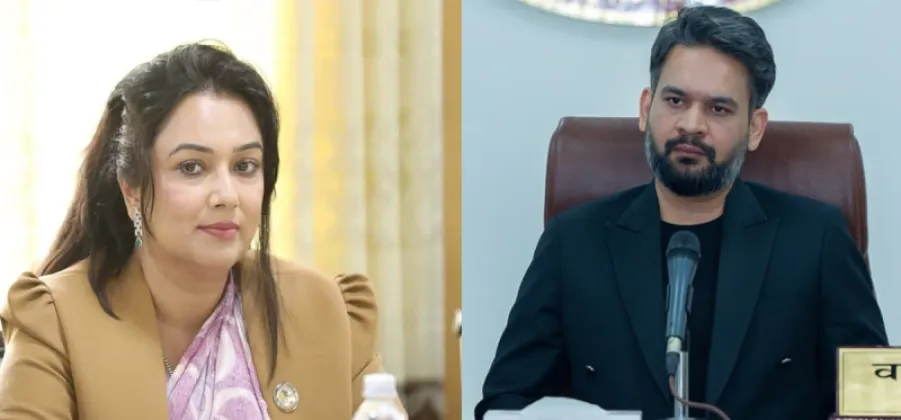
A dispute over responsibility for Friday's detention of journalists from the communications sector in Kathmandu has put Nepal Police and the Prime Minister's Office on opposite sides, after the two institutions issued statements offering contradictory accounts of who set the action in motion. In a statement issued on Friday night, Nepal Police said its Cyber Bureau was mobilised after the Prime Minister's Office showed interest in the matter. The Prime Minister's Office, however, claimed it was unaware of the incident. The contradiction has drawn a direct challenge from Rastriya Prajatantra Party (RPP) chief whip Khushbu Oli, who asked who gave the order to arrest journalists, while the ruling Rastriya Swatantra Party (RSP) has also said it knew nothing of the case, as reported by Nagarik News.
Conflicting statements over the detention of journalists in Kathmandu
Nepal Police broke its silence on the case with a statement released at night on Friday. In it, the force said that its Cyber Bureau, the police unit that deals with cyber-related matters, was mobilised after the Prime Minister's Office showed interest in the matter. The wording of the statement is central to the dispute: rather than presenting the operation against the journalists as a police initiative, it places the origin of the move with the country's highest executive office.
The Prime Minister's Office has told a different story, claiming that it was unaware of the incident. Its position stands in direct tension with the police account, which identifies the office as the point from which the action began.
The positions of the institutions and parties involved can be summarised as follows:
- Nepal Police: the Cyber Bureau was mobilised after the Prime Minister's Office showed interest in the matter.
- Prime Minister's Office: it was unaware of the incident.
- Khushbu Oli (RPP chief whip): who gave the order to arrest journalists?
- Rastriya Swatantra Party (RSP): the ruling party expressed ignorance about the case.
Taken together, the accounts leave an obvious gap. If the police statement is accurate, the Prime Minister's Office showed enough interest in the matter to trigger the mobilisation of the Cyber Bureau, which is difficult to reconcile with a claim of complete ignorance. If the office's claim is accurate, then the basis on which the bureau was mobilised against journalists has not been explained. Neither the police statement nor the Prime Minister's Office has so far offered a version of events that resolves the contradiction.
What is publicly known about the detention itself remains limited. The journalists were detained on Friday in Kathmandu and are associated with the communications sector. Details such as the number of journalists involved, the circumstances of their detention and the legal grounds for holding them were not spelled out in the statements issued by either side.
Khushbu Oli asks who ordered the arrest of journalists
RPP chief whip Khushbu Oli questioned the Prime Minister's Office directly over the detention, asking who gave the order to arrest journalists, after the office claimed it was unaware of the incident. Her question targets the gap at the centre of the dispute: if the government's most senior office had no knowledge of the action, then who did give the order?
As her party's chief whip, Oli's intervention moves the case beyond a disagreement between two statements and into the arena of political accountability. By addressing her question to the Prime Minister's Office rather than to the police, she has pressed the office to explain the chain of command behind an operation that the police say was set in motion by the office's own interest in the matter.
Ruling party RSP says it was in the dark
The confusion extends to the governing side as well. The Rastriya Swatantra Party (RSP), the ruling party, expressed ignorance about the case, indicating that it had no knowledge of the detention of the journalists. Its position mirrors that of the Prime Minister's Office, leaving the government's top office and the ruling party both disclaiming awareness of an action that the police statement connects to the Prime Minister's Office itself.
The result is a standoff in which no institution has accepted responsibility. The police point to the Prime Minister's Office, the Prime Minister's Office says it knew nothing, the ruling party says it was not informed, and the opposition is asking who, in that case, ordered the arrest of journalists.
Unanswered questions after Friday night's statements
As of the statements issued so far, several basic questions remain open. It has not been made public who ordered the detention of the journalists, under what legal authority they were held, or what specific interest the Prime Minister's Office took in the matter before the Cyber Bureau was mobilised. Nor has it been explained how the office's claim of ignorance fits with the police account issued on Friday night.
Until one of the parties to the contradiction clarifies its position, the question posed by Khushbu Oli, who gave the order to arrest journalists, remains the unresolved core of a case that has already created friction between the government's own institutions and drawn scrutiny over the detention of journalists.


