
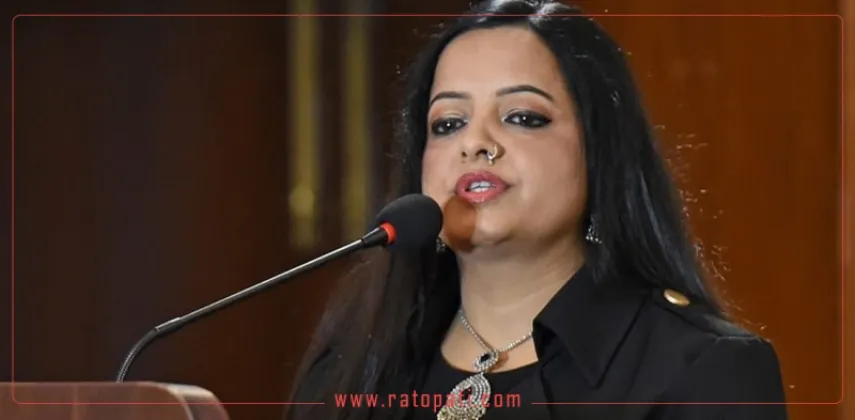
Prime Minister Balendra Shah’s office on Friday denied any involvement in the arrest of journalists in Kathmandu, saying neither the prime minister, his secretariat nor the Office of the Prime Minister and Council of Ministers had prior knowledge of the detentions. Press and research expert Deepa Dahal said the office learned of the day’s developments only after the arrests had taken place, and that Shah then issued a strict instruction for the detained journalists to be released immediately.
PM’s office denies prior knowledge
Dahal said the prime minister and the institutions attached to his office had no role in the arrests and had not been informed in advance. Her statement addressed the involvement of three parts of the government leadership: Shah personally, his secretariat and the Office of the Prime Minister and Council of Ministers. She said none had known about the detentions before they occurred.
The account also set out when the prime minister’s office became aware of the situation. According to Dahal, it was informed only after the arrests had taken place. She said the office had been unaware of the developments until it received that information. The statement therefore distinguishes between the detentions themselves and the response Shah made after learning about them.
Dahal’s comments were reported after police entered newsrooms and detained journalists from various media outlets in Kathmandu. The available information does not identify the outlets, name the journalists or give the number of people detained. It also does not specify where within the newsrooms the detentions took place or how long the journalists were held.
Shah orders immediate release
After being informed of the arrests, Shah issued what Dahal described as a strict instruction to release the detained journalists immediately. The order was presented as the prime minister’s response once the detentions came to his attention. It did not, in the account provided, amount to confirmation that the journalists had already been released.
That distinction is important: Dahal described an instruction from Shah, rather than reporting the outcome of its implementation. The available account does not say whether police had acted on the order by the time her statement was made. Nor does it provide details about any further communication between the prime minister’s office and the police after Shah’s instruction.
The statement also did not explain why police entered the newsrooms or provide a legal basis for the detentions. No details were given about the circumstances leading up to the police action. Those issues remain separate from the central point of Dahal’s response: she denied advance knowledge or involvement by the prime minister and his office, and said Shah directed that the journalists be freed as soon as he learned they had been detained.
What the statement establishes
Dahal’s remarks set out the office’s account of the sequence: police entered newsrooms in Kathmandu and detained journalists; the prime minister’s office was not aware of the operation beforehand; and Shah ordered their immediate release after being informed. The statement does not establish whether the order was carried out or clarify the circumstances of each detention.
The key points in the office’s account are:
- No prior knowledge: Dahal said Shah, his secretariat and the Office of the Prime Minister and Council of Ministers were unaware of the arrests beforehand.
- Awareness after the detentions: She said the office learned of the developments only after the journalists had been detained.
- Instruction to release: Shah issued a strict order for the journalists to be released immediately, according to Dahal.
- Outcome not confirmed: The available account does not say whether the journalists were released or provide further details about the police action.
Dahal’s statement followed the police operation at newsrooms and focused on the prime minister’s office’s lack of prior involvement and its response after receiving information. It did not provide a broader explanation of the arrests. The circumstances surrounding the police entry, the reasons for detaining the journalists and whether the release instruction was implemented were not clarified in the information available.


