
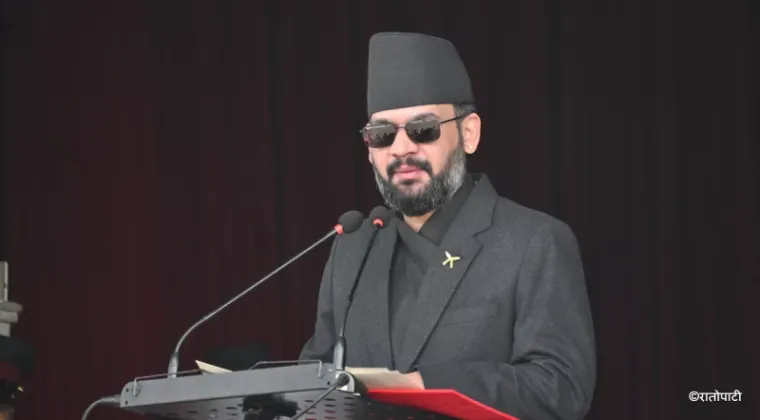
In a sharply worded Facebook post on Sunday evening, Prime Minister Balendra Shah, widely known as Balen, warned that no one should dream of escaping when the right time comes, saying that everyone's "wrong time" will arrive. The Prime Minister named no one and offered no specific context for the statement, but the message spread quickly across Nepali social media and was reported by multiple news outlets, including Ratopati, which highlighted his caution that people should not dream of seeing only one or two people escape.
The remark was brief, but its wording was sweeping. Coming directly from the head of government through his own social media account, the statement was framed in universal terms: the right time, in the Prime Minister's telling, will catch up with everyone, and no one should comfort themselves with the idea of being among the few who get away.
'Everyone's wrong time will arrive': what the Prime Minister said
The post appeared on Facebook on Sunday evening. In it, the Prime Minister cautioned that no one should dream of escaping when the right time comes, and that everyone's wrong time will arrive. Ratopati's report on the statement presented the core of the message as a warning not to dream that just one or two people will escape, an emphasis that captures the broad scope of the remark.
The wording itself paired two ideas: a "right time" that is still to come, and a "wrong time" that, according to the Prime Minister, awaits everyone. Beyond those lines, the post offered nothing more. There was no accompanying explanation, no reference to a specific event, and no individual singled out. Summarized as published, the message amounted to the following:
- No one should dream of escaping when the right time comes.
- Everyone's wrong time will arrive.
- No person or group was named, and no context was attached to the warning.
As a Facebook post, the statement reached the public directly, in the Prime Minister's own words and at the timing of his own choosing, rather than through a press briefing or a formal government statement.
A warning without a name or a reason
What stands out most about the Prime Minister's statement is what it leaves out. He did not mention any specific context in the post, and he did not name anyone. On the basis of its own text, the warning cannot be connected to any particular event, decision, or controversy, because the Prime Minister supplied no such connection.
He also did not spell out what the "wrong time" he referenced would involve, who would face it, or what might bring it about. He gave no indication of when the "right time" might come, nor did he clarify whether the warning was tied to any matter before the government or the country's political life. The post, as reported, consists of the warning and its framing, and nothing beyond it.
The result is a message that is broad by construction. Addressed to no named target, it speaks instead in sweeping terms, warning that whatever moment of consequence the Prime Minister was alluding to will arrive for everyone rather than for a select individual or two.
From a Facebook page to Nepal's news cycle
The warning did not stay confined to the Prime Minister's page. It was shared on social media after being posted on Sunday evening, and multiple Nepali news outlets reported on it, carrying the Prime Minister's words to a wider audience.
Ratopati was among the outlets covering the statement. Its headline focused on the line about not dreaming that one or two people will escape, giving prominence to the part of the post that most clearly conveyed its sweeping character: the idea that whatever the Prime Minister was warning about, it would not spare only a handful of people.
The coverage, like the post itself, did not attach the warning to any specific issue. The reports relayed what the Prime Minister had said, when he had said it, and the platform he had used, and they noted the absence of any named target or stated context.
The questions the post leaves open
Because the Prime Minister provided no context, the post leaves a number of questions unanswered, at least on its face:
- Whom, if anyone, the warning was meant for.
- What prompted the Prime Minister to post it on Sunday evening.
- What the "right time" refers to, and when it might arrive.
- What "everyone's wrong time" would mean in practice.
None of these questions is addressed in the post itself. For now, the statement stands exactly as the Prime Minister delivered it: an unexplained but unambiguous warning that when the right time comes, no one should dream of escaping, because everyone's wrong time will arrive.


