
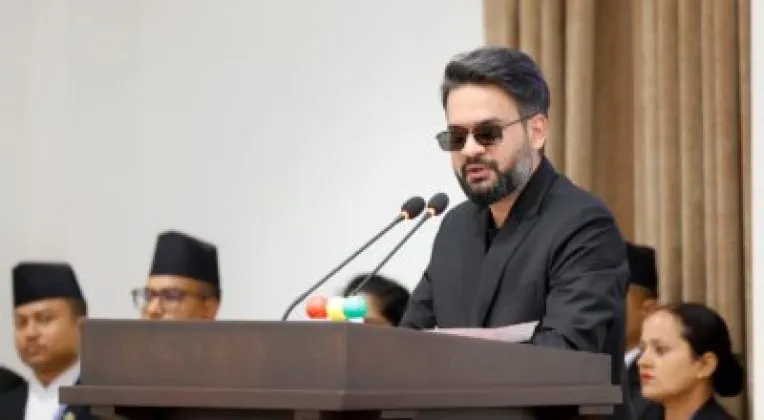
Prime Minister Balen Shah has ordered the immediate release of journalists detained from several media outlets in Kathmandu and directed authorities to stop police from entering newsrooms to make arrests, according to his communications and research adviser Deepa Dahal. The directive came in response to detentions carried out in the capital on Friday, when police took journalists from multiple media houses into custody. The Prime Minister's Office has expressed serious concern over the arrests and clarified that neither the Prime Minister, his secretariat nor the Office of the Prime Minister and Council of Ministers had any involvement in the operation or any prior knowledge of it.
PM orders journalists freed and police kept out of newsrooms
According to statements reported by Onlinekhabar and Khabarhub, Dahal said the Prime Minister has instructed the concerned authorities to release the detained journalists without delay. The Prime Minister has also made clear that police should not enter newsroom premises to detain media personnel, an instruction that speaks directly to the manner in which Friday's operation was carried out.
The key elements of the directive are:
- Journalists detained from several media outlets are to be released immediately.
- Police are not to enter newsrooms for the purpose of making arrests.
- The instruction was communicated publicly through the Prime Minister's adviser, Deepa Dahal, following the Kathmandu detentions.
The decision to announce the order through the adviser rather than a routine ministry statement underscored the urgency with which the Prime Minister's office sought to respond once the detentions became known. It also placed the Prime Minister firmly on record against the practice of enforcing arrests inside media houses, even as questions persisted about who had authorised the operation in the first place.
Arrests in Kathmandu and the question of who ordered them
The detentions took place in Kathmandu on Friday. Reports said police acted on orders from higher authorities, a detail that has become central to the controversy. Because the Prime Minister's Office maintains that it neither ordered the arrests nor was informed of them in advance, the question of which chain of command directed the operation remains open.
Neither report identifies the journalists taken into custody, the media outlets they worked for, or the grounds on which the arrests were made. The available reporting also does not say how many people were detained or what charges, if any, they face. What is established is that the operation involved journalists from several media outlets and that it was executed by police inside or in connection with newsrooms, prompting the swift intervention from the country's highest executive office.
The gap at the centre of the dispute is stark: police reportedly said they were following orders from higher authorities, while the Prime Minister's Office insists those orders did not come from Balen Shah, his secretariat or the Office of the Prime Minister and Council of Ministers. Taken together, the two claims point to a serious disconnect in the chain of command that has yet to be publicly explained.
PMO distances itself and voices serious concern
In its clarification, the Prime Minister's Office expressed serious concern over the arrests and stated that Balen Shah, his secretariat and the Office of the Prime Minister and Council of Ministers had no involvement in the operation and were not informed beforehand. The statement effectively separates the government's top office from the enforcement action and signals that the detentions proceeded without clearance from the Prime Minister.
That distancing carries political weight. It places responsibility for the operation squarely with whichever authority issued the orders, and it raises the prospect of an internal reckoning over how an action against journalists was carried out without the knowledge of the elected government. For the moment, the Prime Minister's Office has confined itself to concern and clarification, while the release directive stands as the government's most concrete response to the episode.
Key points that remain unresolved include:
- The number of journalists detained and the outlets they represent.
- The legal grounds cited for the arrests.
- Which authority issued the orders that police followed.
- Whether the Prime Minister's release directive has been carried out.
- Whether any official or agency will face scrutiny over the operation.
Stakes for press freedom
Arrests carried out inside newsrooms are widely regarded by press freedom advocates as among the most intrusive measures a state can take against journalists, because they reach into the very space where reporters gather, verify and publish the news. The Prime Minister's instruction that police stay out of newsrooms addresses that practice head-on, and his call for the immediate release of the detained journalists sets a clear expectation for how Friday's detentions should be resolved.
Attention will now focus on whether the detained journalists are freed promptly, whether authorities offer a full account of the basis for Friday's operation, and whether the disconnect highlighted by the Prime Minister's Office, an action reportedly taken on orders from higher authorities without the Prime Minister's knowledge, is formally investigated. Further details on the identities of those detained and the authorisation behind the arrests were not available in the reports at the time of writing.


