
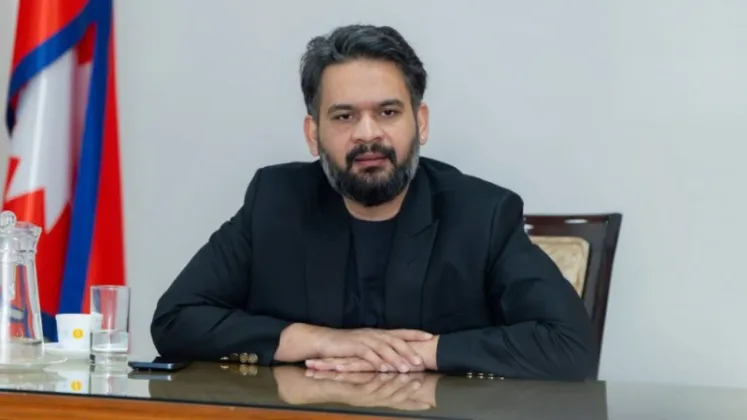
Prime Minister Balendra Shah, popularly known as Balen Shah, has ordered the immediate release of journalists who were taken into custody after police entered a newsroom in Nepal, with the directive issued as soon as he learned of the incident. The instruction was conveyed to the concerned authorities by the Prime Minister's press and research expert, Deepa Dahal, who made clear that no one should be detained on newsroom premises. The intervention came after reports emerged that the journalists had been detained under the pretext of news reporting, an episode that quickly drew the Prime Minister's personal attention.
Directive Issued As Soon As PM Learned of the Incident
The Prime Minister's instruction was communicated publicly by Deepa Dahal, who serves as the press and research expert at the Prime Minister's Office. According to Nepal Press, Dahal said the Prime Minister issued the directive for the journalists' immediate release as soon as he learned of the incident, and underscored that no one should be detained in newsrooms.
The emphasis on timing in Dahal's account underlines the urgency with which the Prime Minister's Office treated the matter. Rather than waiting for a formal inquiry or an internal review before responding, the Prime Minister sent the order for immediate release directly to the authorities responsible for the detentions, signaling that the detention of journalists inside a newsroom was viewed as an action that could not stand.
Global Aawaj also reported the directive, noting that the instruction was that no one should be detained in newsrooms and that the Prime Minister moved promptly once the incident came to his attention.
Key Points from the Prime Minister's Office
- Immediate release ordered: Prime Minister Balen Shah directed the concerned authorities to release the detained journalists without delay.
- Swift timing: The instruction was issued as soon as the Prime Minister learned of the incident, according to his press and research expert Deepa Dahal.
- Newsroom sanctity: The Prime Minister's stated position is that no one should be detained in newsrooms.
- Context of the detentions: The journalists were reportedly taken into custody under the pretext of news reporting, after police entered a newsroom.
Journalists Held After Police Enter Newsroom
The detentions that prompted the Prime Minister's order occurred after police entered a newsroom, according to the initial reports. The journalists were reportedly detained under the pretext of news reporting, a phrasing in the reports that raises questions about the circumstances of the police operation and the grounds on which the journalists were taken into custody.
Details of the incident remain limited in the reporting published so far. The available reports do not specify the name of the newsroom, the number of journalists taken into custody, or the precise sequence of the police entry. What is clear is the sequence of the government's response: the incident reached the Prime Minister, and within a short span he had ordered the concerned authorities to secure the journalists' immediate release.
The directive also goes beyond the question of the journalists' freedom. By stating that no one should be detained in newsrooms, the Prime Minister's Office has framed the matter as one of principle, positioning the newsroom as a space where detentions are unacceptable regardless of the specifics of any police action.
A Firm Message on Press Freedom
The episode places the treatment of journalists and the sanctity of newsrooms at the center of public attention. In Nepal, freedom of expression and press freedom are guaranteed by the constitution, and media houses are widely regarded as spaces where journalists must be able to carry out their work without obstruction. The detention of journalists inside a newsroom, under any pretext, sits uneasily with those guarantees, which is why the Prime Minister's directive has been communicated not as a routine administrative instruction but as a clear statement of position from his office.
Shah, who served as the mayor of Kathmandu before taking office as Prime Minister, chose to act through his press and research expert rather than through a lengthy official statement, with Dahal's remarks serving as the government's principal public response in the hours after the reports emerged. The speed of that response is likely to shape how the incident is understood, distinguishing between the actions of the police on the ground and the position of the country's top executive office.
What Happens Next
Attention will now turn to the concerned authorities and their compliance with the directive. The Prime Minister's order for immediate release leaves little room for delay, and the journalists' release is expected to follow as the authorities act on the instruction. Further details about the police entry into the newsroom, the grounds cited for the detentions, and any subsequent review of the operation are likely to emerge as the situation develops.
For now, the message conveyed by Dahal on the Prime Minister's behalf stands as the government's clearest response to the incident: the detained journalists are to be released immediately, and newsrooms are not places where anyone should be held.


