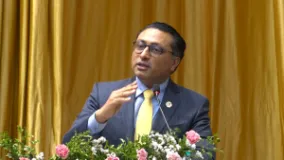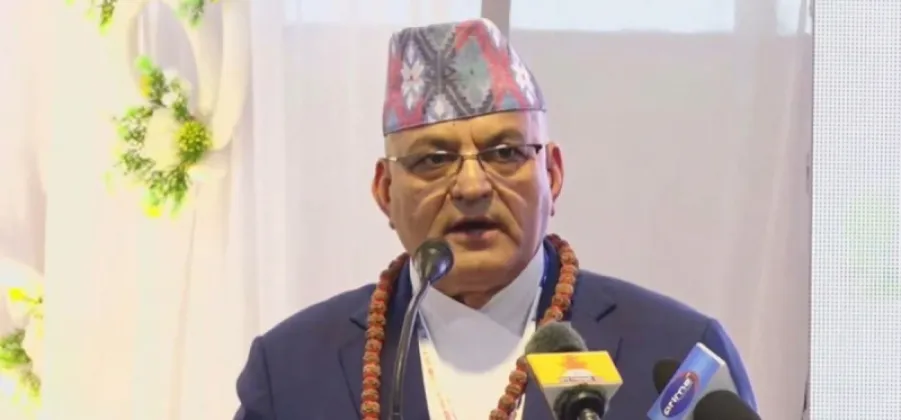
Gandaki Province Chief Minister Surendra Raj Pandey said in Biratnagar that the federal government’s failure to enact laws needed to implement the constitution has prevented provincial governments from exercising their granted rights. He said existing, older laws have become obstacles to effective provincial governance and compared the situation to being told to run with one’s feet tied.
Laws and provincial authority
Pandey’s central concern was the gap between rights granted to provinces by the constitution and the ability of provincial governments to use those rights in practice. He argued that without the necessary laws from the federal government, provinces cannot fully exercise their constitutional authority. His remarks framed the problem as one of implementation: constitutional provisions alone, he said, have not been enough to allow provincial governments to function effectively.
The chief minister also pointed to old laws as a barrier. In his account, rules that remain in force are obstructing provincial governance rather than enabling it. He did not, in the reports, identify specific laws or policy areas, but linked the continued presence of those laws to the limits faced by provincial governments.
Pandey’s description of the situation as being asked to run with one’s feet tied captured his criticism of the mismatch between provincial responsibilities and the legal framework available to carry them out. The metaphor conveyed his view that provinces are expected to operate while the conditions needed for effective functioning remain unresolved.
A federal implementation gap
The remarks place responsibility on the federal government to enact the laws required for provinces to exercise their constitutional rights. Pandey’s argument, as reported, is that the absence of those laws does not simply delay administrative work; it constrains the broader ability of provincial governments to govern effectively. The continued use of older laws adds to that constraint, he said.
The issue he raised is therefore not a claim that provincial rights are absent from the constitution. Rather, Pandey said those rights have not been matched by the necessary legal changes. His comments point to a practical challenge for provincial governments: they may have authority recognized in the constitution, yet still face restrictions when the supporting laws have not been enacted or older laws remain in place.
The remarks were reported by Nagarik News and Pradesh Khabar. Both reports center on Pandey’s criticism that the federal government has not made the laws necessary for provincial governments to function as intended.
His statement in Biratnagar underscored the concern that provincial governance remains limited until the legal framework is brought into line with the authority provided by the constitution. Pandey’s call, as reflected in the reports, was for the federal level to address the legislative gap and the obstacles created by old laws so that provinces can exercise their rights more effectively.