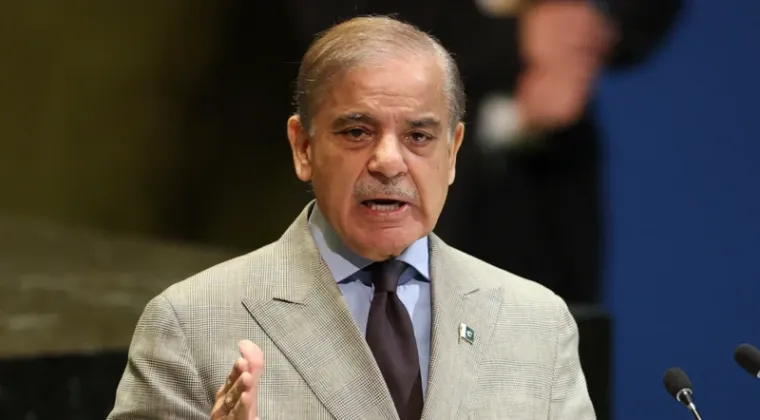
Pakistan Prime Minister Shehbaz Sharif reaffirmed Pakistan’s full support for Saudi Arabia’s legitimate right to self-defence during a meeting with Nauman Mahmood, the first Secretary-General of the Makkah Defence Coalition, in Islamabad on Wednesday. According to the Prime Minister’s Office, Sharif said Pakistan remains committed to protecting Saudi Arabia’s sovereignty, security and regional integrity, and congratulated Mahmood on assuming his new role.
Sharif reiterates Pakistan’s support
The meeting provided an occasion for Sharif to restate Pakistan’s position on Saudi Arabia’s security. The Prime Minister’s Office said he described the kingdom’s right to self-defence as legitimate and affirmed that Pakistan fully supports it. His remarks placed the emphasis on Saudi Arabia’s ability to protect itself, while also underscoring Pakistan’s stated commitment to the country’s sovereignty and security.
Sharif’s message referred to three related priorities: Saudi Arabia’s sovereignty, its security and its regional integrity. Together, those commitments set out the areas of concern he raised in the meeting. The statement did not provide further detail on specific security matters discussed, but presented Pakistan’s support as a continuing commitment rather than a position limited to the congratulatory exchange.
The Prime Minister’s Office attributed the remarks to Sharif and identified Wednesday’s meeting in Islamabad as the setting. The account did not name a particular incident or threat in connection with the discussion. It instead focused on Pakistan’s support for Saudi Arabia’s right to self-defence and its pledge to protect the kingdom’s sovereignty, security and regional integrity.
Meeting with the coalition’s first secretary-general
Mahmood attended the meeting in his capacity as the first Secretary-General of the Makkah Defence Coalition. Sharif congratulated him on taking up the position, linking the welcome to the new appointment with the broader discussion of Pakistan’s support for Saudi Arabia.
The appointment gives Mahmood a role at the head of the coalition’s secretariat, according to the description provided by the Prime Minister’s Office. The available account did not outline the coalition’s structure, its responsibilities or any plans raised during the meeting. It also did not identify further participants. The details released therefore centre on the meeting between Sharif and Mahmood, the new secretary-general’s appointment and the prime minister’s stated position on Saudi security.
The exchange brought together Pakistan’s prime minister and the first person to serve as secretary-general of the Makkah Defence Coalition. Sharif’s congratulations marked Mahmood’s assumption of office, while the reaffirmation of support set out Pakistan’s position on Saudi Arabia’s right to defend itself. The two points formed the main substance of the official account of the meeting.
Pakistan’s stated commitment to Saudi security
Sharif’s remarks framed Pakistan’s support in terms of both self-defence and the protection of Saudi Arabia’s wider national interests. The Prime Minister’s Office said Islamabad remained committed to the kingdom’s sovereignty, security and regional integrity. The statement did not specify what forms that commitment would take or announce any new measure.
The distinction matters to the scope of what was publicly reported: Sharif reaffirmed a position and a commitment, but the account did not describe a new agreement or operational decision. Nor did it set out a timetable for further steps. The announcement was focused on his message to Mahmood during their Wednesday meeting in Islamabad.
By combining congratulations for the coalition secretary-general with an affirmation of support for Saudi Arabia, Sharif’s remarks conveyed both recognition of Mahmood’s new role and Pakistan’s stated approach to the kingdom’s security. The Prime Minister’s Office presented the assurance as full support for Saudi Arabia’s legitimate right to self-defence, alongside Pakistan’s commitment to its sovereignty, security and regional integrity.