
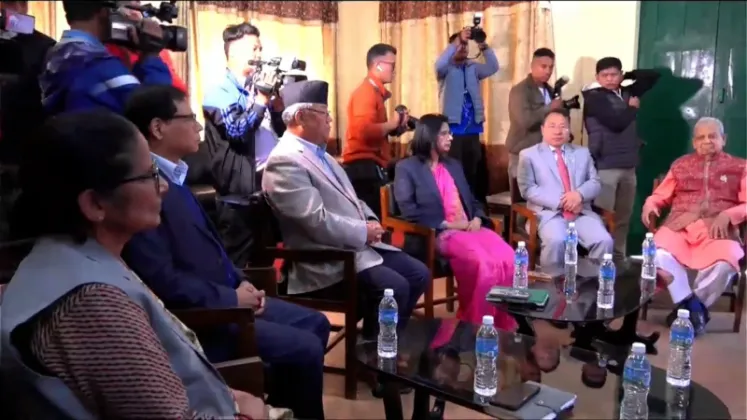
Opposition parties in Nepal have demanded that a session of the Federal Parliament be convened and operated immediately, calling on the government to summon lawmakers at the earliest possible date. The demand was made public through statements carried by Nepali media outlets on Monday, November 2, 2026, and it places the focus squarely on the government, which under the constitution holds the power to recommend when Parliament is called into session. The available reports did not identify the parties behind the demand or the specific issues they want placed before the House.
A Two-Part Demand: Summon the Session, Run the House
As reported, the demand has two distinct components. The opposition parties want the Parliament session summoned without delay, and they want it to actually operate, meaning the House should transact its business rather than simply be called into session as a formality. Reporting by Nepal Views and Nepal Samaya on November 2, 2026, said the parties called for the session to be held as soon as possible.
The key elements of the demand can be summarized as follows:
- An immediate summons of the Parliament session
- The full operation of the session once it convenes
- Timing at the earliest possible date, rather than a schedule chosen at the government's convenience
The available reporting did not specify how many parties are involved, whether the demand was issued jointly or through separate statements, or which topics the opposition intends to raise on the floor. No names of party leaders or spokespersons were attached to the demand in the reports, and no response from the government or the ruling side was included in the coverage reviewed.
Constitutional Machinery Behind the Call
Understanding the demand requires a look at how parliamentary sessions actually work in Nepal. The Federal Parliament is bicameral, consisting of the 275-member House of Representatives and the 59-member National Assembly. Sessions are summoned and prorogued by the President on the recommendation of the Government of Nepal, with the summons specifying the date and time of the sitting. The constitution requires that Parliament meet at least twice a year, and it stipulates that no more than six months may pass between the last sitting of one session and the first sitting of the next.
Because the government of the day effectively controls when a session is recommended, opposition parties in Nepal commonly take their demands public when they believe the House is being kept idle. A sitting Parliament allows lawmakers to debate matters of public importance, question ministers on the floor, scrutinize government decisions, and process legislation. When the House is not in session, the opposition loses its most visible institutional platform, which is why calls for an early summons are a recurring feature of Nepali politics whenever the chamber stands prorogued.
Why the Opposition's Call Carries Weight
In a Westminster-influenced parliamentary system such as Nepal's, the floor of the House is the opposition's principal arena. Demands of this kind are typically aimed at securing debate time on contemporary political and governance issues, holding the government accountable before the public, and preventing the ruling side from setting the political calendar on its own. Public statements of the sort reported on November 2 serve both as pressure on the government and as a signal to supporters that the opposition is seeking institutional space rather than staying silent.
The reports reviewed for this article, however, did not state the specific grounds on which the opposition based its demand. It is not clear from the available coverage whether the call precedes a particular piece of legislation, a question of government accountability, or a broader political development. In the absence of those details, the statements stand as a general insistence that Parliament return to work without further waiting, and readers should treat the coverage as an initial account of the parties' position.
What Happens Next
For the demand to translate into an actual session, the Government of Nepal would first need to recommend the summons, after which the President would formally call Parliament into session and fix the date and time. Once the House meets, agenda-setting typically moves to the Parliament's Business Advisory Committee, which decides the schedule of sittings and the distribution of business among the parties, with the Speaker presiding over proceedings. Until such a recommendation is made, the opposition's statements function primarily as public and political pressure.
The reports of November 2, 2026, did not indicate whether the government had responded to the demand, nor did they offer any timeline for when the next session might be summoned. Whether the call draws support from a broader cross-section of parties, and how quickly the government moves to recommend a summons, will determine whether Parliament returns to its chamber in the coming days or whether the demand becomes part of a longer standoff over the House's calendar.


