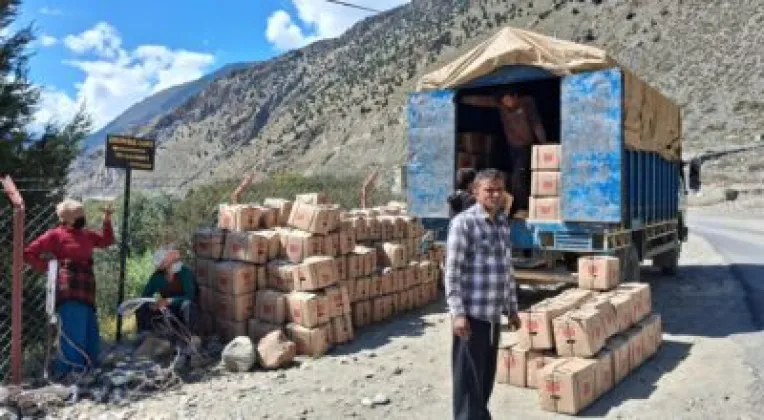
Only 30 percent of the apples produced in Mustang district have been transported to markets outside the district so far, after heavy rainfall on September 27 (Asoj 11) triggered floods, landslides and riverbank erosion that blocked the Beni-Jomsom road for two weeks. Although the road has reopened, difficult travel conditions are slowing shipments, prompting farmers and traders to rush the remaining apples out as the selling season slips away.
Two-week disruption delays shipments
The road closure interrupted the movement of apples from Mustang to markets beyond the district during a time when farmers and traders were trying to sell the crop. With the route blocked for two weeks, only a portion of the district’s production has been transported outside Mustang. The reported figure - 30 percent so far - leaves the majority of the apples yet to be moved beyond the district.
The disruption followed heavy rainfall on September 27, or Asoj 11, which triggered flooding, landslides and erosion along riverbanks. Those events left the Beni-Jomsom road impassable for two weeks. The closure meant that the route could not be used for regular apple shipments during that period, delaying efforts to get the produce to outside markets.
The road has since reopened, but reopening has not restored easy movement. The route remains difficult to navigate, and shipments are still being affected by the condition of the road. Farmers and traders are now trying to move apples while the selling season is already slipping away, leaving less time to transport the crop than would have been available without the closure.
Farmers and traders race against the season
The figures show the scale of the remaining task: so far, less than one-third of Mustang’s apple production has reached markets outside the district. The other 70 percent has not yet been transported outside Mustang, according to the reported share. The available information does not give a total production volume or the number of shipments, but the proportion indicates that most of the crop’s outward movement is still pending.
Farmers and traders are rushing shipments now that the road is open, but difficult conditions continue to constrain movement. The urgency is heightened by the narrowing selling season. The delay has therefore not ended with the reopening of the road: apples still need to be transported, and the route remains challenging at the point when sellers are trying to complete that work.
The reported situation links the delayed market access directly to the sequence of events: heavy rainfall brought floods, landslides and riverbank erosion; the resulting disruption closed the Beni-Jomsom road for two weeks; and the route remains difficult even after reopening. The result so far is that only 30 percent of Mustang’s apples have been transported to markets outside the district, with farmers and traders continuing to push shipments as the season slips away.