
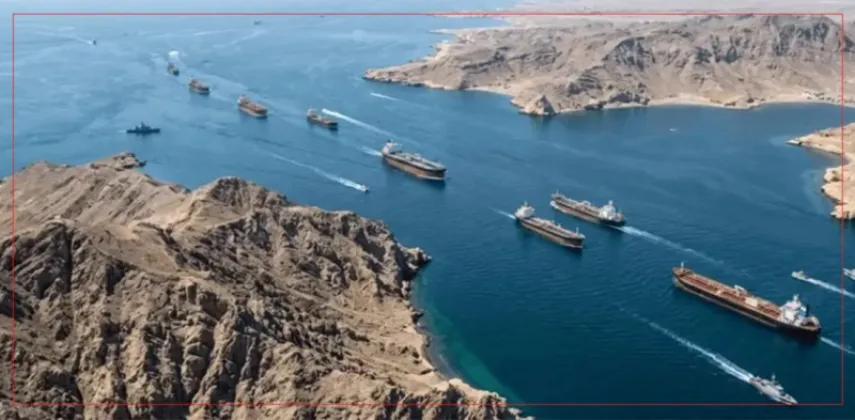
Oman rescued 25 crew members from a commercial ship that caught fire after an attack on Friday, while Iran stopped three oil tankers attempting to cross the Strait of Hormuz. The incidents have heightened attention on the strategic shipping route, where tensions have risen since the war began after the United States and Israel attacked Iran on February 28. The strait carries roughly one-fifth of the world’s oil, making disruption there a concern well beyond the immediate area.
Rescue after attack and fire
The rescue operation followed an attack on a commercial ship that left the vessel on fire. Oman’s response brought 25 crew members to safety, according to the information provided. The account does not identify the ship, specify the location of the incident, or say who carried out the attack. It also does not provide details about the crew members’ nationalities or whether anyone was injured.
The fire and rescue represent one strand of the latest developments around Hormuz: a commercial vessel was attacked and its crew needed assistance, while separate reports concerned restrictions on oil tankers trying to use the passage. The available information does not establish a direct connection between the ship incident and Iran’s actions toward the three tankers. They are occurring amid the same broader period of conflict and tension affecting the route.
Iran stops three oil tankers
Iran stopped three oil tankers that were attempting to cross the Strait of Hormuz. The reported action adds to uncertainty for vessels seeking to move through the waterway, although the information available does not say when or how long the tankers were stopped, where they were headed, or what happened to them afterward. It also does not specify the vessels’ ownership or flag states.
The distinction between stopping tankers and permanently preventing passage is important. The information provided confirms that three vessels were halted while trying to cross, but does not describe a seizure, a change in their routes, or any agreement allowing them to continue. Without further details, the immediate outcome for the tankers remains unclear.
A strategic route under pressure
The Strait of Hormuz is a critical route for global oil shipments. Roughly one-fifth of the world’s oil passes through it, according to the summary of the reports. That scale helps explain why incidents affecting commercial ships or tanker movement draw international attention: disruption to a major transport corridor can affect the movement of a substantial share of the world’s oil supply.
The current tensions follow the war that began after the United States and Israel attacked Iran on February 28. The conflict has disrupted the strategic route, and the latest reports describe both a rescue operation after an attack on a ship and Iran stopping three tankers. Together, they show the immediate challenges facing maritime traffic in the area, while the available information leaves key operational details unresolved.
For now, the confirmed developments are limited but significant: Oman rescued 25 crew members from a burning commercial ship, and Iran stopped three oil tankers seeking to cross Hormuz. The route’s importance to oil transport means that continued disruption carries wider significance, even as details about the ship attack and the tankers’ eventual status remain unavailable.


