
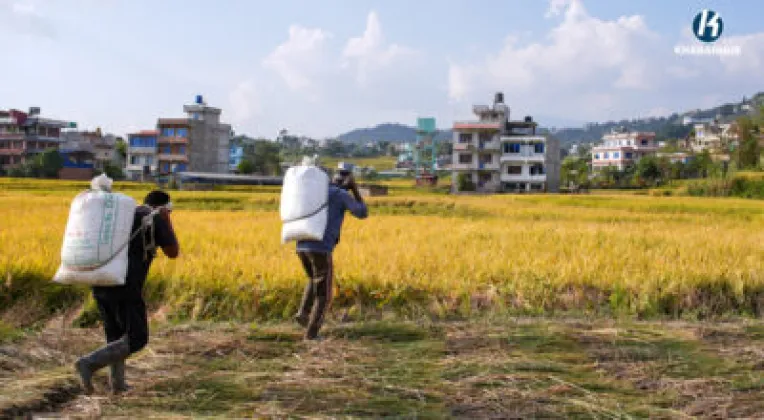
Farmers in Madi, Chitwan, are worried after a newly planted paddy variety failed to produce grain during the latest harvest, following signs of disease that appeared from the time it was planted. Fields that had yielded paddy until last year produced little usable rice, leaving farmers concerned about reduced food supplies and seeking solutions to the damage.
Disease appeared from the planting stage
Farmers say the crop showed signs of disease from the beginning of its growth. The problem continued through the season, with the paddy failing to develop grain as it reached the ripening stage. At harvest, the plants reportedly yielded only empty husks rather than filled grains.
The sequence has caused particular concern because the affected fields had produced paddy in previous years. Farmers are attributing the failure to planting a new variety, although the available information does not establish the specific cause of the crop damage or identify the variety.
The reported loss has transformed what farmers expected to be a harvest into a season of uncertainty. The damage was not limited to a drop in the quantity of grain: farmers describe a crop that reached harvest but did not provide rice for use. That outcome has left them seeking answers about why the variety failed and how to address the problems in paddy farming.
Lower yields raise food concerns
The failure has reduced paddy yields and raised fears that farmers may struggle to secure enough food grain for the year. For households that depend on their own harvest, an inadequate crop can make it difficult to meet expected needs. Farmers in Madi are worried about that prospect as they assess the consequences of finding empty husks where grain should have formed.
Their concern follows the full growing cycle: disease was noticed from planting, grain did not form at ripening, and the harvested plants contained empty husks. The reported progression has left farmers without the expected paddy from fields that had produced a crop through the previous year. The scale of the losses, and how many farmers or fields have been affected, has not been specified.
Farmers seek solutions
Farmers are seeking solutions to the damage and the problems they are facing in paddy farming. Their immediate concern is the failed harvest and the difficulty of securing food grain for the year. They also need answers about the reported disease and the failure of grain to form, so they can understand what happened to the crop.
The available information does not describe a confirmed remedy, an official assessment of the affected fields or assistance offered to farmers. Nor does it provide details on whether the new variety has been examined to determine why it produced empty husks. Farmers’ calls for solutions underscore the need to address both the losses from this harvest and the wider questions raised by the crop failure.
For Madi’s farmers, the experience has brought uncertainty to paddy farming in fields that had yielded grain until last year. Their reports point to a serious failure associated with the newly planted variety, but the cause and any response remain unclear. Until those questions are resolved, farmers remain concerned about their reduced yields and whether they will have enough food grain for the year.


