
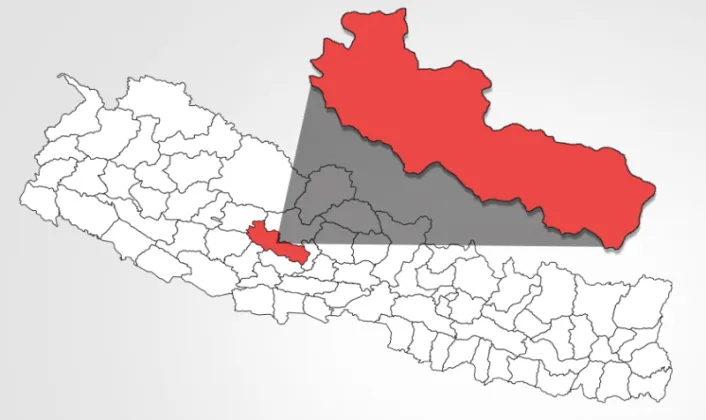
Police personnel serving at the District Police Office in Baglung no longer have to live in rented rooms away from their workplace, following the completion of four new buildings on the office premises. The newly built structures provide staff housing and barracks, a dedicated detention cell and a separate residence for the office chief, closing a chapter in which officers at the hill district office rented private accommodation for want of official quarters. The construction was carried out under the federal government's police infrastructure programme, according to reports by RatoPati and Khabarhub.
Three decades in a cramped building
For roughly 30 years, the District Police Office in Baglung, the headquarters of the district of the same name in Gandaki Province, operated from a single, severely cramped building. Zinc-roofed sheds put up around the structure served as additional space, but they could do little to ease the pressure on an office that had long outgrown its premises. The shortage of room was such that administrative work, the detention cell and the storage of weapons were all housed within the same building, leaving the office without any real separation between the spaces where personnel worked, where detainees were held and where firearms were kept.
Because the old premises offered no proper accommodation, police personnel had little option but to rent rooms in the area around the office. Officers thus bore the cost and inconvenience of private housing on top of their duties, a situation that RatoPati characterized as the end of police being forced to live in rented rooms. With the four new buildings now complete, that arrangement has come to a close.
What the four new buildings provide
The four structures, constructed within the District Police Office compound, are meant to cover the core accommodation and custody needs of a district-level office of the Nepal Police. According to the reports, they include:
- Housing and barracks for police personnel, allowing staff to live on the office premises instead of in rented rooms
- A dedicated detention cell, giving the office a proper facility for holding detainees
- A residence for the office chief, so the head of the district office has an official home within the compound
Perhaps most significantly, the new construction makes it possible to separate functions that were once forced to share a single roof. Administrative work, detention and the keeping of weapons no longer need to occupy the same building, directly addressing the most acute shortcoming of the office's old setup. The presence of barracks and official housing also means that personnel, previously spread across rented rooms around the district headquarters, can now be accommodated together at the office itself.
Built under the federal infrastructure programme
The construction was carried out under the federal government's police infrastructure programme, through which the federal centre finances the building and upgrading of police offices and associated structures across the country. For Baglung, the programme has amounted to a wholesale replacement of the district office's physical infrastructure: a 30-year-old building and its zinc-roofed sheds have given way to four new purpose-built structures.
Why the change matters
The end of rented-room housing changes the daily reality of policing in Baglung in several concrete ways. Personnel with on-site accommodation no longer need to arrange and pay for rooms on the private market, removing a burden that until now fell individually on officers for want of official quarters. A dedicated detention cell places custody in a purpose-built space rather than inside a shared office building, and the office chief now has an official residence within the compound itself.
The significance of the upgrade is also institutional. A district police office is expected to combine administration, custody and the secure keeping of weapons, yet the old Baglung setup bundled all three into one cramped structure for three decades. Spreading those functions across new, purpose-built buildings brings the office's physical infrastructure into line with the responsibilities it is required to discharge, and keeps personnel at the office around the clock rather than dispersed through the town.
For an office that spent 30 years making do with one ageing building and zinc-roofed sheds, the completion of four new structures marks a decisive change in how Baglung's police are housed and how the office itself operates. It also stands as a visible instance of federal infrastructure investment reaching the district level, delivered through the police infrastructure programme and converting a long-standing accommodation problem into a matter that has now been resolved.


