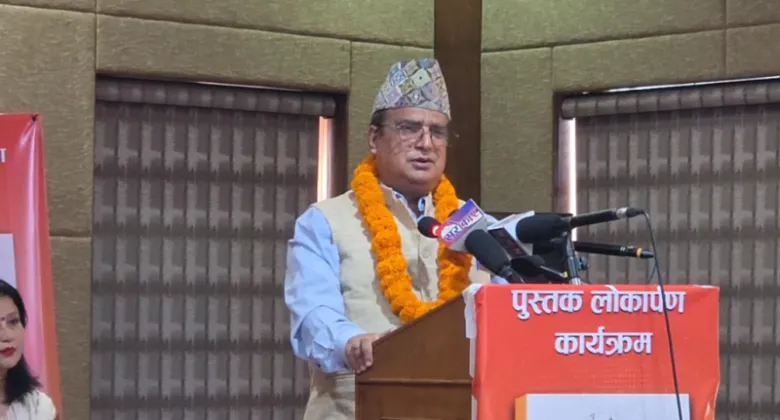
Newly elected Nepali Congress Vice Chair Madhu Acharya said the party should be run through established systems rather than individual influence while speaking at a book launch in Kathmandu on Wednesday. Acharya made the remarks as he released Laxman Bahadur Shahi’s book Adha Adhyaya, calling for party decisions, including the distribution of tickets, to be based on merit and fair procedures. He cautioned that personal proximity to influential figures should not, on its own, secure opportunities within the party.
A call to make procedures central
Acharya’s central message was that decisions should be guided by a system, not by the preferences or influence of individuals. The call applies to decisions across party affairs, with ticket allocation identified as one area where merit and fairness should matter. His comments, reported by Nepal Press and Khabarhub, place internal party decision-making at the heart of his remarks.
The principle he described is that opportunities and decisions should follow fair procedures instead of being shaped by an individual’s personal reach. Under that approach, closeness to a party leader would not by itself be a sufficient basis for receiving an opportunity. Acharya’s warning was directed at a system in which proximity could outweigh merit, and he argued for decisions to be made according to fair and consistent processes.
Merit and fairness in party decisions
Ticket distribution was specifically included in Acharya’s call for system-based decision-making. He said tickets and other party matters should be handled on merit and through fair procedures. The remarks did not set out a detailed process or criteria for assessing merit, but they emphasized that decisions should not depend simply on a person’s connections or individual influence.
By linking tickets with other party matters, Acharya framed the issue as broader than a single decision. His appeal was for the party to rely on procedures in its internal affairs, rather than allow personal influence to determine who receives opportunities. The distinction he drew was between decisions made through a system and decisions shaped by proximity to people with influence. His comments therefore focused on the standards guiding party decisions, rather than announcing a specific change to the party’s rules.
The reports also presented the call as an effort to break a chain of internal conflicts within the party. Acharya connected system-based decision-making with addressing those conflicts, while stressing the need for fair procedures. His remarks point to internal disagreements as part of the concern behind his appeal, but did not identify particular disputes or describe steps to resolve them. Instead, he emphasized a general principle: decisions should follow a system that gives merit and fairness a role.
Remarks made at a book launch
Acharya made the comments in Kathmandu on Wednesday while releasing Shahi’s book Adha Adhyaya. The event provided the setting for his remarks on how the Nepali Congress should manage its internal decisions. The reported focus was not a detailed discussion of the book’s contents, but Acharya’s message about party systems, ticket decisions and the role of personal influence.
His appeal comes as a newly elected vice chair, and sets out his view that the party should be guided by procedures rather than by individual sway. He called for merit-based and fair decision-making and warned against treating closeness as a qualification for opportunity. Acharya’s remarks leave the practical design of such procedures unspecified, but clearly state the standard he says should guide party affairs: decisions should be made through a system, with merit and fairness taking precedence over personal proximity.