
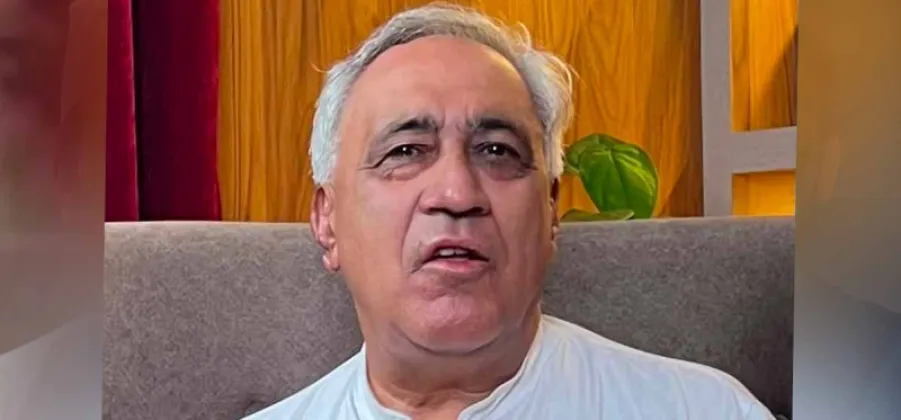
Nepali Congress Vice Chair Chandra Bhandari has demanded an impartial investigation into the allegations leveled against his party, saying that any such probe must be carried out in the service of justice, truth and accountability rather than out of enjoyment, revenge or prejudice. In remarks reported by Nagarik News, Bhandari made it clear that the controversy surrounding the Nepali Congress should be resolved through a proper investigation, and he cautioned that the issue should not be diverted from its course. His comments come in the wake of accusations made against the party, and they articulate a clear standard for how the matter ought to be handled: investigate thoroughly, without bias, and without letting the substance of the question drift out of view.
Justice, Truth and Accountability at the Core
At the center of Bhandari's statement is a firm distinction between the legitimate purpose of an investigation and the improper motives that can sometimes drive one. According to his remarks, any matter must be investigated impartially for the sake of justice, truth and accountability, and not out of enjoyment, revenge or prejudice. The choice of words is telling. By naming enjoyment, revenge and prejudice as impermissible grounds, the senior Congress leader signaled a recognition that politically charged allegations are often met not with sober fact-finding but with point-scoring, score-settling and pre-judgment.
Bhandari's framing sets a clear benchmark for the probe he is calling for. An impartial investigation would follow the evidence wherever it leads, treat the allegations on their merits and reach conclusions that can withstand scrutiny. In principle, such a process protects all sides: it gives the accusers a fair hearing, it safeguards the accused from predetermined outcomes, and it gives the public findings it can actually trust. Anything less, his statement implies, risks turning a question of accountability into an instrument of vendetta.
The Key Points of His Statement
- Any matter must be investigated impartially.
- The purpose of a probe should be justice, truth and accountability.
- Investigations must not be driven by enjoyment, revenge or prejudice.
- The issue should not be diverted from its course.
- The controversy should be resolved through a proper investigation.
A Clear Warning Against Diversion
The second strand of Bhandari's message is his insistence that the matter "should not be diverted but resolved through a proper probe." The warning cuts in more than one direction. To those who might seek to exploit the allegations against the Nepali Congress for political gain, he is saying that revenge and prejudice are not grounds for inquiry. To those who might prefer that the controversy simply fade away, he is saying that diversion is not a substitute for resolution. In either reading, the answer to the charges, as he presents it, lies in a genuine investigative process rather than in deflection or delay.
Framing the probe as the path to resolution is significant. It positions the investigation not as a threat to be resisted or a spectacle to be managed, but as the proper mechanism through which the facts can be established and the matter brought to a close. For a party facing public accusations, that is a stance which embraces scrutiny rather than dodging it, and it ties the credibility of the process, at least in Bhandari's telling, to its fairness rather than to the maneuvering around it.
Allegations Against a Major Party
Bhandari's remarks came after allegations were leveled against the Nepali Congress, one of the major political forces in Nepal. As reported by Nagarik News, the vice chair's response focused on how the accusations should be handled rather than on their specifics, emphasizing investigation over deviation from the topic. The intervention carries weight because it comes from a senior office-bearer of the party: as vice chair, Bhandari speaks from within its leadership, and his call for an impartial probe represents an acceptance, in principle, that the matter deserves to be examined through formal channels.
The statement also reflects a broader expectation placed on major political parties when allegations surface. Public accusations against a party of the Congress's stature inevitably attract close attention, and the manner of the response often shapes how the episode is remembered. By stressing impartiality and warning against diversion, Bhandari has sought to define the terms of that response: the allegations should be probed properly, and the probe should be about truth rather than theater.
The Stakes for Due Process
The contrast Bhandari drew - between justice, truth and accountability on one side and enjoyment, revenge and prejudice on the other - speaks directly to the credibility of any process that follows. An inquiry seen as prejudged deepens division and produces findings that few accept. An inquiry seen as fair can settle the question, whichever way the facts point: if the allegations are unsubstantiated, a proper probe clears the air; if they are borne out, it establishes responsibility. On both paths, the investigation he demands is the instrument, and diversion serves neither truth nor the public entitled to answers.
For now, Bhandari's message stands as a clear articulation of the standard he believes should govern the case: investigate impartially, do not divert, and let justice, truth and accountability be the measure by which both the process and the party are judged.


