
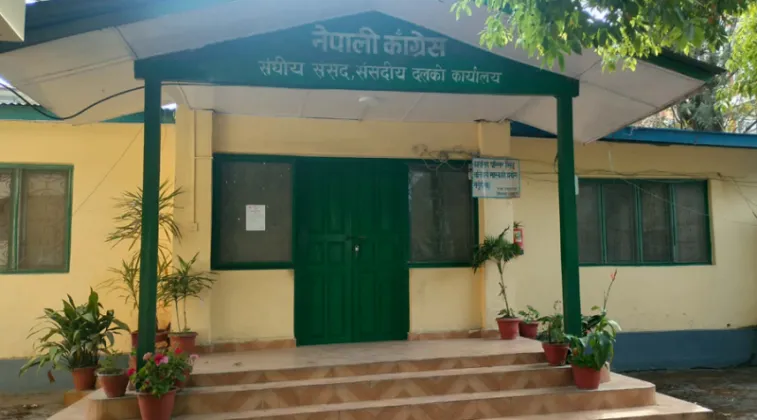
The Nepali Congress parliamentary party meeting is underway at Singha Durbar in Kathmandu, with the gathering of the party's lawmakers beginning on Monday, according to reports. The meeting is taking place at the historic central Kathmandu complex that serves as the seat of Nepal's federal government and hosts the Federal Parliament. While the convening of the party's parliamentary wing signals a round of internal consultation among Nepali Congress legislators, details of the agenda were not disclosed in the reports available at the time of writing.
Meeting underway at Singha Durbar
Reports said the meeting of the Nepali Congress parliamentary party commenced on Monday at Singha Durbar. The venue, a sprawling Rana-era palace complex in the heart of the capital, is the traditional nerve centre of Nepal's political administration. It houses the Office of the Prime Minister and Council of Ministers, while the Federal Parliament building stands within its premises. For Nepali Congress lawmakers, who gather there whenever the federal legislature is in session or when the party needs a venue for collective deliberation, the complex is a familiar setting.
As is standard for such gatherings, the meeting is expected to be held behind closed doors, with discussions among the legislators remaining off limits to the media until the party decides to share outcomes publicly. The reports did not specify how long the meeting would last or who would be present, beyond confirming that it was underway.
What is known so far
- The Nepali Congress parliamentary party meeting is underway at Singha Durbar in Kathmandu.
- The meeting began on Monday, according to reports.
- Further details of the agenda have not been disclosed in the reports so far.
The initial report of the meeting was carried by Nepal Lead.
A standard mechanism of parliamentary politics
A parliamentary party is the organized body of a party's elected representatives in the legislature. In Nepal's federal structure, such bodies operate within the Federal Parliament, which comprises the House of Representatives and the National Assembly. Meetings of the parliamentary party are a routine feature of political life and typically serve several purposes:
- Aligning the party's position on bills, motions and the federal budget before they come up for debate or voting
- Issuing directives or whips to lawmakers during key parliamentary proceedings
- Reviewing contemporary political developments and framing a collective response
- Discussing organizational matters and coordination between the party leadership and its legislators
Such meetings are generally led by the party's parliamentary leadership, and decisions are usually reached through discussion and consensus. They also provide a forum for lawmakers to raise concerns directly with the party's top leadership before positions are finalized in the House.
Why the meeting draws attention
Meetings of a major party's parliamentary wing are closely watched because they often signal how the party intends to conduct itself in the legislature in the days ahead. When the Federal Parliament is in session or preparing for one, the parliamentary party meeting is the standard venue where a party settles its approach to pending legislation, upcoming debates and pressing national issues.
In this instance, the absence of a publicly announced agenda means attention will turn to what emerges from Singha Durbar, whether in the form of decisions, statements or directives to lawmakers. Until the party speaks, the substance of Monday's discussions remains within the closed doors of the meeting hall.
Background: Nepal's oldest party and its seat of power
The Nepali Congress, founded in 1947, is Nepal's oldest democratic political party. It stood at the forefront of the movement that brought an end to Rana rule in 1951, led the 1990 People's Movement that restored multiparty democracy, and played a central role in the 2006 movement that opened the way for the end of the monarchy. Over the decades, the party has headed successive governments and remains one of the principal forces in Nepali politics.
Its parliamentary wing, the Nepali Congress parliamentary party, brings together the party's elected federal lawmakers and functions as the interface between the party organization and the legislature. Meetings such as Monday's are among the primary instruments through which the party coordinates that relationship.
Singha Durbar, a historic venue
Singha Durbar was built in the early twentieth century by Rana Prime Minister Chandra Shumsher and later passed into state hands after the fall of the Rana regime. It has since served as the administrative hub of the Nepali state, hosting the country's most important government offices. The presence of the Federal Parliament building within the complex makes Singha Durbar the focal point of Nepal's legislative life, and party meetings on its premises are a regular occurrence when parliament is active.
Further details awaited
With the agenda undisclosed and the meeting underway at the time of reporting, further information is expected to emerge once the gathering concludes. Parties typically brief the media through their chief whips or spokespersons after parliamentary party meetings, outlining the decisions taken and the line agreed upon by lawmakers.
For now, what is confirmed is that the Nepali Congress parliamentary party convened at Singha Durbar on Monday, as reported by Nepal Lead. Updates on the meeting's outcome and any disclosed agenda items are likely to follow, and this report will be refreshed as more information becomes available.


