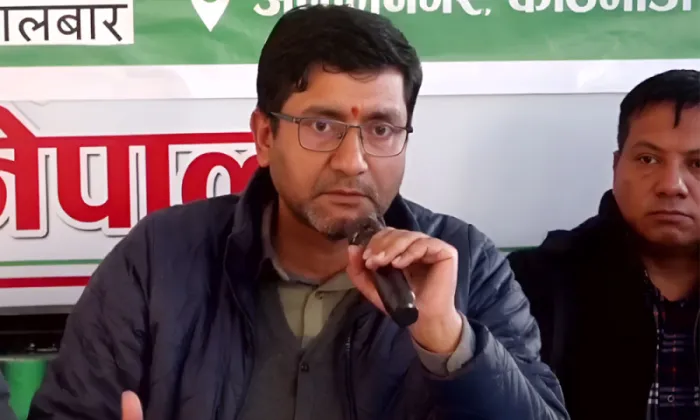
The Cyber Bureau of Nepal Police has summoned Nepali Congress General Secretary Ajaybabu Shivakoti, reaching the senior party leader by telephone while he was on a religious trip outside Kathmandu and asking him to appear before the bureau. Shivakoti has confirmed that he was contacted and told to come to the Cyber Bureau, and he has said he will honour the summons. At the same time, the Congress general secretary struck a defiant note, declaring that he will not be unsettled by fear of the government.
Summons by Phone While the Leader Was Away from the Capital
The summons reached Shivakoti while he was away from Kathmandu on a religious journey, meaning the Cyber Bureau made contact by phone rather than through an in-person appearance at his office or residence. According to reports published by NepaliPress, Nagarik News and Ratopati, bureau officials telephoned the Congress leader directly and asked him to present himself at the bureau.
The key facts as reported are as follows:
- The Cyber Bureau of Nepal Police has summoned Ajaybabu Shivakoti, general secretary of the Nepali Congress.
- Shivakoti was contacted by phone while on a religious trip outside Kathmandu.
- He was asked to appear at the Cyber Bureau.
- He has said he will go to the Cyber Bureau.
- He has also said he will not be unsettled by fear of the government.
Neither the purpose of the summons nor the specific date on which Shivakoti is expected to appear was spelled out in the initial reporting. What is clear from the accounts published so far is that the Cyber Bureau, the police unit responsible for investigating offenses connected to information technology and online activity, has moved to bring one of the most senior office-bearers of a major political party before it, and that the party leader has publicly committed to showing up.
"I Will Go to the Cyber Bureau": Shivakoti's Response
Shivakoti's public reaction combined cooperation with defiance. On the one hand, he confirmed that he will go to the Cyber Bureau, making clear that he has no intention of evading the summons despite being out of the capital when it was issued. On the other hand, he paired that commitment with a pointed political message, saying that he will not be unsettled by fear of the government.
That framing matters. By choosing to speak publicly about the summons rather than staying silent, the Congress general secretary signalled that he intends to face the process head-on. His remarks, as carried in the reporting on the summons, convey two things at once: a willingness to respect the obligation to appear, and a rejection of any suggestion that the call from the bureau has rattled him or that government pressure will alter his conduct.
The statement is likely to resonate within his party as well. A police summons to a leader of Shivakoti's seniority is not an everyday occurrence, and how the party's rank and file interpret the episode may depend heavily on how its senior leaders respond. Shivakoti's own answer, delivered within hours of the news breaking, was to present himself as unbowed.
A Senior Figure in the Nepali Congress
As general secretary, Shivakoti occupies one of the most influential positions in the Nepali Congress, one of Nepal's oldest and most prominent political parties. The general secretary's post sits at the heart of the party's organizational machinery, and those who hold it are closely involved in managing the party's internal affairs and coordinating its structures across the country. In practical terms, the summons therefore concerns a top-tier figure of the party's central leadership rather than a mid-level functionary, which helps explain the attention the phone call has received.
The Cyber Bureau, for its part, is the specialized unit of Nepal Police that handles investigations into cyber-related offenses. Summonses issued in the bureau's name draw public interest whenever they involve prominent personalities, and particularly when they involve political leaders, because of the unit's mandate over matters connected to online activity and technology-related offenses.
What Happens Next
The initial reports did not indicate which specific matter Shivakoti has been called in connection with, nor did they carry a detailed response from the party or an explanation from the police beyond the fact of the summons itself. As a result, key questions remain open: when exactly the Congress general secretary is expected to appear, what he will be asked about, and whether the bureau will issue any statement once he does.
Attention will now turn to Shivakoti's appearance at the bureau and to any clarification that follows from either side. For his part, the Congress leader has already made his position known on both counts: he will go to the Cyber Bureau, and, as he put it, he will not be unsettled by fear of the government. Until further details emerge, the episode stands as a developing story involving one of Nepal's most senior political figures and the police unit charged with policing the country's cyber space.