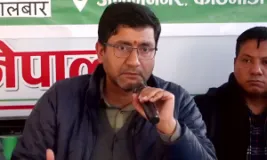
More than 60,000 families in Jhapa district have formally applied for land ownership certificates, with the district's Land Problem Resolution Committee registering applications from a total of 60,570 households as of early November 2026. The applicants include landless families, squatters, and members of unorganized settlements, according to Chief District Officer Shravan Kumar Pokharel, who chairs the committee. The figures offer the clearest measure yet of the scale of landlessness and insecure tenure in the eastern Nepal district, and they set the stage for the committee's next phase of work in determining which families qualify for legal ownership of the land they occupy or seek to claim.
How the applications break down
The 60,570 applications registered by the committee fall into three broad categories, each reflecting a different dimension of the land problem in Jhapa:
- 41,851 families from unorganized groups, who account for the overwhelming majority of applicants, roughly seven out of every ten applications received
- 15,783 families classified as landless residents, making up just over a quarter of the total
- 2,896 families from landless Dalit communities, a smaller share by number but a group widely regarded as among the most acutely affected by historical land deprivation
The dominance of applicants from unorganized settlements stands out in the data. These are households that have been living on land without formal documentation of ownership, a situation that leaves them without the legal standing that a registered title provides. The 15,783 landless residents represent families who hold no land of their own at all, while the 2,896 landless Dalit families reflect the specific disadvantage faced by Dalit households, who have historically faced barriers to acquiring and holding land across Nepal.
Who is applying, and why the categories matter
The distinction between the three applicant categories is central to understanding the significance of the numbers. Landless families, known in the Nepali context as sukumbasi, are those who own no land and often live and work on land belonging to others or on public land. Unorganized settlers are households that have built homes and lives on land without secure or formal tenure, frequently over long periods, without ever obtaining the paperwork that would legally recognize their claim. Landless Dalit families occupy a distinct category because of the layered discrimination they face, combining economic landlessness with the social exclusion long associated with the caste system.
By recording these categories separately, the committee is building a district-wide picture of who lacks secure tenure and under what circumstances. That picture is essential for distributing attention and resources appropriately, since the pathways to resolving each group's situation can differ. A landless Dalit family, for example, may be prioritized under targeted provisions, while unorganized settlers may require a determination of how long they have occupied the land in question.
The committee behind the count
The Land Problem Resolution Committee in Jhapa is chaired by Chief District Officer Shravan Kumar Pokharel, the senior administrative authority in the district. The committee's role is to address land-related problems at the district level, including the long-standing question of how to regularize the status of families who live without ownership documents. The registration of 60,570 applications as of early November 2026 represents the committee's documentation of demand for ownership certificates across Jhapa, which lies in Koshi Province in Nepal's eastern Tarai.
The phrase "as of early November 2026" is important. The figures reflect applications registered up to that point, and the committee has not indicated in this reporting what the final tally will be once the process closes. That means the eventual number of families seeking certificates could rise beyond the already substantial 60,570 recorded so far.
Why the certificates matter
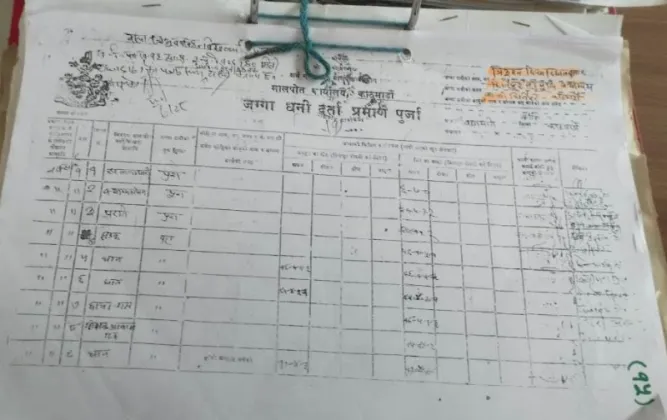
A land ownership certificate, the document these families are seeking, is the legal recognition of rights over a parcel of land. For the households involved, holding one can affect nearly every aspect of rural and semi-urban life:
- Security of tenure, reducing the risk of eviction and giving families confidence to invest in their homes and land
- Access to credit, since banks and financial institutions typically require a registered title before lending against property
- Eligibility for government programs, many of which are tied to documented ownership or formal recognition of a household's status
- Intergenerational stability, as documented land can be inherited and transferred with legal clarity
For families who have spent years or decades farming, building, and raising children on land they do not legally own, the difference between holding a certificate and not holding one can shape economic opportunity for a generation.
What comes next
The registration of more than 60,000 applications marks a milestone in Jhapa's effort to confront landlessness, but it is also a measure of how large the task remains. The committee, working under CDO Pokharel's leadership, must now process the applications it has collected, distinguishing among landless residents, unorganized settlers, and landless Dalit families as it evaluates claims. The 41,851 applications from unorganized groups in particular suggest that insecure tenure, rather than outright landlessness alone, is the dominant form of the problem in the district.
The figures were reported by the Land Problem Resolution Committee through Chief District Officer Pokharel and covered by RatoPati. For the 60,570 families whose applications are now on record, the count is the first formal acknowledgment of their claim to a piece of land, and the clearest signal yet of the scale of the work that lies ahead for the district.