
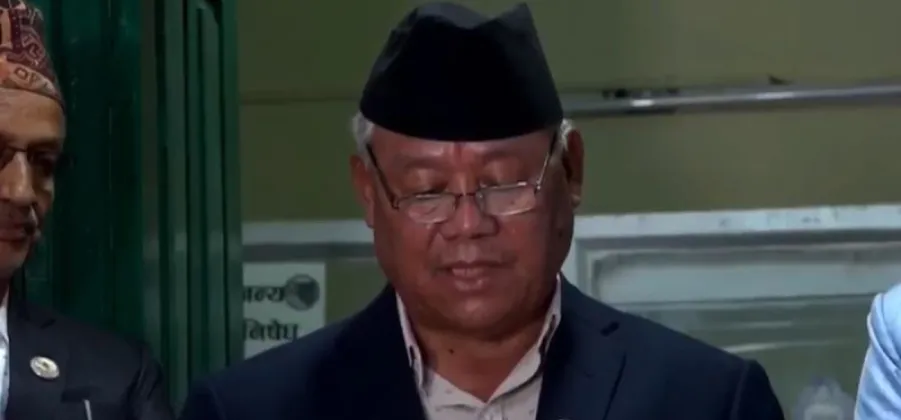
The Nepali Congress on Monday publicly demanded the formation of a parliamentary special committee to investigate what it described as a crackdown on journalists, including the arrests of members of the press. The main opposition party simultaneously called for a broader investigation into all disputed and controversial activities of the government, according to reports published by multiple Nepali media outlets, including Nagarik News, Nepal Lead and Nepal Samaya. The dual demand places the treatment of journalists and the government's wider conduct squarely on the parliamentary agenda and signals an intensifying political confrontation over accountability in Kathmandu.
A Two-Pronged Demand for Accountability
According to the reports, the Nepali Congress put forward two distinct but related demands, both channeled through the mechanism of a parliamentary special committee. The first and most prominent element concerns the press: the party wants a formal, institution-led investigation into the crackdown on journalists, a phrase that in the party's framing encompasses the arrests of reporters and media workers. The second element widens the lens considerably, calling for scrutiny of what the party characterized as all disputed government activities, rather than a single incident or ministry.
The demands as reported can be summarized as follows:
- Formation of a parliamentary special committee to investigate the crackdown on journalists, including arrests
- A broader investigation into all controversial and disputed activities of the government
- Public announcement of the demands on Monday through the party's official position, as covered by multiple media houses
By bundling the journalists' issue with a wider call for a probe into government conduct, the Nepali Congress appears to be framing the treatment of the press not as an isolated grievance but as part of a broader pattern of governance it considers worthy of legislative scrutiny. The party's decision to make the demand public on a Monday, rather than raise it only through internal parliamentary channels, suggests an effort to build public pressure alongside formal procedure.
Press Freedom at the Center of the Dispute
The reference to journalist arrests is the sharpest edge of the Nepali Congress's demand. Nepal's constitution guarantees freedom of expression and of the press, and the treatment of journalists is widely watched both domestically and internationally as a barometer of democratic health. When reporters are detained or arrested in the course of their work, political parties in opposition routinely frame such incidents as an attack not only on individuals but on the public's right to information.
The party's framing of the situation as a "crackdown" implies a systematic pattern rather than a single event, although the initial reports detailing the demand did not enumerate the specific incidents that prompted it. What is clear from the reports is that the Nepali Congress regards the government's conduct toward the media as serious enough to warrant a dedicated parliamentary investigation, a step that goes beyond routine questioning in the House or statements of condemnation. A special committee, once formed, would have the mandate to summon officials, examine documents and evidence, and issue findings and recommendations, giving the issue an institutional weight that daily political debate often lacks.
How a Parliamentary Probe Would Work
Under Nepal's federal parliamentary system, committees of the Federal Parliament serve as the primary instruments of legislative oversight over the executive. A special committee formed for a specific purpose can investigate a defined subject, call ministers and government officials to testify, and submit reports with recommendations. For such a committee to be constituted, the proposal typically must secure the support of the House, which makes the Nepali Congress's demand a test of the government's standing in Parliament as much as a statement of principle.
That procedural reality is what gives the demand its political force. An opposition party cannot form a special committee on its own; it must persuade enough members of the House that the matter merits formal investigation. The Nepali Congress's call for a probe into "all disputed government activities," alongside the journalist issue, effectively hands the government a broad array of potential lines of inquiry should the committee be formed. The reports did not specify which other government activities the party has in mind, leaving the scope of the proposed investigation a matter that would presumably be defined in Parliament if the demand advances.
What Comes Next
For now, the demand stands as the Nepali Congress's position, announced publicly on Monday and reported across multiple outlets, indicating that the party intends to keep the issue visible in the days ahead. The government has not, in the reports covering the announcement, been recorded as responding to the call, and it remains to be seen whether parliamentary business will take up the proposal for a special committee.
The episode underscores a familiar dynamic in Nepali politics: when opposition parties seek to challenge a government's conduct, the committee system is among the most consequential tools available, capable of transforming accusations into documented findings. By tying the cause of press freedom to that machinery, the Nepali Congress has aimed its demand at both the government's record and Parliament's willingness to scrutinize it. Further details on the party's specific allegations, the incidents involving journalists, and any parliamentary response are expected to emerge as coverage of the story develops through sources such as Nagarik News, Nepal Lead and Nepal Samaya.


