
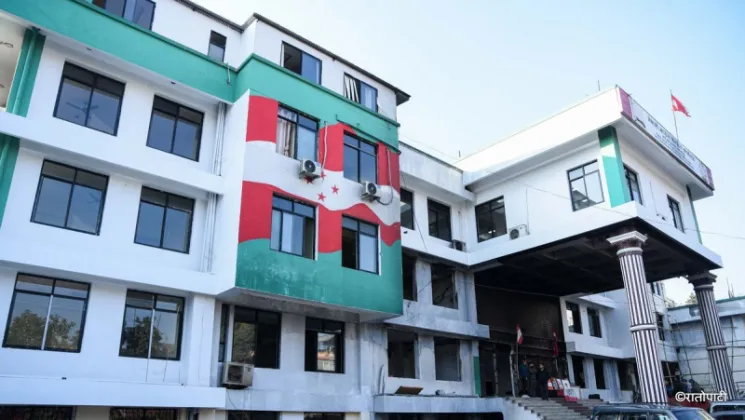
Kathmandu - The Nepali Congress has called a meeting of its parliamentary party for Monday morning, convening its lawmakers at 8:30 am at the party's parliamentary party office in Singha Durbar, Kathmandu. The announcement, reported by RatoPati and Nagarik News, confirms that the country's oldest democratic party will gather its elected representatives at the start of the week, though no details about the meeting's agenda have been disclosed so far.
When and Where the Meeting Will Take Place
The session is scheduled to begin at 8:30 am on Monday at the Nepali Congress parliamentary party office in Singha Durbar, the historic government complex in central Kathmandu. The confirmed details of the meeting are as follows:
- Day and time: Monday, 8:30 am
- Venue: Parliamentary party office, Singha Durbar, Kathmandu
- Participants: Members of the Nepali Congress parliamentary party
- Agenda: Not disclosed
The early morning slot places the gathering ahead of the day's broader schedule, allowing party leaders and lawmakers to coordinate before other political activities of the week get under way. Monday morning meetings of this kind are a familiar fixture of party life in Nepal, where the start of the working week is often used to align lawmakers on the tasks ahead.
Agenda Kept Under Wraps
The party has not revealed what will be discussed when its lawmakers convene. Withholding the agenda in advance is a common practice among Nepali political parties, which frequently prefer to finalise internal positions before making them public. For the Nepali Congress, parliamentary party meetings typically serve as a forum to brief lawmakers on political developments, to build consensus on the party's stance in Parliament, and to give rank-and-file representatives a chance to voice their concerns directly to the leadership.
What is actually discussed, and whether any decisions or statements emerge, will only become clear once the meeting concludes. Until then, the only confirmed details remain the time and the venue.
A Standard Practice in Nepali Politics
Across Nepal's major parties, notices for parliamentary party meetings are routinely issued without a public agenda, and deliberations are held behind closed doors. Party spokespeople usually brief the media after the session, making post-meeting statements the primary window through which the outcomes of such gatherings reach the public.
The Role of a Parliamentary Party
The parliamentary party is the collective body of a party's elected representatives in the Federal Parliament, which comprises the House of Representatives and the National Assembly. Its meetings are typically chaired by the party's parliamentary party leader and function as the principal space in which lawmakers coordinate on legislation, committee assignments and matters of national importance. The chief whip and the whips of each party play a central role in organising attendance and communicating the leadership's positions to members.
Such meetings also serve as a bridge between a party's central organisation and its elected representatives, helping ensure that positions adopted inside Parliament reflect the broader line of the party. For this reason, gatherings of the parliamentary party are closely watched by political observers, as the statements issued after them can indicate the direction of a party's legislative and political strategy in the days that follow.
Singha Durbar: Nepal's Centre of Political Power
The choice of venue carries significance of its own. Singha Durbar, originally built as a palace in the early years of the twentieth century, now functions as the nerve centre of Nepal's federal governance. The complex is home to the Office of the Prime Minister and the Council of Ministers, while the Federal Parliament building, where the two houses of the legislature meet, stands within its grounds. Parliamentary party offices of the major parties are located in and around the complex, making Singha Durbar the natural setting for intra-party meetings of federal lawmakers.
Nepali Congress: The Country's Oldest Democratic Party
Established in 1947, the Nepali Congress is Nepal's oldest democratic political party. It played a leading role in the 1951 movement that ended the century-long Rana rule, spearheaded the 1990 People's Movement that restored multiparty democracy, and was central to the 2006 movement that paved the way for the abolition of the monarchy in 2008 and the proclamation of the federal democratic republic. The party was also in government when the Constitution of Nepal was promulgated in September 2015.
Currently led by veteran leader Sher Bahadur Deuba, the Nepali Congress has headed successive governments over the decades, and its parliamentary party meetings have often been the stage for significant announcements about its legislative and political positions. Against that backdrop, Monday's gathering, despite its undisclosed agenda, offers the party's leadership a formal platform to address its lawmakers on the issues of the day.
What Comes Next
Attention will now turn to what the leadership tells its lawmakers when they assemble in Singha Durbar on Monday morning. Any decisions on the party's positions or organisational matters are expected to be communicated after the session, most likely through statements to the media or the party's official channels. As of now, the Nepali Congress has confirmed only the time and the venue, leaving the substance of the discussion to be revealed once the meeting is over.


