
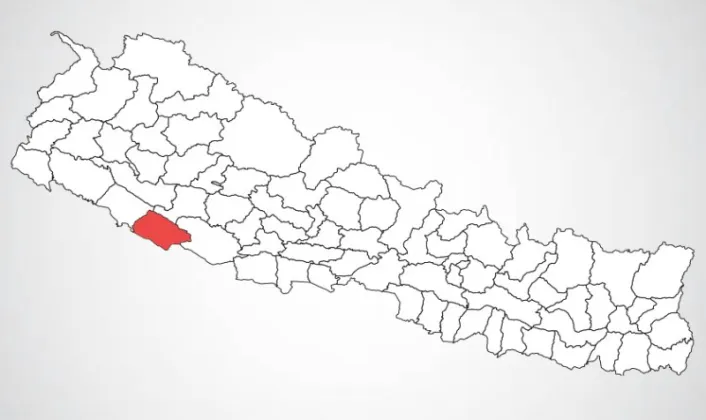
The sports infrastructure at Nepalgunj Stadium in Banke district, including facilities developed during the eighth National Games, is not being properly used or maintained and is steadily deteriorating. Damodar Aryal, an ASN official responsible for swimming, said the infrastructure is decaying and that the absence of ownership and financial resources has prevented its conservation. He added that the lack of player production has also hindered the upkeep of the facilities. The situation, detailed in reports published by RatoPati, Khabarhub and Global Aawaj, presents the picture of a stadium that has infrastructure in place but lacks the protection required to keep it serviceable.
A National Games Legacy Losing Its Shine
When Nepalgunj Stadium received new infrastructure during the eighth National Games, the investment was meant to leave behind a lasting sporting base for Banke district and the surrounding region. Facilities of that scale are expected to serve training, competitions and community sport for years after the event that prompted their construction. Instead, according to Aryal and the media reports, the structures built with that ambition are now deteriorating for want of conservation.
The reports describe a venue that has not slipped into disuse overnight but is gradually losing its condition because the basics of stewardship are missing. The problems identified in the reporting can be summarised as follows:
- Underuse: the infrastructure, including facilities developed during the eighth National Games, is not being properly used.
- Deterioration: in the absence of maintenance, the structures are decaying.
- Ownership vacuum: the lack of ownership over the infrastructure has prevented its conservation.
- Budget shortage: a lack of financial resources has blocked protection and repair work.
- Weak talent pipeline: the lack of player production has further hindered maintenance of the facilities.
No Owner, No Budget: Why Conservation Has Stalled
Aryal's diagnosis places two failures at the centre of the problem. The first is the question of ownership. When a stadium's infrastructure has no clearly responsible custodian, day-to-day upkeep and periodic repair fall through the gaps, and the decay of valuable assets becomes nobody's specific responsibility. According to Aryal, it is precisely this lack of ownership, combined with scarce finances, that has kept conservation work from happening at Nepalgunj Stadium.
The second failure is financial. Maintaining sports infrastructure is a continuing obligation rather than a one-off task, because surfaces, structures and equipment all require regular attention if they are to remain safe and usable. At Nepalgunj Stadium, the reports say, that obligation is not being met because the necessary budget simply is not there. The consequence is the deterioration Aryal describes, with facilities developed for national-level competition gradually losing their condition while no funds are available to arrest the decline.
Fewer Players, Fewer Reasons to Maintain
The third strand of the problem is human rather than material: player production. According to the reports, the lack of player production has also hindered the maintenance of the facilities. The connection is straightforward. Sports infrastructure earns its upkeep through use, whether through athletes training, teams competing or coaches running programmes, and a steady stream of emerging players gives both the justification and the pressure needed to keep facilities in working order. Where that stream of talent dries up, facilities fall quiet, and quiet facilities deteriorate the fastest.
For Nepalgunj Stadium, this creates a self-reinforcing cycle. Infrastructure that is not properly used loses its condition; infrastructure in poor condition is less able to support athlete development; and without athlete development, the case for investing in maintenance weakens further. Aryal's comments indicate that the budget shortage and the talent drought must be understood together, as connected parts of a single problem rather than separate failures.
What the Reporting Makes Clear
Taken together, the reports from RatoPati, Khabarhub and Global Aawaj describe a venue whose post-event inheritance was never matched with the means to protect it. As RatoPati's headline put it, Nepalgunj Stadium "has infrastructure but lacks protection". Aryal's remarks supply the reasons: no ownership, no money, and too few players coming through to give the facilities a purpose that demands their preservation.
An Uncertain Road Ahead
Unless the ownership question is settled and financial resources are arranged, the deterioration at Nepalgunj Stadium is likely to continue. The facts on record are pointed enough: the infrastructure exists, it was developed during the eighth National Games, it is not being properly used or maintained, and the officials cited say conservation has been prevented by the lack of ownership and funds, with weak player production compounding the neglect. What happens next will depend on whether the stadium's sporting assets are treated as a legacy worth protecting, or left to decay a little further with each passing season.


