
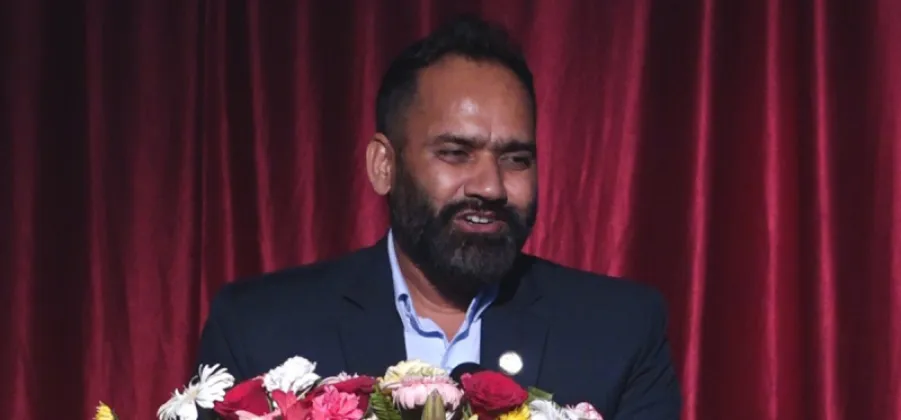
Nepal's government is preparing to put the country's long-neglected travel destinations in front of a global online audience by mobilising more than 200 digital content creators, under a special initiative of Minister for Culture, Tourism and Civil Aviation Khadga Raj Paudel 'Ganesh'. The programme, announced in Kathmandu, aims to publicise and promote Nepal's original culture, traditions and hidden destinations through digital media, with the Nepal Tourism Board coordinating the effort from start to finish.
The announcement, reported by Nagarik News and Khabarhub, signals one of the most ambitious attempts yet by the tourism ministry to harness social media storytelling as an official instrument of destination promotion rather than relying solely on conventional advertising campaigns.
A Digital Push Beyond the Beaten Track
At the heart of the initiative is a simple recognition: many of Nepal's most compelling places, customs and cultural practices remain largely invisible to prospective travellers, both at home and abroad. By bringing more than 200 content creators on board, the ministry intends to fill that gap with photography, video and first-hand narratives produced by people who make their living capturing and sharing experiences online.
According to the details released in Kathmandu, the programme's stated objectives include:
- Publicising Nepal's original culture and traditions through content that reflects the country's living heritage rather than polished commercial imagery
- Promoting neglected and lesser-known tourist destinations that have remained outside the mainstream tourism circuit
- Leveraging digital media platforms as the primary channel for reaching domestic and international audiences
- Coordinating the campaign through the Nepal Tourism Board, the national body responsible for marketing Nepal as a travel destination
Minister Paudel 'Ganesh' is the driving force behind the special initiative, which the ministry has positioned as a fresh approach to showcasing the country's assets. Rather than introducing new infrastructure or physical campaigns, the programme concentrates on storytelling - an area where content creators have proven especially effective in recent years.
Why Content Creators Are Central to the Plan
The decision to place content creators at the centre of a national tourism campaign reflects how travel decisions are increasingly made. Short-form videos, blogs and social media posts now shape where millions of people choose to go, often more powerfully than traditional brochures or television advertisements. A single well-produced video from an unfamiliar location can generate curiosity that a conventional campaign struggles to match.
For Nepal, the appeal is twofold. First, content creators typically speak the visual language of younger travellers, who represent a growing share of the global tourism market. Second, creators often seek out exactly the kind of off-the-beaten-path experiences that the ministry now wants to highlight - village festivals, local crafts, mountain trails and cultural traditions that rarely appear in mainstream promotional material.
With more than 200 creators involved, the scale of the programme suggests the ministry and the Nepal Tourism Board are aiming for sustained, wide-ranging coverage rather than a one-off burst of publicity. The involvement of the Board as coordinator is significant, as it places the creators' output within the framework of Nepal's official destination marketing and gives the campaign a single institutional anchor.
Broadening Nepal's Tourism Map
The focus on hidden destinations comes against the backdrop of a tourism economy that has long revolved around a handful of internationally famous attractions. Mount Everest, the trekking routes of the Annapurna region, the lakeside city of Pokhara and the birthplace of Gautam Buddha at Lumbini have historically dominated Nepal's image abroad, drawing the bulk of international visitor attention.
That concentration has also raised familiar challenges. Popular destinations absorb most of the visitor traffic and tourism revenue, while many communities with rich cultural traditions and remarkable landscapes see little of either. Highlighting neglected destinations through digital channels is widely seen as a way to encourage travellers to venture further, spread economic benefits more widely and ease pressure on the most visited sites.
The ministry's emphasis on Nepal's "original" culture and traditions also points to a promotional strategy rooted in authenticity. Rather than competing solely on scale or luxury, the campaign appears designed to showcase the everyday heritage of the country - the customs, rituals and ways of life that distinguish one village, valley or community from another. For content creators, whose audiences often reward genuine, unfiltered experiences over staged attractions, that material is a natural fit.
What Comes Next
With the programme announced in Kathmandu and the Nepal Tourism Board tasked with coordination, attention will now turn to how the campaign unfolds in practice. The scale of the creator network - upwards of 200 participants - gives the initiative a broad base from which to generate a steady stream of content covering different regions, seasons and cultural themes.
For the tourism ministry, the initiative under Minister Paudel 'Ganesh' represents an acknowledgment that Nepal's next wave of visitors is more likely to be inspired by a compelling video from a little-known hill town than by a conventional advertisement. For the content creators involved, it offers official backing to explore corners of the country that rarely make it onto the standard tourist itinerary.
If the programme achieves its stated aim, the result could be a fuller, more diverse portrait of Nepal reaching digital audiences worldwide - one built not around a single famous peak or city, but around the many cultures, traditions and destinations that have long remained hidden in plain sight.


