
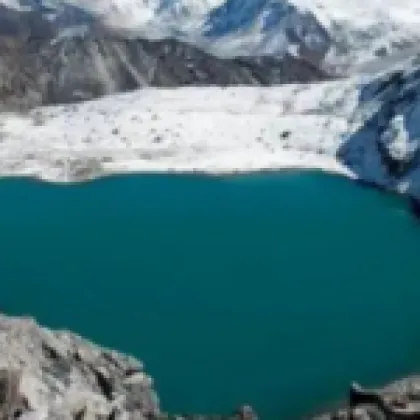
Nepal is moving to defuse one of the most serious hazards posed by its melting mountains, with a government plan to lower the water levels of four risk-prone glacial lakes and to expand flood early warning systems along four major rivers. The initiative, intended to reduce the potential for glacial lake outburst disasters, carries an estimated cost of about 49.9 million US dollars, or roughly seven and a half billion rupees. It comes as climate change sharpens the threat of glacial lake outbursts, avalanches and landslides across the Himalayan region, making proactive risk reduction an increasingly urgent priority for the country.
Four High-Risk Glacial Lakes Slated for Drawdown
At the centre of the plan is the deliberate lowering of water levels in four glacial lakes that authorities have classified as risk-prone. The programme covers Thulagi in Manang, Lower Barun in Sankhuwasabha and Lumding in Solukhumbu, among other lakes identified as dangerous. The lakes named in the plan are:
- Thulagi, located in Manang
- Lower Barun, located in Sankhuwasabha
- Lumding, located in Solukhumbu
These high-altitude water bodies sit in mountain valleys where a sudden release of water could race downstream toward settlements, agricultural land, bridges, trails and other infrastructure in the districts and communities below.
The logic behind drawdown is straightforward. Glacial lakes typically collect meltwater behind moraine dams, natural barriers built from loose rock, sediment and debris left behind by retreating glaciers. Unlike solid rock, these dams can be unstable. A heavy influx of meltwater, an avalanche, an earthquake or simple pressure from rising water levels can cause them to fail, sending a destructive surge of water, mud and debris downstream in what is known as a glacial lake outburst flood, or GLOF.
By drawing down the lakes in advance, authorities reduce the pressure on these fragile natural barriers and shrink the volume of water that would be released if a dam were to fail. Both factors directly shape the scale of any outburst, which is why lowering water levels is widely regarded as one of the most effective structural measures for reducing GLOF risk in high mountain regions.
Early Warning Expansion Along Four Major Rivers
Lowering lake levels addresses the hazard at its source, but no structural intervention can remove the threat entirely. That is why the plan pairs the drawdown work with an expansion of flood early warning systems along four major rivers. These systems are designed to detect dangerous changes in river conditions and transmit alerts downstream, giving authorities and residents in the flood path advance notice to move to higher ground before disaster strikes.
The value of that advance notice is difficult to overstate. Floods in Nepal's steep terrain travel quickly and carry enormous destructive force, sweeping away bridges, damaging hydropower facilities and cutting off villages connected only by mountain trails. For communities in narrow river valleys, even a small margin of extra time can mean the difference between evacuation and tragedy. Together, the two measures form a layered defence: reducing the likelihood and size of an outburst upstream, while improving the capacity of downstream populations to respond if one occurs.
A 7.5-Billion-Rupee Commitment to Preparedness
The financial scale of the programme signals its importance. The government expects to spend about 49.9 million US dollars, equivalent to roughly seven and a half billion rupees, to lower the lakes and build out the early warning network. It is a substantial investment in disaster risk reduction, reflecting a shift in emphasis from reacting to disasters after they occur toward limiting their potential impact in advance.
For a country as exposed to mountain hazards as Nepal, spending of this kind is increasingly viewed as an economic safeguard as much as a humanitarian one. Outburst floods can inflict damage across entire river basins, affecting lives, livelihoods, farmland and infrastructure far from the lakes themselves. By committing billions of rupees to mitigation now, the government is betting that the cost of prevention will prove far smaller than the cost of a major disaster.
A Himalaya Under Growing Climate Pressure
The plan arrives against the backdrop of mounting climate stress in the Himalayas. Rising temperatures accelerate the melting of glaciers across the region, causing meltwater to pool into lakes that grow larger and more numerous over time. More water accumulating behind weak natural dams means a higher potential for outbursts, and the same warming is intensifying other mountain hazards as well. The government framed the initiative as a response to this broader trend, citing the elevated risk of glacial lake outbursts, avalanches and landslides in the Himalayan region.
Nepal's approach, lowering dangerous lakes while strengthening early warning coverage, reflects a growing recognition among Himalayan countries that some climate-driven threats can no longer be prevented, only managed. If carried through, the programme would reduce danger around four of the country's most closely watched glacial lakes and give communities along four major rivers a better chance of seeing danger coming. The plan was reported by News of Nepal.


